
Edie Bowles: DAERA’s animal welfare failings run deeper than Fivemiletown
 Reading time: 6 minutes
Edie Bowles argues that the review into the culling of 51 cattle near Fivemiletown exposes failings that extend beyond a single operation. She examines wider concerns about DAERA’s enforcement of animal welfare law and calls for urgent reform.
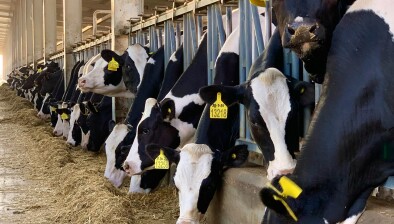
The Department of Agriculture, Environment and Rural Affairs (DAERA) has just published its long-awaited Independent Review into the culling of 51 cattle on a farm near Fivemiletown in County Tyrone and its findings expose serious failings in the Department’s decision-making, oversight and treatment of animal welfare. Unfortunately, as someone who has spent years examining how DAERA enforces animal welfare law in Northern Ireland, I cannot say I was surprised.
On 8 June 2026, following a farmer’s conviction for multiple welfare offences, a court ordered that cattle be removed from his possession under section 32 of the Welfare of Animals Act (Northern Ireland) 2011.
The court did not require the animals to be killed. Nevertheless, rather than simply remove the animals, DAERA decided to kill them, maintaining that there was no reasonable alternative due to inadequate handling facilities and risks of gathering and transporting them.
The cull involved 51 cattle being shot dead in fields near Fivemiletown, with parts of the cull taking place in full view of neighbours and corpses left exposed in fields overnight. The operation was marred by a number of failures which resulted in a poorly managed cull. In one troubling example, a surviving calf was discovered days later on a road with a neck injury described as ‘reflective of a gunshot wound’, although its cause could not be definitively established.
As a result of the accusations that DAERA poorly managed and mistreated the animals throughout the cull, DAERA faced significant public pressure. In response, on 3 August 2026, Northern Ireland’s Minister of Agriculture, Environment and Rural Affairs, Andrew Muir, commissioned an independent review into the operation.
Although the Review concluded that the cull was lawful and the method of killing humane, it also exposed serious failings in DAERA’s treatment of animal welfare. Remarkably, the Review found that DAERA did not provide any policy document on how to implement court orders requiring animals to be removed from their owners. Instead, officials rely on an established default custom in the Department to kill all the animals which it is tasked with removing.
The findings also revealed that cattle were killed even after DAERA had agreed to suspend the cull to allow a prospective buyer to purchase the remaining animals, and that inadequate records were kept of the animals killed. Significant delays within DAERA’s enforcement processes were also identified. Despite deciding to pursue prosecution against the farmer on 31 January 2024, the Department did not refer the case to the Public Prosecution Service until 12 November 2024, more than nine months later. The Review reported that the length of the enforcement process can take between 21 and 33 months and warned that such delays risk leaving animals exposed to continued suffering.
Perhaps the most troubling aspect of the case is what happened before the cull. Even though inspections between 2022 and 2024 revealed severe neglect, including emaciated animals and inadequate access to food and water, the cattle remained on the farm until 2026. Animals whose welfare was already known to be seriously compromised were left in the same circumstances for years before they were eventually killed.
The unfortunate reality is that this was far from an isolated incident. These circumstances are symptomatic of DAERA’s far broader pattern of indifference to animal welfare. Rather than considering how it can protect the animals in its care, the Department appears all too unwilling to intervene - and all too willing to kill them.
The Animal Law Foundation has been exposing this neglect for years. Our research shows that, in 2024, DAERA conducted just 370 animal welfare inspections involving 275 different farms, meaning that approximately only 1.13 per cent of Northern Ireland’s 24,423 farms received an inspection. Yet, non-compliance was identified in more than one in five inspections.
These concerns led The Animal Law Foundation to send DAERA a formal Pre-Action Protocol Letter in September 2026, challenging its compliance with its statutory animal welfare enforcement obligations and warning that judicial review proceedings may follow. Our concerns include the Department’s failure to demonstrate a sufficiently effective, transparent and risk-based system for inspecting farms and responding to animal welfare breaches.
DAERA’s approach to animal welfare enforcement was already challenged in court last year. In October 2025, the High Court ruled against DAERA for its decision to end future funding for council-run animal welfare services, which protect companion animals and other non-farmed animals.
Nevertheless, DAERA has continued to display a dismissive attitude towards animal welfare - recently even going so far as to refuse to recognise the effect of laws protecting crabs and lobsters. Existing Northern Irish law prohibits causing crabs and lobsters avoidable pain, distress or suffering when killing them. England and Wales have had no problem confirming that this means that boiling lobsters and crabs alive while conscious is unacceptable. Yet, despite having the same law, DAERA has refused to confirm the same position.
The recent Review also revealed that, in all three other cases between 2020 and 2026 where DAERA intervened following deprivation orders, DAERA killed the animals rather than arranging for their removal. Further, in 2023, DAERA also sought to authorise the shooting of thousands of badgers, but its plans were halted when the High Court ruled that its decision-making was unlawful.
Northern Ireland has some strong laws designed to protect animals. Yet, these protections are only effective if the authorities responsible enforce them.
The tragic killing of 51 cattle in County Tyrone should serve as a wake-up call for DAERA. This was not simply an isolated incident or an unfortunate error of judgement. It is symptomatic of a far deeper, systemic problem. When compliance with animal welfare law is treated as optional, millions of animals risk being left to suffer without adequate protection. DAERA must urgently reassess its approach and take its legal responsibilities seriously.

Edie Bowles is executive director of the The Animal Law Foundation.

Share this article:

Subscribe to our newsletter to not miss articles like this one:
 SUBSCRIBE