


Written by:

Gillian O'Hanlon BL
Case Reporter
Court of Appeal: Sexual assault conviction overturned due to faulty charge to jury
 Reading time: 6 minutes
Written by:
Gillian O'Hanlon BL
Case Reporter
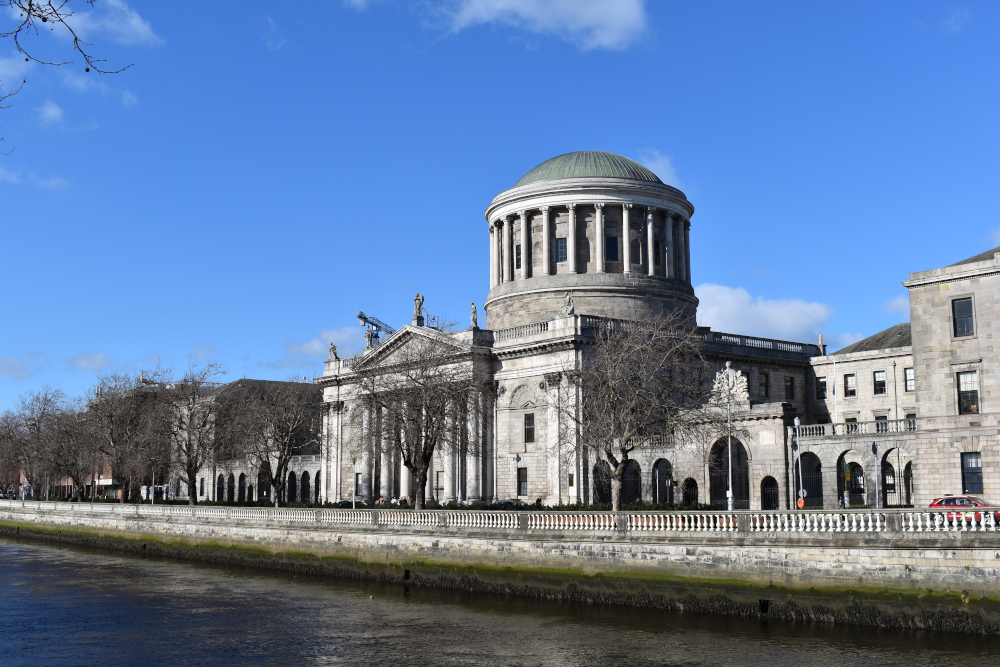
The Court of Appeal has overturned a man’s conviction for sexual assault on his young cousin due to a defect in the trial judge’s charge to the jury.

About this case:
- Citation:[2025] IECA 261
- Judgment:
- Court:Supreme Court
- Judge:Mr Justice Peter Charleton
Delivering judgment for the Court of Appeal, Mr Justice Peter Charleton considered that: “Proof in a criminal trial is beyond reasonable doubt… Being fairly sure of guilt means having a probable appreciation of guilt but to a moderate or reasonable degree only.”
Background
In March 2024, the appellant was convicted of 10 counts of sexual assault contrary to s.2 of the Criminal Law (Rape) (Amendment) Act 1990, as amended, relating to the abuse of his cousin when she was between six and 10 years of age.
The appellant was sentenced to five-and-a-half years’ imprisonment in April 2024.
At trial, the judge admitted evidence of an instance in which the appellant was confronted by his family members about the alleged abuse, in which he did not deny the allegations but said that he could not remember.
That evidence was admitted by the trial judge in circumstances where the law of evidence enables a statement not positively asserting innocence to be treated as an admission, if the maker of the statement was confronted by an allegation in which it would have been reasonable to deny a grave assertion.
In that regard, the evidence of a psychologist was called both on a voir dire and before the jury. The psychologist opined that the appellant was suffering with ADHD, had a low cognitive ability, poor stress responses and was a vulnerable individual, and that his personality traits and neurological conditions greatly increased the likelihood of a false confession.
In determining whether the admission was voluntary, the trial judge outlined inter alia to the jury that there was no pressure, threats or circumstances that would give rise to a concern in relation to false confessions being made to the family members.
The judge did not accept that the risk factors outlined by the psychologist had any direct application to the situation where family members confronted the accused in a calm and reasonable manner, noting: “His reaction was to say he did not remember and if [the complainant] said it happened it did. He did not quite confess and certainly was not under any pressure… There was nothing in their words or actions that were in any way inappropriate or unreasonable in the circumstances, even given his level of functioning and there are no grounds to exclude his admissions on that basis.”
The trial judge also gave a warning in relation to delay in the case, and a charge as to the burden and standard of proof, which charge included the following as to proof beyond reasonable doubt:
“So, although it’s not a mathematical calculation, you want to be fairly sure and fairly certain and if you’re in school with your ruler and you’re doing your maths, that ruler, that wooden ruler, I don’t know if you all got that, but that’s what we sometimes compare it to, you’d want to be fairly close to the top of the ruler. At the end of the day, you must sleep soundly and have no misgivings about your decision. Your decision is final as a jury, and you can’t come back and I’m sure you’re well aware of this. All of these things I have to say to you. If you make a mistake, you can’t come back. There is an appeal and obviously you hear about appeals, but that’s on grounds of law about things I say, not about your decision, so that’s very important.”
The appellant appealed against his conviction, taking issue with the judge’s admission of evidence concerning the family confrontation, and with certain of the judge’s directions and charges to the jury.
The Court of Appeal
The defence contended that the prosecution’s reliance on the alleged failure by the appellant to positively assert his innocence in the family confrontation was inappropriate and that in circumstances where he was vulnerable and had developmental and intellectual shortcomings, the probative value of his response to the allegations was extremely low and ought to have been ruled inadmissible.
Mr Justice Charleton observed that from the trial judge’s ruling in this regard, it was clear that the issue of the appellant’s alleged admission was properly analysed and in accordance with applicable principle.
As to the challenge to the judge’s direction on delay, the court noted that the essentials of the direction promulgated as ideal on behalf of the appellant had been given by the trial judge in unimpeachable form, and further that any issue now taken with the reference to Leitrim as the setting for the abuse was not commented upon by the defence at trial and it was “not now possible to assert that it was in any way a turning point within the trial”.
As to the defence’s contention that the judge should have given a novel direction to the jury — that those of a point of view should not hold out and be pressured by what other jurors thought — Mr Justice Charleton considered that the idea was that with the necessity to make a decision, some jurors in favour of acquittal might weigh in for the sake of peace with a guilty verdict.
The judge explained: “There is no need to give a warning about pressure. The conduct of the jury deliberations is a matter for the jury. Were it to happen that some juror had a strong view, that would not be pressure. Instead, the issues are there to be tested as to fact and inference from fact as to objective validity. In community, it helps to debate an issue. In arriving at a decision, the experience of the world and the analysis of other jurors become valuable.”
As to the judge’s charge concerning the burden and standard of proof, Mr Justice Charleton considered inter alia that proof in a criminal trial is beyond reasonable doubt and set out a model direction.
Referring to the trial judge’s direction, the judge opined: “Being fairly sure of guilt means having a probable appreciation of guilt but to a moderate or reasonable degree only. That phrase, which undermined an otherwise impeccable charge to the jury, was compounded by the ruler analogy and the uncertainty as to what degree of perhaps 12 inches or maybe 30 centimetres had to be achieved.”
Conclusion
Accordingly, the Court of Appeal overturned the conviction and ordered a re-trial.
DPP v S.M. [2025] IECA 261

Share this article:

Subscribe to our newsletter to not miss articles like this one:
 SUBSCRIBE