

UN experts sound alarm over Garda pepper spray and tasers
 Reading time: 4 minutes
UN human rights experts have expressed concern over An Garda Síochána’s acquisition and use of less lethal weapons for crowd control and protest management.
Gina Romero, the special rapporteur on the rights to freedom of peaceful assembly and of association, and Alice Jill Edwards, the special rapporteur on torture and other cruel, inhuman or degrading treatment or punishment, jointly spoke out yesterday.
They voiced alarm about the purchase and use of so-called ‘double-strength pepper spray’ (SABRE Red Crossfire MK‑3 Gel), one of the strongest irritant sprays on the market.
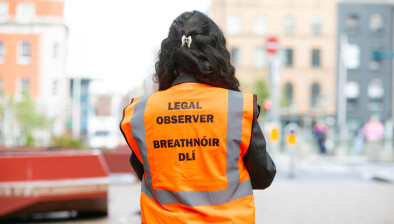
They noted with concern that it had allegedly been used against peaceful protestors during a demonstration in October 2025, alongside other excessive means of force, resulting in injuries among several peaceful protestors and at least one protest monitor.
The decision to acquire these ‘double strength’ sprays was allegedly related to the disturbances in Dublin in November 2023.
However, the experts stressed that there is a lack of clarity regarding the analysis of operational needs used to justify the increased strength of these sprays, and the testing process implemented. “The resulting safeguards remain unclear,” they said.
The experts expressed similar concerns over the pilot project employing Conductive Energy Devices (CED) — or tasers — by gardaí, with the capacity of delivering electric shocks when pressed against the target’s body.
“This function serves no legitimate purpose and falls under category A of the preliminary list of items identified by the special rapporteur on torture as being inherently cruel, inhuman or degrading and therefore considered to be prohibited,” they said.
They were dismayed at the information by the gardaí that these weapons could be used against pregnant women and the elderly.
“Less-lethal weapons should not be used in situations of crowd control, especially in situations involving the exercise of the right to peaceful assembly,” the experts said.
“Such weapons reduce the use of de-escalation techniques, increase the use of force, and therefore should be used only as a measure of last resort, following a verbal warning, and with adequate opportunity for assembly participants to disperse.”
Although classified as “less-lethal”, the experts noted that both weapons cause severe pain, carry a serious risk of secondary injury, and have the potential to be misused.
Any use of force by security forces must comply with the fundamental principles of legality, necessity, proportionality, precaution and non-discrimination and must be strictly regulated in accordance with applicable international standards.
“We are concerned about the adoption of this equipment following a pattern of opacity and lack of public debate,” the experts said.
The experts have contacted the Irish government on this issue.
The Irish Council for Civil Liberties (ICCL) has welcomed the UN special rapporteurs’ intervention.
Emily Williams, ICCL’s policing and justice policy officer, told Irish Legal News: “ICCL is pleased to see leading UN human rights experts warning about the serious risk of human rights violations posed by the use of double-strength pepper spray in the policing of protest and the new Garda taser pilot.
“We share the experts’ concerns and reiterate our calls for the Garda use of force policy to be published as a matter of priority. Weapons and force should only be used when strictly necessary and not to repress peaceful protest.
“The UN experts have outlined their dismay that the Garda taser policy permits gardaí to use tasers against pregnant people and the elderly, and have criticised ‘a pattern of opacity and lack of public debate’ in the introduction of equipment.
“ICCL shares these concerns about the taser pilot and alongside other civil society organisations, academics and researchers, we have communicated these to An Garda Síochána.”

Share this article:

Subscribe to our newsletter to not miss articles like this one:
 SUBSCRIBE