



UN court finds Myanmar responsible for genocide against Rohingya
 Reading time: 3 minutes

The International Court of Justice has ruled that Myanmar failed to prevent and punish genocide against the Rohingya, finding that the country’s security forces committed acts prohibited under the Genocide Convention.
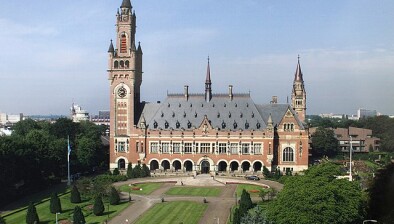
In a judgment delivered in The Hague, ICJ president Yuji Iwasawa said the military had carried out “extreme violence” against the mainly Muslim Rohingya in Rakhine state. The court found that security forces and other state organs committed acts including killing members of the group, causing serious bodily or mental harm and imposing measures intended to prevent births.
The case was brought by The Gambia in November 2019. The court examined survivor testimony and reports from international investigators about the 2017 military operations in northern Rakhine. Villages were burned and bulldozed, men and boys executed, and women and girls raped. The evidence also described infants being killed, which Judge Iwasawa said supported an inference that forces intended to prevent births among the Rohingya.
About 700,000 Rohingya fled across the border to Bangladesh following the operations. The court cited evidence that an estimated 10,000 people were killed. It also heard that nearly 400 villages, around 40 per cent of almost 1,000 villages in three northern Rakhine townships, were partly or completely destroyed. In testimony, one witness called by Myanmar described an attack in which Rohingya insurgents allegedly killed around 100 civilians.
The court ordered Myanmar to end any continuing violations and bring its laws into line with the Genocide Convention. It must investigate people reasonably suspected of committing prohibited acts and prosecute and punish them if warranted. The ruling also requires measures to prevent future violations, provide restitution to the Rohingya, facilitate safe and voluntary return and family reunification, and compensate victims.
Myanmar must report within two years on the restitution measures it has taken and the amount and arrangements for compensation. The amount and form of reparation will be decided in a later phase. The judgment is final, binding on both parties and cannot be appealed.
UN secretary-general António Guterres welcomed the decision as a “powerful recognition of the Rohingya victims of genocide. It is a demonstration of international justice and a reaffirmation that impunity for such horrific acts must not stand.” He said accountability remained essential to reconciliation in Myanmar. “International law, including the Genocide Convention, must be respected by all.”
“This is a historic moment for international justice, for the Rohingya and for the international law of genocide,” said Dr Irene Pietropaoli, senior research fellow at the British Institute of International and Comparative Law. She said the judgment found that the evidence could not reasonably be explained as counter-insurgency operations, and that it would shape the interpretation of genocide law.
Sonya Sceats, the institute’s chief executive, said the court’s response to political attacks would test states’ commitment to international justice. She warned that an accountability vacuum could encourage other states to carry out similar campaigns, with consequences beyond the countries where atrocities occur.

Share this article:

Subscribe to our newsletter to not miss articles like this one:
 SUBSCRIBE