




Written by:

Gillian O'Hanlon BL
Case Reporter
Supreme Court: Ukrainian couple lose appeal over disability and carer’s allowances
 Reading time: 7 minutes
Written by:
Gillian O'Hanlon BL
Case Reporter
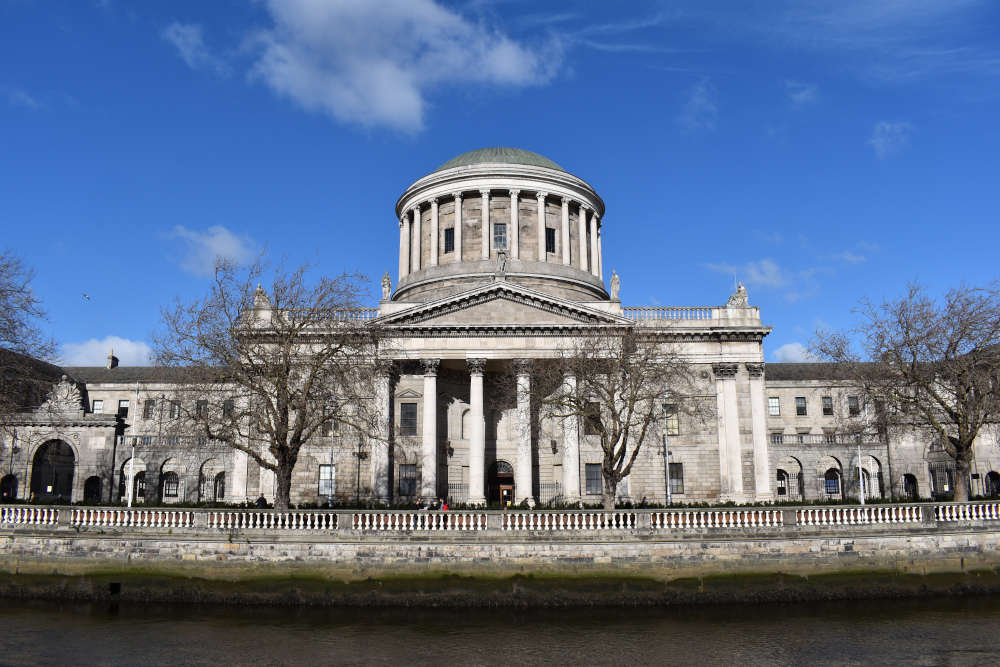
The Supreme Court has dismissed an appeal by a Ukrainian couple who contended that their disqualification from disability and carer’s allowances while living in a designated accommodation centre was discriminatory.

About this case:
- Citation:[2026] IESC 732
- Judgment:
- Court:Supreme Court
- Judge:Ms Justice Iseult O'Malley
Delivering judgment for the Supreme Court, Ms Justice Iseult O’ Malley opined, “it is not improper to adopt a policy of reserving, insofar as possible, serviced full-board accommodation for new arrivals in the hope or expectation that those here for a longer time may, after a while, be able to find accommodation independently. What is essential is that they be given the appropriate assistance to do this and that compliance with the Directive continues.”
Background
The appellants, a married couple from Ukraine, were granted temporary protection in Ireland in April 2022 pursuant to s.60 of the International Protection Act 2015.
Pursuant to s.60(10)(b), the appellants were entitled to receive the same medical and social welfare benefits as those to which Irish citizens were entitled.
From July 2022, the first appellant received disability allowance of €208 per week as she suffered with serious medical conditions and was wheelchair bound. Her husband, also having heightened medical needs to the extent that it was unlikely that he could become fit for work, acted as carer for his wife and from August 2022, received a carer’s allowance of €224 per week.
Subsequently, the 2015 Act was amended by s.11 of the Social Welfare and Civil Law (Miscellaneous Provisions) Act 2024 which inserted into s.60(10)(b) a disqualification from social welfare benefits where a person is resident in a designated accommodation centre.
S.10 of the 2024 Act imposed a further disqualification from receiving any payment listed in s.139 of the Social Welfare Consolidation Act 2005 (including disability and carer’s allowance) for any week or part thereof during which a person resides in a designated accommodation centre.
The appellants had been living in State-funded full-board accommodation, which was then designated as a designated accommodation centre in September 2024. As a result, they no longer received disability and carer’s allowance, instead receiving an ex gratia sum of €38.30 per week.
The appellants commenced judicial review proceedings in November 2024, arguing inter alia that s.10 and s.11 of the 2024 Act were incompatible with the Constitution and breached the guarantee under Article 40.1 of equality before the law.
The High Court took the view that by 2024, the war in Ukraine had continued for two years and that the Oireachtas was entitled to conclude that provision of full social welfare benefits to recipients of temporary protection encouraged and embedded their use of free emergency accommodation and associated supports as a permanent feature.
Mr Justice Alexander Owens found no discriminatory purpose or adverse effect and no factual basis for the appellants’ assertion that the changes were introduced for the purpose of forcing them out of their accommodation, as opposed to encouraging their integration and independence.
On 20 March 2026, the appellants were granted leave to bring a leapfrog appeal directly to the Supreme Court.
The Supreme Court
The Court agreed with the respondents that the appellants’ acceptance that their rights under the Temporary Protection Directive (Council Directive 2001/55/EC of 20 July 2001) had not been breached was a “highly significant feature” of the case, being as the Directive and its implementing legislation was the “root source” of their right to enter and reside in the State, and which prescribes the minimum standard of treatment for them.
Noting that this was a “pure” equality claim in that the appellants did not assert any substantive legal right to the allowances but contended that they were unfairly excluded from a benefit extended to people similar to them, Ms Justice O’ Malley relied upon Donnelly v. Minister for Social Protection [2023] 2 I.R. 415 in which it was held that such a challenge could only succeed if the legislative exclusion was grounded upon a constitutionally illegitimate consideration.
Highlighting that the Court was required to give latitude to the legislature in fiscal matters, the judge was satisfied that the claim that the exclusion was irrational because it was based only upon the place in which the appellants reside was misconceived.
Firstly, the Court highlighted that the claim depended upon comparisons with persons who are not in the same situation as the appellants, being those who have international protection, other beneficiaries of temporary protection who do not live in designated accommodation and residents in care institutions.
Ms Justice O’ Malley explained that that it is legitimate to formulate policy on the basis that people with recognised refugee status or subsidiary protection are likely to reside in the State for longer periods than beneficiaries of temporary protection, and that “It is also legitimate to alter an initial reception policy in the light of subsequent events and in order to ensure that a particular form of assistance, intended to be temporary, does not become permanent.”
The judge continued, “it seems clear from the evidence relating to the pressure on accommodation facilities that this was a significant factor in the decision of the legislature to adopt a policy that would have the effect of reducing the numbers of beneficiaries of temporary protection in those facilities.”
Finding that this was not, in itself, illegitimate so long as proper alternative assistance is given and the obligations imposed by the Directive are complied with, the Court pointed out that the appellants also failed to acknowledge that nobody in the international protection comparator group had an entitlement to full board accommodation and social welfare allowances.
The Court considered that residents in care institutions were not an appropriate comparator group at all, and identified that a fundamental issue with the appellants’ claim was that they disregarded the financial value to them of all the support which has been provided to them by the State in arguing that they were not financially better off than other social welfare recipients when they were paid the allowances.
Highlighting that this was not appropriate in a constitutional claim depending upon establishing that the State has treated the appellants, for financial purposes, as inferior to persons to whom they are similar, the Court found it “wholly unrealistic” to compare the appellants to a couple receiving similar allowances but living in rented accommodation.
The Court outlined that there was no question of such a couple having the same disposable income at the end of the week as that of couples in receipt of the same gross income who, because of State provision, do not have to pay for heating or food.
Observing that the central issue was not the location in which the appellants reside but the differing forms of services made available to people in different types of accommodation, Ms Justice O’ Malley opined, “I cannot see that Article 40.1 is engaged by the provision of one service in kind – accommodation and food – and another in cash, where a claimant can make a choice between the two and has not established that there is a disproportionately unfavourable treatment of the people availing of either form.”
Conclusion
Accordingly, the Supreme Court dismissed the appeal.
A.A. & Anor v The Minister for Social Protection & Ors [2026] IESC 732

Share this article:

Subscribe to our newsletter to not miss articles like this one:
 SUBSCRIBE

