



Written by:

Gillian O'Hanlon BL
Case Reporter
Supreme Court: Taxpayers awarded 50 per cent costs against Collector General
 Reading time: 6 minutes
Written by:
Gillian O'Hanlon BL
Case Reporter
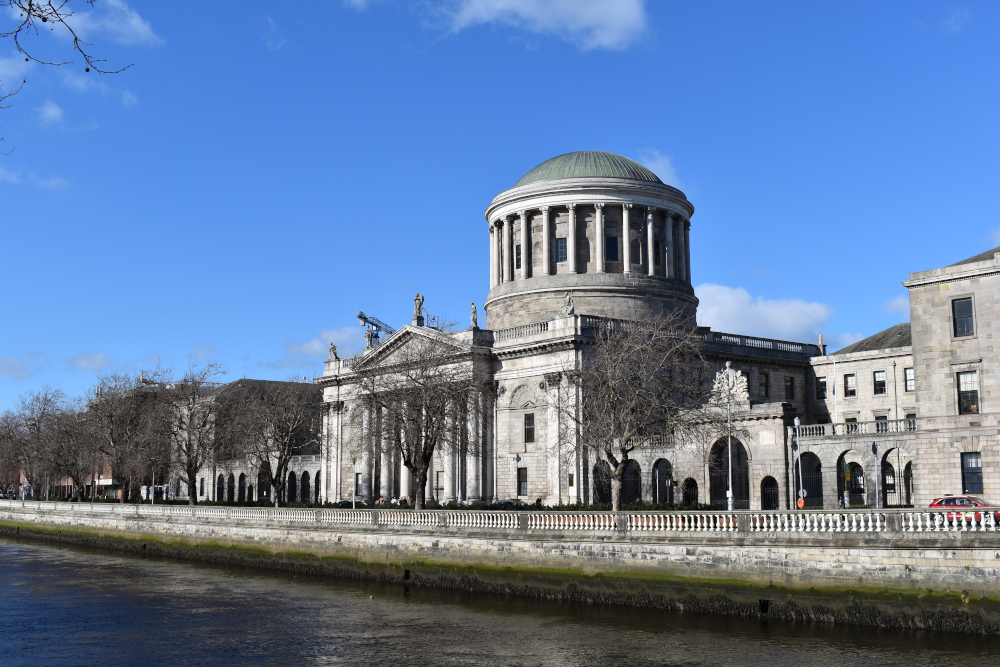
The Supreme Court has made an exceptional award of 50 per cent of two taxpayers’ legal costs following their unsuccessful challenge to the legality of the Collector General’s fee arrangements.

About this case:
- Citation:[2026] IESC 41
- Judgment:
- Court:Supreme Court
- Judge:Mr Justice Gerard Hogan
Delivering the leading judgment for the Supreme Court, Mr Justice Gerard Hogan recognised that the litigation had “produced an authoritative resolution of questions of genuine systemic importance which had not previously received definitive consideration by this Court. It would not, in my view, be just that the parties who have facilitated that clarification should bear the costs associated with securing it.”
Background
The Collector General brought summary proceedings against two taxpayers seeking the recovery of unpaid taxes.
The High Court and Court of Appeal having found in favour of the Collector General, the taxpayers appealed to the Supreme Court on the single issue of whether contractual arrangements between the Collector General and a panel of nominated solicitors’ firms in respect of legal costs had champertous features such as to render these agreements unenforceable.
In June 2026, the Supreme Court in Howley v. Howard [2026] IESC 34 dismissed the appellants’ appeals and upheld the legality of the arrangements whereby fees were payable on a “no foal, no fee” basis and the level of fee payable was contingent on the amount of unpaid tax recovered by the Collector General against tax defaulters.
The issue of the costs to be awarded in the proceedings returned before the Supreme Court for consideration.
The Supreme Court
Mr Justice Hogan noted that in circumstances where the Collector General had been entirely successful in the proceedings, he was presumptively entitled to his costs in line with s.169(1) of the Legal Services Regulation Act 2015.
However, the judge highlighted that s.169(1) does not preclude the Court from taking other considerations into account, including, as contended for by the taxpayers, “the extent to which it was “reasonable” to litigate a particular point.”
The Court outlined the taxpayers’ argument that it was reasonable for them to litigate these issues, having regard to inter alia the Collector General’s concessions before the Supreme Court concerning the extent to which he intended to charge the conditional uplift fee, and the question of whether the existence of an allegedly champertous fee agreement was a defence to legal proceedings.
Agreeing that the taxpayers could be said to have been successful in the latter respect, where the Supreme Court had disagreed with the Court of Appeal on that very issue, Mr Justice Hogan considered the circumstances in which the Court may exercise its discretion to award costs in favour of a losing party in important litigation concerning the State as set out in Little v. Chief Appeals Officer (No.2) [2024] IESC 53.
The Court was satisfied that “it would be hard to say that the defendants did not satisfy each of these conditions, at least in substance”, noting that the only possible reservation was that the claim was not strictly one in public law.
Having examined the position and role of the Collector General, Mr Justice Hogan confirmed that tax has “close links with public law” and that the issue of whether the Collector General was entitled to exercise his statutory functions by commencing proceedings while allegedly committing champerty was sufficient to bring the matter within the concept of “public interest proceedings”.
The Court determined that the taxpayers met the further criteria set out in Little, finding inter alia that the points at issue were of real substance and of general public importance, and were likely to have a significant on the category of persons affected by the legal issues.
As to whether an adverse costs award would act as a deterrent, Mr Justice Hogan considered this a neutral point in that the Collector General had already obtained large judgments against the taxpayers and a further award of costs was unlikely to have made any real difference to their decision to litigate this point, “Yet on the other hand, the prospect of further costs being imposed by court order is likely to have a deterrent effect on many litigants.”
Moving to consider the elevated test concerning awards of costs in favour of a losing party against the State, Mr Justice Hogan opined, “the present case represents almost a paradigmatic example of the type of case contemplated by this test. As the first judgment attests, the issues were ones of real substance. The issues were fundamental to the operation of the legal system and the clarification of the law was, in many respects, both necessary and overdue.”
The judge further emphasised that the appeal had enabled the Court to comprehensively re-examine fundamental aspects of maintenance and champerty and to clarify the legal status of conditional fee and “no foal, no fee” arrangements, the “chief beneficiaries” of that clarification being litigants, legal practitioners and the legal system itself.
The Court confirmed that the present case fell within the limited category identified in Little where the public interest served by the litigation “transcends” the private interests of the parties and that, in circumstances where the litigation had produced an authoritative resolution of questions of systemic importance, it would not be just that the taxpayers should bear the costs associated with securing that clarification.
Having expressed that the Collector General should not be awarded any costs, the Supreme Court nonetheless did not believe that the exceptional nature of the case warranted an award of the entirety of the taxpayers’ costs, having regard to s.169(1) and the fact that the proceedings arose from their own failure to discharge their tax liabilities.
Conclusion
Accordingly, the Supreme Court made no order as to costs in the High Court and Court of Appeal, and awarded the taxpayers 50 per cent of their costs in the Supreme Court, to reflect “their status as unsuccessful litigants and defaulting taxpayers on the one hand and the exceptional public value of the appeal on the other.”
Howley v McClean; Howley v Howard [2026] IESC 41

Share this article:

Subscribe to our newsletter to not miss articles like this one:
 SUBSCRIBE

