



Written by:

Gillian O'Hanlon BL
Case Reporter
Supreme Court: Retrial ordered on amended indictment
 Reading time: 6 minutes
Written by:
Gillian O'Hanlon BL
Case Reporter
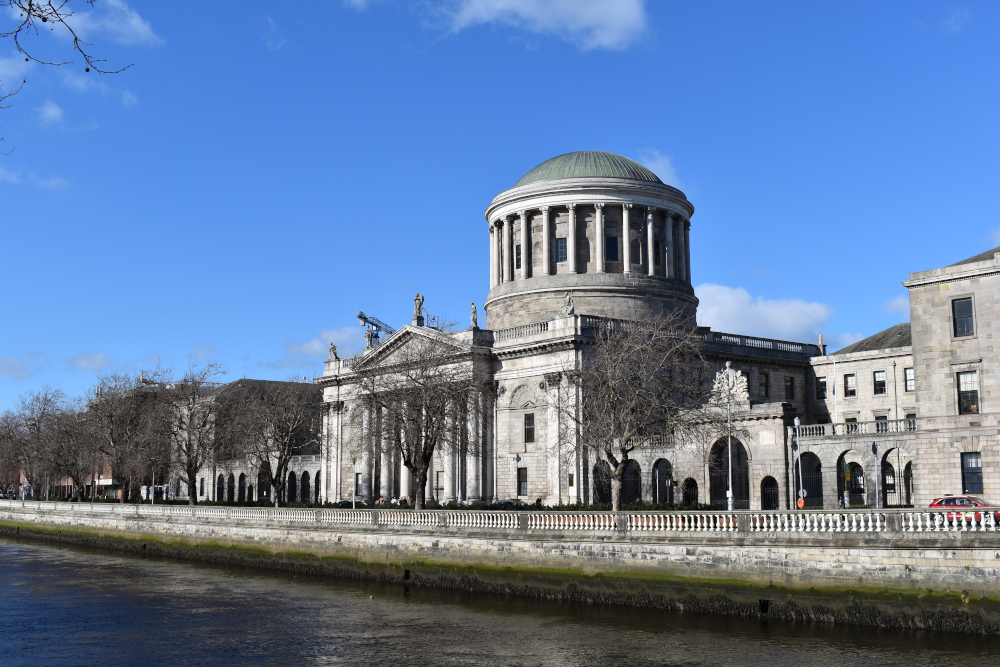
The Supreme Court has determined that the Court of Appeal erred in directing a retrial on an indictment which had subsequently been amended by the Special Criminal Court at trial.

About this case:
- Citation:[2026] IESC 21
- Judgment:
- Court:Supreme Court
- Judge:Ms Justice Aileen Donnelly
Delivering judgment for the Supreme Court, Ms Justice Aileen Donnelly explained that “the jurisdiction of the Court was to make no further order or to order that the appellant be retried for the offence for which he had been convicted. It follows that the order quashing the conviction did not and could not amount to an order quashing the amendment to the indictment.”
Background
The appellant was tried before the Special Criminal Court (SCC) for inter alia conspiracy to commit burglary contrary to common law.
The original indictment contained a single count of conspiracy to burgle related to various properties over an approximately four-month period.
The indictment was amended by the SCC during the delivery of its “reasoned verdict” and the appellant was convicted on foot of that amended indictment.
The appellant’s conviction under the amended indictment was for an offence of conspiracy to burgle related to a single property over the course of one night (covering two calendar days).
The SCC’s reasoned verdict encompassed both the rulings on an application for a direction and the verdict, following a general practice where the defence does not make a separate direction application from the closing speech.
The SCC found that there was insufficient evidence to convict the appellant of the conspiracy to burgle offence as particularised on the original indictment as it could not cross-check the assignment of cell site locations to the references to the original call data records, but found that there was sufficient evidence to convict on a narrower basis in respect of a single burglary.
Without giving any advance notice that it would make an amendment, and without providing the parties an opportunity to make submissions on same, the SCC directed that the particulars of offence be amended and a guilty verdict recorded on that offence.
The appellant appealed to the Court of Appeal against his conviction.
The Court of Appeal
The Court of Appeal determined that the manner in which the SCC effected the amendment to the indictment breached the appellant’s rights to constitutional and natural justice, with the effect that his trial was not conducted in due course of law contrary to Article 38 of the Constitution.
In those circumstances, the court decided that the conviction should be quashed and where the effect of overturning the conviction was that “all legal rulings of the Special Criminal Court have no legal, binding effect”, a retrial of the conspiracy to burgle indictment as originally charged was ordered pursuant to s.3(1)(c) of the Criminal Procedure Act 1993.
The appellant was granted leave to appeal to the Supreme Court, with the question for the Supreme Court concerning whether the Court of Appeal could order a retrial in respect of an offence of which the accused was not convicted.
The Supreme Court
Having set out the provisions of s.3 and s.4 of the 1993 Act, Ms Justice Donnelly explained that s.3(1)(c) sets out the power of the Court to quash a conviction and to order a retrial “for the offence”.
Finding that the relevant provisions of the 1993 Act must be understood by the wording used in the section when reading the statute as a whole in light of the background and context thereof, Ms Justice Donnelly was convinced that the plain wording of the provision demonstrated that the Court of Appeal may hear an appeal against a conviction of an offence and having quashed the conviction, “the power to order a retrial is the power to order a retrial for ‘the offence’”.
Being satisfied that s.3(1)(c) did not provide authority for the retrial of the appellant in respect of the offence set out in the original indictment, the judge explained:“The order for a retrial must therefore be directed to a retrial for the offence of which the person has been convicted.”
The Court noted that in the case before it, the Court of Appeal in error had treated its role as if it was exercising powers of judicial review instead of its appellate role conferred by the 1993 Act.
Ms Justice Donnelly highlighted that “the Court of Appeal decision to quash the appellant’s conviction did not amount to a formal quashing of the amendment to the indictment. That amendment to the indictment had legal effect in so far as it was on that indictment that the appellant was convicted. The quashing of the conviction does not reach back into the trial process and ‘undo’ or set aside that amendment.”
The judge determined that having quashed the conviction, the only options for the Court of Appeal were those set out in s.3(1), to make no further order or to order that the appellant be retried for the offence for which he had been convicted, being the offence of conspiracy to burgle on the amended particulars of offence.
As to the question of whether a retrial should be ordered, the Court was satisfied that the balancing of the competing interests of the appellant and the public interest in having the guilt or innocence of the accused on the amended indictment be decided by the trial court weighed in favour of the latter.
In this regard, Ms Justice Donnelly pointed out that should the respondent wish to proceed with the retrial, the appellant would have the opportunity to make objections to the amended indictment and to consider any relevant matters, such as whether to plead to amended indictment.
Conclusion
Accordingly, the Supreme Court dismissed the appeal but varied the part of the order of the Court of Appeal directing the retrial as follows:
“The Court doth direct that the said James Flynn be retried for the offence for which he was convicted, namely for the offence of conspiracy to burgle in that on the 22nd of January 2013 and the 23rd of January 2013, at various locations within County Louth, he conspired with Aaron Brady and another to enter residential premises at 2 Hillcrest, Clogherhead, County Louth, with the intention of stealing the keys of the householder’s motor vehicle”.”
Director of Public Prosecutions v James Flynn [2026] IESC 21

Share this article:

Subscribe to our newsletter to not miss articles like this one:
 SUBSCRIBE