




Written by:

Gillian O'Hanlon BL
Case Reporter
Supreme Court: Leave to appeal refused in data centre planning permission challenge
 Reading time: 7 minutes
Written by:
Gillian O'Hanlon BL
Case Reporter
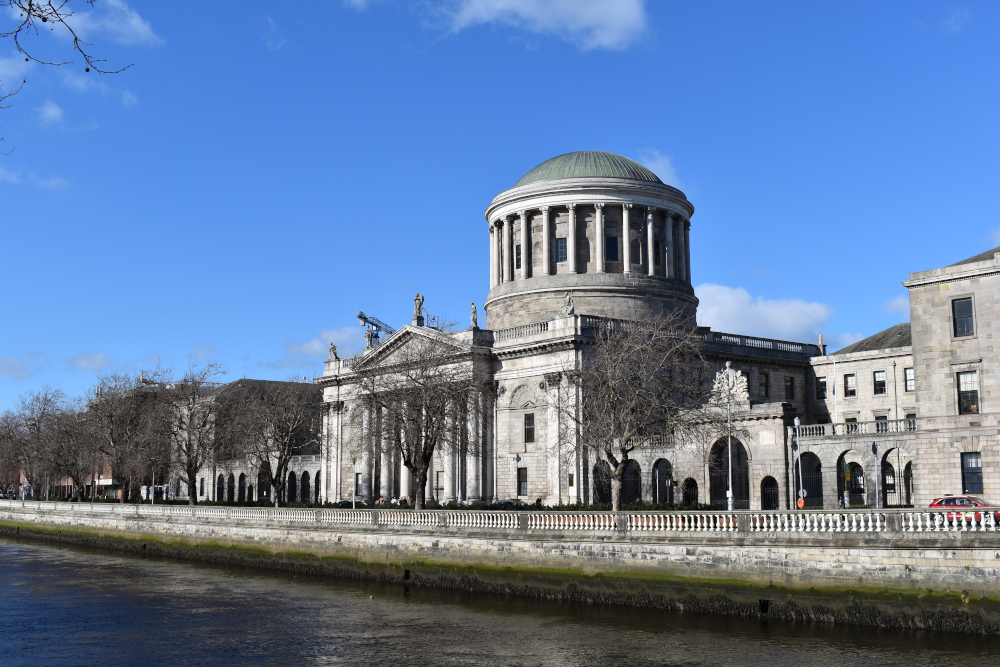
The Supreme Court has refused leave to appeal in a challenge concerning planning permissions granted for the construction of a data centre and substation in Co. Clare.

About this case:
- Citation:[2026] IESCDET 123
- Judgment:
- Court:Supreme Court
Delivering its determination and refusing leave to appeal, the Supreme Court confirmed that the applicants were not asking the Court to determine a point arising from the High Court’s judgment and that, contrary to the applicants’ contentions, the mere fact that the Coolglass Wind Farm Limited v An Coimisiún Pleanála [2026] IESC 5 principles were being applied in the context of a data centre rather than a wind farm did not render the appeal exceptional.
Background
An Coimisiún Pleanála granted Art Data Centres planning permission for the construction of data centre buildings and an associated substation in Ennis, Co. Clare.
In Doyle v An Bord Pleanála (No. 3) [2026] IEHC 156, the applicants unsuccessfully sought orders quashing the decisions to grant planning permission on the basis that An Coimisiún Pleanála had failed to provide reasons in finding that the data centre would have positive environmental impacts, failed to require mitigation of greenhouse-gas emissions from the centre, and breached its duties under s.15 of the Climate Action and Low Carbon Development Act 2015.
The applicants alleged that, having regard to the inspector’s report failing to explicitly reference s.15 of the 2015 Act, An Coimisiún Pleanála should have acted consistently with s.15 rather than simply having regard to the provision.
This contention was rejected by Mr Justice Richard Humphreys who found that the 2015 Act does not require the explicit use of the word “consistent” rather than the words “have regard” in a decision, and that it could not be said that An Coimisiún Pleanála understood its duty as being to “have regard” to s.15.
The applicants further alleged that as the obligation on An Coimisiún Pleanála to comply with Sectoral Emissions Ceilings (SECs) arises from s.15(1) of the 2015 Act, and the Climate Action Plan 2023 (CAP 2023) must be consistent with the SECs and carbon budgets, then s.15 presupposes compliance with SECs.
The High Court rejected that argument as it had not been demonstrated that the decisions fell outside the scope of lawful outcomes consistent with s.15 as per Coolglass Wind Farm Limited v An Coimisiún Pleanála [2026] IESC 5.
The applicants also contended inter alia that An Coimisiún Pleanála failed to require as a condition the conclusion by the developer of a Corporate Power Purchasing Agreement (CPPA) for purchasing renewable energy equal to the power consumption of the data centre.
In that regard, the High Court found that the permission, properly construed, required that a CPPA be concluded, as this had been provided for in the material submitted by the developer and the conditions incorporated this material.
Leave to Appeal
The High Court refused to grant a certificate for leave to appeal to the Court of Appeal to the applicants, who sought to advance three issues of alleged exceptional public importance:
- Where a developer is required to enter into a CPPA which envisages that the energy consumed by the development will be offset with new renewable energy generation, is the data centre ‘a project that is going to be powered from renewable energy’ and therefore one that An Coimisiún Pleanála could regard prima facie as not being one that in itself causes major net emissions?
- Whether An Coimisiún Pleanála’s duty under s.15 to act consistently therewith can be satisfied where its decision recites that it “had regard” to the CAP 2023 and if so, what duty is on An Coimisiún Pleanála to demonstrate its fulfilment of that obligation?
- Whether and how carbon budgets and SECs must be addressed within a s.15(1) consistency analysis at project level.
The applicants sought to make a leapfrog appeal to the Supreme Court, arguing that this course was warranted by exceptional circumstances, given that it concerned the first application of the Coolglass principles to a major emissions-generating infrastructure project.
The Supreme Court
The Supreme Court took the view that the application did not meet the constitutional threshold required for leave to be granted.
Considering that the premise of the applicants’ first ground of appeal was that the trial judge erred in how he treated the renewables that would be provided pursuant to the CPPA, the Court noted that this assumed that all parties proceeded on the basis that a CPPA was required as a condition of planning permission.
The Court pointed out that the applicants’ position was that An Coimisiún Pleanála had unlawfully failed to impose any condition requiring new and/or additional renewable generation, undermining the developer’s reliance on the CPPA in support of its claim that the data centre would have minor adverse climate effects, and that “In other words, the thrust of the challenge was the absence of the CPPA, not the treatment of the CPPA by the trial judge”,
Finding that the applicants were not asking the Court to determine a point arising from the High Court’s judgment, the Court considered the second ground of appeal – that, following Coolglass, the incorrect test was erroneously applied by An Coimisiún Pleanála in stating that it “had regard to” CAP 2023.
The Court was satisfied that the High Court, in accepting that the appropriate test was one of consistency, properly construed the decision and the inspector’s report as a whole, applied well-established principles of interpretation, and found there had been substantive engagement with the consistency test.
Finding that no issue of general public importance arose in the absence of a dispute about the appropriate test or the approach to interpretation, the court considered the third ground of appeal centred on “whether and how carbon budgets and sectoral emissions ceilings, as referenced in CAP 2023 and integral to national climate governance, must be addressed within a Section 15(1) consistency analysis at project level”.
Having regard to the findings of the High Court, inter alia that carbon budgets and SECs were not included in s.15(1), that the basis of the alleged obligation under CAP 2023 was not pleaded and that the applicants had not demonstrated that the decision fell outside the lawful spectrum of decisions as per Coolglass, the Supreme Court recognised that the applicants had not argued that these findings were erroneous.
Highlighting that instead, the applicants sought to step away from the facts of the case to ask an abstract question, the Court explained that “An applicant in judicial review proceedings is not entitled to ask the court to opine on an abstract question, untethered to the exercise carried out by the Commission in granting permission. Still less are they entitled to ask an appellate court to answer an abstract question without reference to the findings of the lower court.”
Having regard to the applicant’s contention that exceptionality arose where the case involved the application of the Coolglass principles to a data centre as opposed to a wind farm, the Court opined, “the mere fact that the Coolglass principles are being applied in a different factual context does not render the appeal exceptional.”
Conclusion
Accordingly, the Supreme Court refused to grant leave to bring a leapfrog appeal.
Doyle & Ors v An Coimisiún Pleanála & Ors [2026] IESCDET 123

Share this article:

Subscribe to our newsletter to not miss articles like this one:
 SUBSCRIBE

