





Written by:

Gillian O'Hanlon BL
Case Reporter
Supreme Court: Historical sexual abuse action to proceed
 Reading time: 6 minutes
Written by:
Gillian O'Hanlon BL
Case Reporter
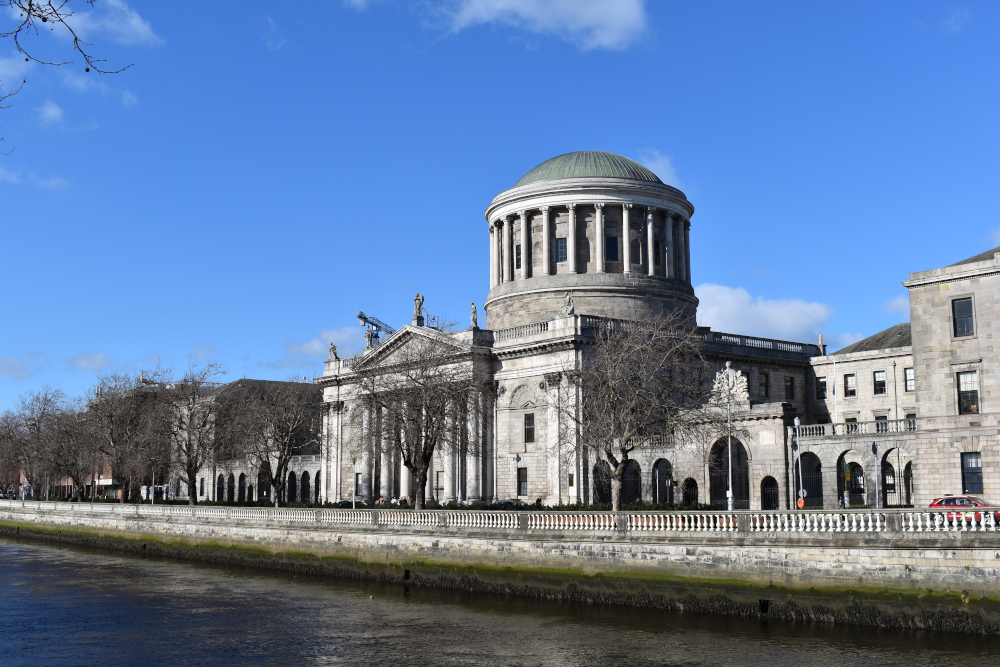
The Supreme Court has determined that a man’s civil action in respect of alleged sexual abuse by his father in the 1980s should not have been dismissed by the High Court.
Delivering judgment for the Supreme Court, Mr Justice Brian Murray opined: “This case cannot at this point be dismissed in limine because it cannot be said now that it is sufficiently clear that no proper trial of the plaintiff’s claim can be conducted.”

About this case:
- Citation:[2026] IESC 37
- Judgment:
- Court:Supreme Court
- Judge:Mr Justice Brian Murray
Background
In September 2022, the plaintiff issued proceedings seeking damages for injuries suffered by him as a result of an alleged sexual assault perpetrated by his father in 1981, when the plaintiff was approximately 15.
The plaintiff’s father was 89 at the time of the commencement of the action and was suffering from serious cognitive impairment.
The father’s guardian ad litem issued a motion to dismiss the proceedings in circumstances where he was unable to give evidence or instructions and was prejudiced in his defence by reason of the passage of time, as two persons who might have given relevant evidence had passed away.
The plaintiff alleged that as the alleged assault caused him to suffer psychological trauma which impaired him to the extent that he could not make a reasoned decision to bring the proceedings any earlier than he did, the lapse of time was caused by his father and the defendants should not be able to rely on the court’s power to strike out for delay.
The High Court rejected the plaintiff’s argument and dismissed the proceedings, a decision which was appealed to the Court of Appeal. Following oral argument before the Court of Appeal, the plaintiff’s father passed away and the proceedings were reconstituted by the substitution of two representatives of his estate as defendants to the action.
The Court of Appeal ultimately reversed the decision of the High Court.
The defendants were granted leave to appeal to the Supreme Court, which considered that the application raised issues as to defendant culpability for delay in the assessment of such a motion, as well as the potential relationship between the power to dismiss for delay and the relevant provisions of the Statute of Limitations 1957.
The Supreme Court
Having considered the parties’ submissions and the relevant legal principles, Mr Justice Murray considered that the law in this area has evolved significantly since it was first suggested in O’ Domhnaill v Merrick [1984] IR 151 over 40 years ago.
The judge explained that where a stateable claim is brought within the relevant limitation period, “the presumption must be that the plaintiff is entitled to bring their case to trial, and they will not usually be acting ‘culpably’ when they institute legal proceedings near the end of the applicable limitation period”.
However, the court pointed out that a plaintiff who brings their claim within time may have it dismissed if they should fail to prosecute the action or if the maintenance of the action is an abuse of the court’s processes, particularly where a plaintiff engages in a lengthy and intentional delay designed to improperly obtain a forensic advantage to the expense of the defendant.
Mr Justice Murray considered that aside from those two situations, the only power to dismiss in limine stateable proceedings which have been instituted within time arises where it is established that as a result of the effluxion of a substantial period since the alleged wrong, the evidence available to the defendant “has been so diminished that no true trial on the merits is capable of being conducted.”
The judge found that the power of a court to dismiss an action on that basis is an exceptional one, “not merely as to the extreme circumstances that would have to exist before this could be said of a plaintiff’s action, but also to the extent that, generally, claims to this effect should be determined by the trial judge in the light of all of the evidence and having regard to the extensive powers enjoyed by a judge to guard against any unfairness in the action they hear”.
In those circumstances, the Court outlined that such an O’ Domhnaill application should only be acceded to where “the court has no doubt but that based on the evidence before it, a trial judge could only conclude that no true trial on the merits is capable of being conducted, and where the court is satisfied that nothing is likely to occur between the hearing of the application and the trial that might change the answer to that question”.
Mr Justice Murray reasoned that because the O’ Domhnaill power intervenes only exceptionally to protect the integrity of the civil trial as envisaged under the Constitution, the power “operates independently of ‘fault’ of either party” and emphasised that it is not the law that a defendant is precluded from seeking dismissal where the wrong alleged against them prevented the plaintiff from suing earlier.
Highlighting that this “excision of fault” is justified by the demands of the administration of justice, Mr Justice Murray opined that, in this case, it could not be said that this was necessarily a case in which it would not be possible to conduct a constitutionally acceptable trial where the defendants had been aware of the details of the plaintiff’s claims for over 20 years, where this was a case in which it was possible that the plaintiff could adduce admissible evidence of admissions made by the deceased to at least one of his siblings, and where it would be particularly dangerous to out-rule at this point the prospect that other evidence “will emerge that significantly changes the shape of any ultimate trial”.
Reiterating that a trial court has extensive powers enabling it to ensure that a defendant who is disadvantaged by a significant lapse of time since the events complained of will not suffer an unjust result, the Court opined that if a trial court ultimately decides that it cannot justly decide this case due to the degree of prejudice facing the defendants as a result of the passage of time, the trial judge can dismiss the claim on that ground alone if at the hearing the case, it transpires that the only admissible evidence of the alleged wrongdoing is the plaintiff’s own assertions as to what occurred.
Conclusion
Accordingly, the Supreme Court dismissed the appeal.
Beatty v Beatty & Ors [2026] IESC 37

Share this article:

Subscribe to our newsletter to not miss articles like this one:
 SUBSCRIBE

