


Written by:

Gillian O'Hanlon BL
Case Reporter
Supreme Court outlines principles on delay as a special circumstance
 Reading time: 7 minutes
Written by:
Gillian O'Hanlon BL
Case Reporter
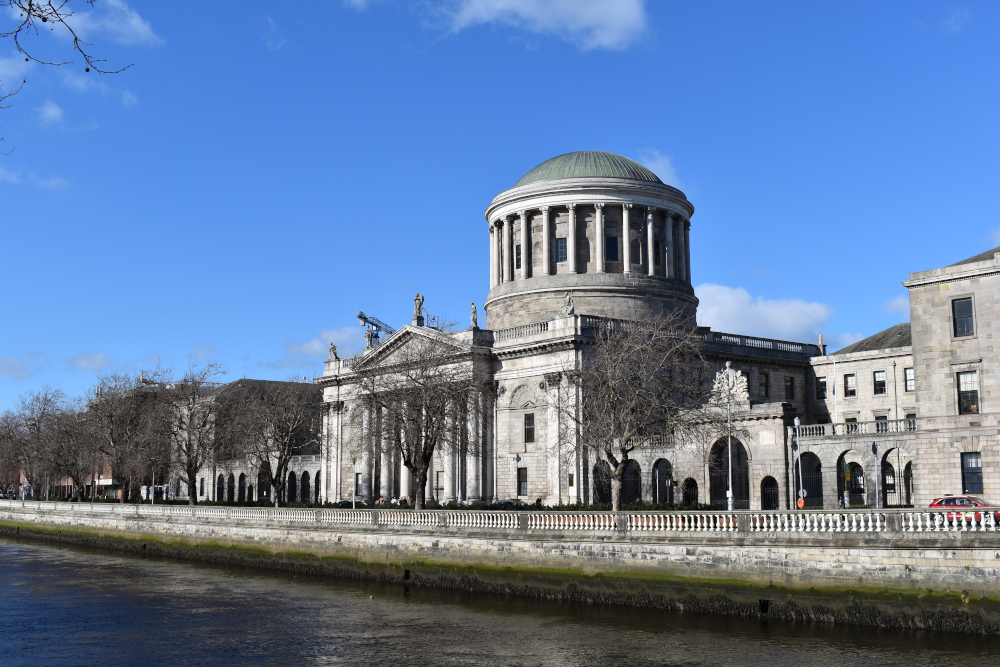
The Supreme Court has set out principles on delay as a special circumstance in the context of security for costs applications.

About this case:
- Citation:[2026] IESC 32
- Judgment:
- Court:Supreme Court
- Judge:Ms Justice Aileen Donnelly
Delivering judgment for the Supreme Court, Ms Justice Aileen Donnelly opined “the facts lead to one result. The length of the relevant delay here is truly extraordinary. It is a sufficient countervailing factor which justifies refusal of the application for security for costs.”
Background
The appellants wished to set up a private hospital in Limerick and engaged in negotiations with the respondent to have the intended facility approved for insurance purposes. The respondent refused to provide cover.
The appellants commenced proceedings on 26 May 2015 seeking declaratory relief and damages arising from the respondent’s decision, based on an alleged abuse of a dominant position by the respondent in violation of competition law.
In correspondence beginning on 28 May 2015, the respondent sought the provision of security for its costs based upon an examination of the appellant company’s accounts. On 23 October 2015, the respondent’s solicitors warned that if security for costs was not provided voluntarily, a motion would issue.
In the interim, the respondent obtained an order compelling replies from the appellants and delivered its defence in June 2018. Following the delivery of the defence, the respondent issued a further motion in November 2018 to exclude the evidence of the appellants’ expert witness on the basis of a conflict of interest, which application was successful on appeal to the Court of Appeal and to the Supreme Court.
The respondent’s security for costs motion ultimately issued against the second appellant almost 8 years later on 28 June 2023, though both appellants defended the motion.
The High Court ordered that the second appellant provide security for costs in the sum of €1,790,500 in favour of the respondent, notwithstanding the “special circumstances” raised by the appellants which included the delay on part of the respondent in bringing the application.
The appellants unsuccessfully appealed to the Court of Appeal.
On appeal to the Supreme Court, the main issue was whether, in seeking to rely on the respondent’s delay, the appellants were entitled to rely on the length of the delay per se and/or presumed or inferred prejudice, or if they must demonstrate actual prejudice.
If the latter, a derivative issue was whether the appellants had demonstrated actual prejudice before the High Court.
A subsidiary issue was whether the appellants were entitled to argue that there was no requirement for prejudice at all, having regard to inter alia the case of Kirwan v Connors [2025] IESC 21.
The Supreme Court
Having reviewed the applicable legal position, Ms Justice Donnelly set out a number of principles concerning delay as a special circumstance:
a) “Security for costs applications involve a court attempting to do justice at a time when it will not be possible to form any strong view as to the merits or otherwise of the claim. That analysis is also relevant to considerations of special circumstances.
b) The rationale of delay as a special circumstance is based upon the entitlement of a party to be able to include in its decision whether to progress the proceedings the fact that it will have to put up security from as early a time as is reasonably practicable.
c) The test is not whether the plaintiff would have progressed the action but rather whether the plaintiff ought to have been entitled to make that decision in light of full information.
d) Apart from the private interests of the parties, assessment of delay also incorporates the public interest in ensuring that in the administration of justice the most efficient and effective use is made of limited court resources. The courts are not indifferent to the consequences of legal delays and litigation inefficiency. Having cases linger unnecessarily in court lists takes up time in the hearing of what might have been unnecessary applications if security for costs applications were made earlier. Such late applications delay the ultimate resolution of the proceedings on the merits. These are all factors for consideration as to where the balance of justice may lie.
e) The length of the delay is relevant in the consideration of the overall balance of justice.
f) In general, prejudice (in the sense of detriment, loss, damage etc.) ought usually to be proven by the plaintiff but the nature of the evidence required will depend on the facts of the case. The court is entitled to look at all the evidence, such as the history of the proceedings, in making its assessment. The greater the delay, the less the weight of prejudice may be required in order to tip the balance.
g) Where the delay is significant and is in whole or in part unexplained the court may view the balance of justice as having shifted in favour of refusing the application in the absence of a pressing exigency of justice. In such a situation, prejudice is to be inferred from an especially lengthy delay and the delay of itself shifts the balance.
h) There is an obligation to apply for the discretionary order for security for costs as soon as reasonably possible, a period usually measured in terms of weeks or possibly months. Where the delay is measured in the region of six months to one year and any significant part of that delay is unexplained, that may be sufficient to tip the balance against ordering security even in the absence of specific prejudice; the court will have to weigh all matters in the balance. A delay of over a year is so significant in the context of a discretionary remedy that where a significant part is unexplained the balance of justice shifts to refusing the order in the absence of a pressing exigency of justice.”
Applying those principles to the facts, the Court determined that the delay of eight years from the respondent’s first indication that it wanted security for costs to the issuing of the motion was “truly extraordinary”.
Ms Justice Donnelly remarked that even if one took the delay as being five years from the filing of the defence, that delay was also inordinate.
The judge continued: “The respondent must be taken to have had sufficient knowledge of the relevant facts when they first made this demand in the context of the litigation. Nowhere has it been explained why an eight year delay was permitted to take place.”
The Court explained that the delay led to the consumption of significant judicial resources through the hearing of the respondent’s expert evidence motion and subsequent appeals, and that: “Even without such specific court time being taken up, the resolution of the proceedings, in the sense of the possibility of a stay or in the sense of the final decision on the merits, has been delayed for a length of time that per se has an impact on the efficient administration of justice.”
The court considered that what was relevant was that the respondent chose to pursue that motion in a situation where it likely could have prevented the progression of the proceedings if it had chosen to bring its motion for security for costs.
Highlighting that the type of delay that occurred was in the context of activity in the proceedings, “nonetheless the impact on the administration of justice is real.”
With regard to the appellants’ position that the delay caused them to lose the opportunity to make an informed decision as to whether to inter alia defend the respondent’s expert evidence motion and to pursue the appeals therefrom, Ms Justice Donnelly found that even if the delay had not been so lengthy, there was sufficient prejudice to warrant refusal of security for costs where costs orders had been made against the appellant company.
Conclusion
Accordingly, the Supreme Court determined that the length of the delay and the absence of any exigency of justice was sufficient to allow the appeal and to set aside the order requiring that security for costs be provided.
Sweeney & Anor v The Voluntary Health Insurance Board [2026] IESC 32

Share this article:

Subscribe to our newsletter to not miss articles like this one:
 SUBSCRIBE