




Written by:

Gillian O'Hanlon BL
Case Reporter
Supreme Court: Bank of Ireland prevails in interest rate variation clause challenge
 Reading time: 6 minutes
Written by:
Gillian O'Hanlon BL
Case Reporter
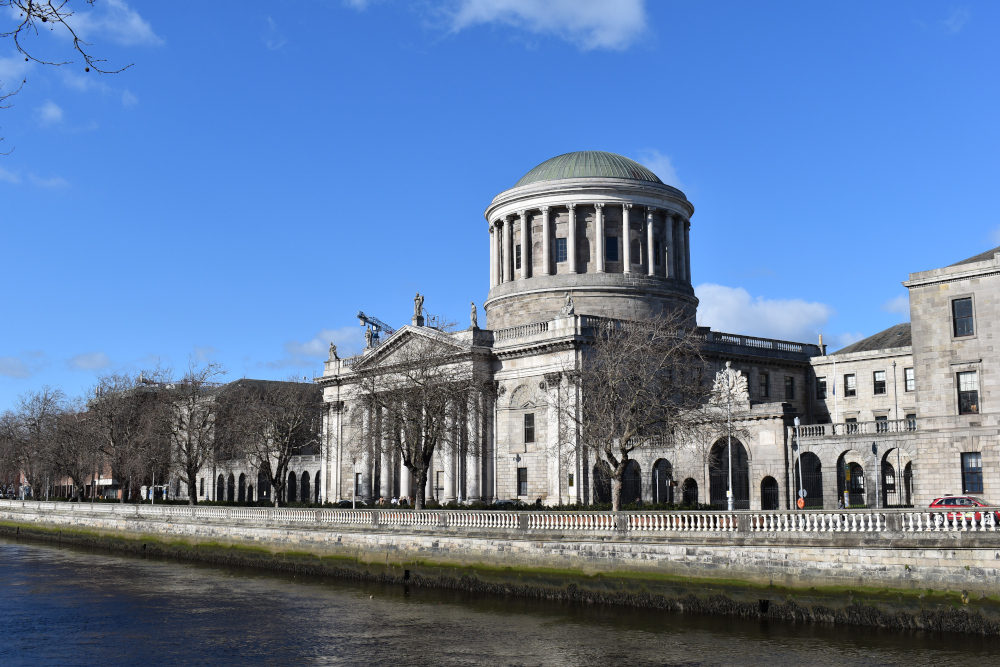
The Supreme Court has determined that an interest rate variation clause contained within Bank of Ireland’s commercial loan terms and conditions gave the bank the sweeping power to change the interest reference rate from EURIBOR to BCOF unilaterally.

About this case:
- Citation:[2026] IESC 44
- Judgment:
- Court:Supreme Court
- Judge:Mr Justice Gerard Hogan
Delivering judgment for the Supreme Court, Mr Justice Gerard Hogan outlined that the problem for the disappointed borrowers “was that the language of Clause 5 did in fact give the Bank a wide power to alter the method of calculating the interest rate and that power was not simply confined to instances where market conventions had changed or other similar or analogous situations.”
Background
In November 2009, the appellants borrowed €12.2m and €2.8m from respondent bank for the purpose of developing an industrial site at Rathcoole, Co. Dublin.
Clause 5 of the bank’s standard terms and conditions for commercial loan agreements stated that “The method for calculating interest and the interest rate may be changed in respect of all facilities from time to time at the Bank’s absolute discretion, whether to take account of a change in prevailing market conventions in Ireland or otherwise. In the event of such change occurring during the continuance of this facility, the Bank will give to the Borrower one month’s prior notice that such change is to take place with effect from the date of expiry of such notice.”
In October 2011, a change in the method of calculating the applicable interest rate on the loans was communicated to the appellants, to which they objected.
The loans were repaid and the relevant mortgage was redeemed in 2017. Thereafter, the appellants issued proceedings claiming that the 2011 change in interest rate amounted to a breach of contract which resulted in them having paid an additional €738,440.
The appellants contended that the bank wrongly changed the method of calculating interest from that of the EURIBOR rate to the novel Bank Cost of Funds (BCOF) rate, thereby altering the fixed money market rate nature of the loan and materially altering the structure of the facility.
The appellants further argued that Clause 5 only permitted changes to the method for calculating interest and the interest rate, that changing the reference rate of the fixed money market mortgage was not such a change, and that only interest rate changes taking account of a change in prevailing market conventions in Ireland or in the Eurozone lending market were permissible.
The bank denied that there was an agreement that EURIBOR would be the reference rate for the life of the mortgage, alleging that it was rational for the bank to give itself discretion to change the method of interest rate calculation in the event of changing circumstances.
The appellants, having been unsuccessful before the High Court and Court of Appeal, were granted leave to appeal to the Supreme Court on the issue of the construction of the interest variation clause and whether there were limits on the discretion of the bank to alter those rates.
The Supreme Court
Acknowledging that Clause 5 appeared to give the bank “sweeping powers to unilaterally negate and override key provisions of the contractual agreement” and having regard to examples of the courts’ approach to such provisions in various contexts, Mr Justice Hogan explained, “where a standard-form contract confers a unilateral power upon a dominant contracting party to alter a fundamental feature of the bargain, the court should be slow to infer the existence of such a power from language which is doubtful or ambiguous.”
Noting that it had not been suggested that the bank had acted unreasonably, capriciously or irrationally when it introduced the disputed interest changes, the judge considered the expert evidence to the effect that the bank was, at the time, effectively locked out of the EURIBOR short term borrowing market in the midst of the economic crisis.
Finding that the real question was whether the bank was contractually entitled to alter the terms of the prevailing interest rate, the court had regard to the appellants’ arguments that the loan agreement distinguished between the calculation of interest and the interest rate, on the one hand, and the selection of the interest rate components on the other.
The appellants’ position was that while the bank had the power to change the former under Clause 5, it could not unilaterally change the latter and that the “absolute discretion” referred to in Clause 5 was conditioned by the words “whether to take account of a change in prevailing market conventions in Ireland or otherwise.”
Mr Justice Hogan was unpersuaded that the “absolute discretion” referred to was in some way cut down or otherwise circumscribed by the reference to “market conventions” in the second part of the clause, noting the parties’ agreement that there had been no change in the prevailing market conventions and that if this reference confined the bank’s discretion in the manner contended for, the change would have constituted a breach of contract.
The Court confirmed that words “whether to take account of” and “or otherwise” were key, noting that “whether” was used as a conjunction which gives an example of events which would be within the scope of the bank’s absolute discretion to effect a change, and that the use of the term “or otherwise”, a form of adverbial parenthesis governing the verb “to change”, “makes it perfectly clear that this subordinate clause should not be regarded as limiting the Bank’s discretion.”
Mr Justice Hogan reiterated that the reference to changes in market conventions was confirmatory and was inserted for greater certainty and for illustrative purposes, pointing to Investors Compensation Scheme Ltd. v. West Bromwich Building Society [1997] UKHL 28, [1998] 1 WLR 896 by way of example.
Accepting that the Court was obliged to construe Clause 5 strictly in light of its sweeping and unilateral character, the Court rejected the contention that the discretion conferred by Clause 5 did not extend to changing a key component of the formula for calculating the interest rate, finding that “on any view, changing one of the component elements of the interest formula directly comes within the scope of the words “method for calculating interest” which appear in the opening line of that paragraph of Clause 5.”
The judge addressed the principle of contra proferentem, finding that it was not engaged here as the clause was not ultimately capable of bearing two alternate interpretations.
In the circumstances, the Court determined that Clause 5 did in fact give the bank a wide power to alter the method of calculating the interest rate which was not confined to instances where market conventions had changed or other analogous situations, and accordingly, the bank had the power to re-structure the interest rate so as to move to the BCOF rate.
Conclusion
Accordingly, the Supreme Court dismissed the appeal.
Harte & Ors v The Governor and Company of the Bank of Ireland [2026] IESC 44

Share this article:

Subscribe to our newsletter to not miss articles like this one:
 SUBSCRIBE

