

Written by:

Gillian O'Hanlon BL
Case Reporter
Supreme Court: Application to appoint decision-making representative to be re-heard
 Reading time: 8 minutes
Written by:
Gillian O'Hanlon BL
Case Reporter
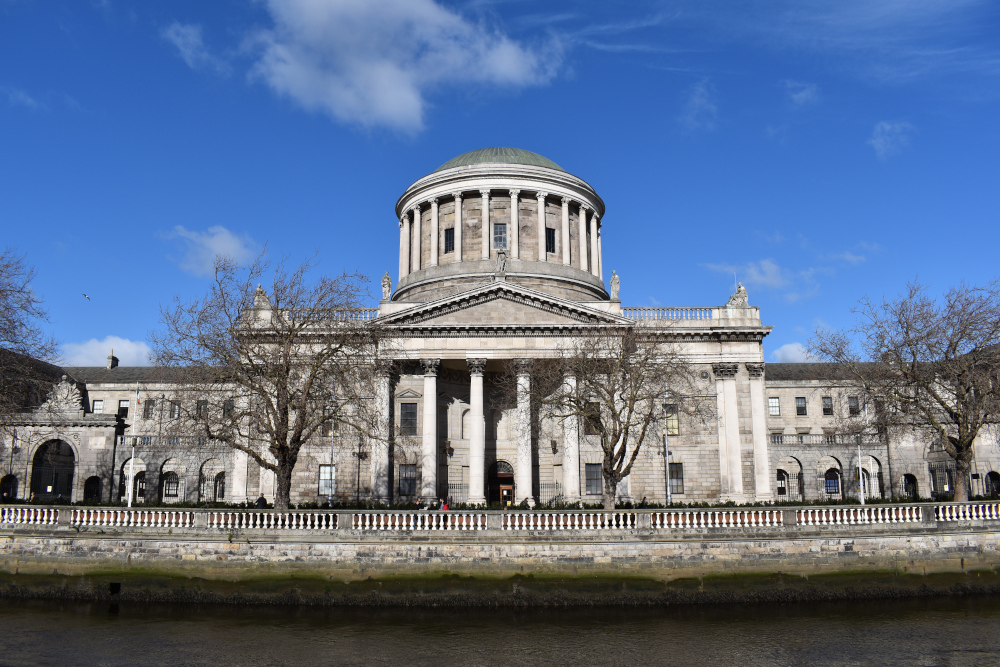
The Supreme Court has determined that the High Court misapplied the principles in the Assisted Decision-Making (Capacity) Act 2015 in appointing a decision-making representative to a young woman.

About this case:
- Citation:[2026] IESC 46
- Judgment:
- Court:Supreme Court
- Judge:Ms Justice Niamh Hyland
Delivering the leading judgment for the Supreme Court in October, Ms Justice Niamh Hyland opined “the deficiencies identified in this case arose from a failure properly to implement the statutory obligations imposed by the Act, not from any inherent defect in the representational model itself”.
Background
Ava, a woman born in 1996, suffered with schizophrenia, autism and a learning disability.
She was admitted to the Galway Adult Acute Mental Health Unit in 2017 due to various mental health difficulties and remained there until May 2022. From May 2022 onwards, Ava was moved to a residential care centre in Co. Meath.
In October 2022, Ava was admitted to wardship over the objections of her half-sister, being the appellant, and her mother. Ava’s mother objected to the placement in Co. Meath based on its distance from Co. Galway, where she lived.
In November 2024, the respondent wrote to Ava notifying her inter alia that her wardship was coming to an end and in January 2026, a motion issued seeking Ava’s discharge from her wardship.
Prior to the hearing, the appellant argued that separate independent representation was necessary to ensure that Ava had “a voice” in the proceedings. The trial judge refused the application, being satisfied that Ava’s voice and interests were sufficiently protected and being satisfied that she was already represented under an existing legal aid certificate granted to Mr. A acting on behalf of the General Solicitor, her committee.
The High Court acceded to the application for Ava’s discharge and appointed a Decision Making Representative (DMR) from the panel maintained by the Decision Support Service (DSS) in respect of her personal welfare, property and affairs, contrary to the wishes of the appellant.
The appellant sought leave to appeal directly to the Supreme Court, contending that Ava lacked independent legal representation during the discharge application as inter alia Mr A’s independence was compromised where he was acting for both Ava and her committee.
In this regard, the appellant advanced various criticisms of Mr A, including his request of the High Court to appoint a DMR from the DSS panel, where that decision was consistent only with the views of the General Solicitor and not with Ava, who wished for her father to act as her DMR.
The appellant further alleged that the trial judge failed to observe the requirements of the Assisted Decision-Making (Capacity) Act 2015 when appointing the DMR and made a declaration extending beyond what was necessary and proportionate, broadly covering many types of decisions without any evidential basis for concluding that intervention was necessary in all areas of Ava’s life and overly restricting her autonomy.
The Supreme Court acknowledged that the interpretation of the 2015 Act has potentially far-reaching consequences for wards in the process of and awaiting discharge from wardship, giving the appeal priority in view of the absolute deadline of October 2027 by which all declarations for discharge must be made pursuant to the Assisted Decision-Making (Capacity) (Amendment) Act 2026.
The Supreme Court
Examining the first ground of appeal concerning Ava’s legal representation, Ms Justice Hyland confirmed that for the purposes of her discharge from wardship, Ava had a legal aid certificate in her name entitling her to legal representation, which representation had to be provided via her committee as wards of courts are considered to lack capacity in all areas, including the capacity to instruct a solicitor directly.
In those circumstances, and having regard to the fact that the ward and committee are not separate parties to the litigation and do not have separate interests, separate legal representation was neither appropriate nor possible.
The judge was satisfied, however, that Ava’s committee was obliged to act in her interests and to instruct the solicitor representing her in a manner such as to ensure that the court could apply the principles in the 2015 Act, which principles included inter alia minimising intervention in the ward’s life, acknowledging the impact of intervention on their rights, promoting their participation, and giving effect, in so far as is practicable, to their past and present will and preferences and the desirability of preserving existing relationships within the family.
The Court explained that where there is a difference of opinion between the ward and the committee as to the decisions the court should take, the committee “must instruct the solicitor to gather evidence relevant to both positions and present it to the court” and the committee’s view “should not be given additional weight by the court simply because it emanates from the committee.”
Turning to the immediate case, Ms Justice Hyland considered that Ava’s committee had failed to instruct Mr A to explore the interest expressed by her family members in becoming her DMR, did not ensure that he gave adequate weight to her will and preferences, and incorrectly advocated for a DSS panel DMR without adequately considering the preservation of her family relationships.
The judge further considered that Mr A had mistakenly applied the test for assessing capacity when seeking to ascertain Ava’s will and preferences, in circumstances where the 2015 Act makes it clear that capacity is separate from will and preference.
Moving to consider the trial judge’s decision, the Court determined that the trial judge failed to reflect the statutory context by omitting any reference to Ava’s will and preferences or the desirability of preserving her familial relationships when appointing the DMR, failed to set out that a DSS panel DMR should only be appointed in the absence of another suitable person, and failed to consider appointing different DMRs for different decisions.
Ms Justice Hyland emphasised that the failures of Mr A to fully advise the committee on the requirements of the 2015 Act and the committee’s failure to properly instruct the solicitor arose solely from a misunderstanding of the changes effected by the new Act, rather than any want of care or lack of commitment to Ava’s interests, and that the court in turn failed to observe its obligations “presumably at least in part because of the approach of the committee and the solicitor.”
Concluding that “the deficiencies identified in this case arose from a failure properly to implement the statutory obligations imposed by the Act, not from any inherent defect in the representational model itself”, Ms Justice Hyland concluded that the High Court’s order should be set aside and the matter remitted to the High Court for re-hearing.
As to the appellant’s second ground of appeal concerning the range of decisions which the DMR could make on Ava’s behalf, the judge explained that the 2015 Act, including s.3 and s.8 thereof, required a “least intervention” approach in conferring decision-making power on a DMR, meaning that a DMR “should only be appointed to make decisions in areas where the person lacks capacity to make those decisions” and that the provisions “envisage a close examination of potential decisions and the person’s capacity to make same, as opposed to a blanket approach to decision-making.”
In that regard, the Court cautioned that medical practitioners carrying out a functional capacity analysis should consider “potential of “pools of capacity” within larger pools of incapacity, i.e. where a person has capacity to manage small amounts of money but not larger amounts.”
Noting that the court should take a similar approach informed by the principle of least intervention, Ms Justice Hyland warned that “When conferring decision-making powers on a DMR in the Order, a court should be mindful of the danger of being either under- or over-inclusive.”
Highlighting that in the case before the Court, the appellant adduced no medical evidence identifying a deficit in the medical practitioner’s analysis or in the court’s decision to follow the medical practitioner’s conclusions, Ms Justice Hyland refused the second ground of appeal.
Conclusion
Accordingly the Supreme Court set aside the decision under appeal and remitted the matter back to the High Court for a fresh decision.
AN v The General Solicitor for Minors and Wards of Courts [2026] IESC 46

Share this article:

Subscribe to our newsletter to not miss articles like this one:
 SUBSCRIBE