



Written by:

Gillian O'Hanlon BL
Case Reporter
Supreme Court: Appeal of driver of ‘getaway car’ in Regency Hotel attack dismissed
 Reading time: 6 minutes
Written by:
Gillian O'Hanlon BL
Case Reporter
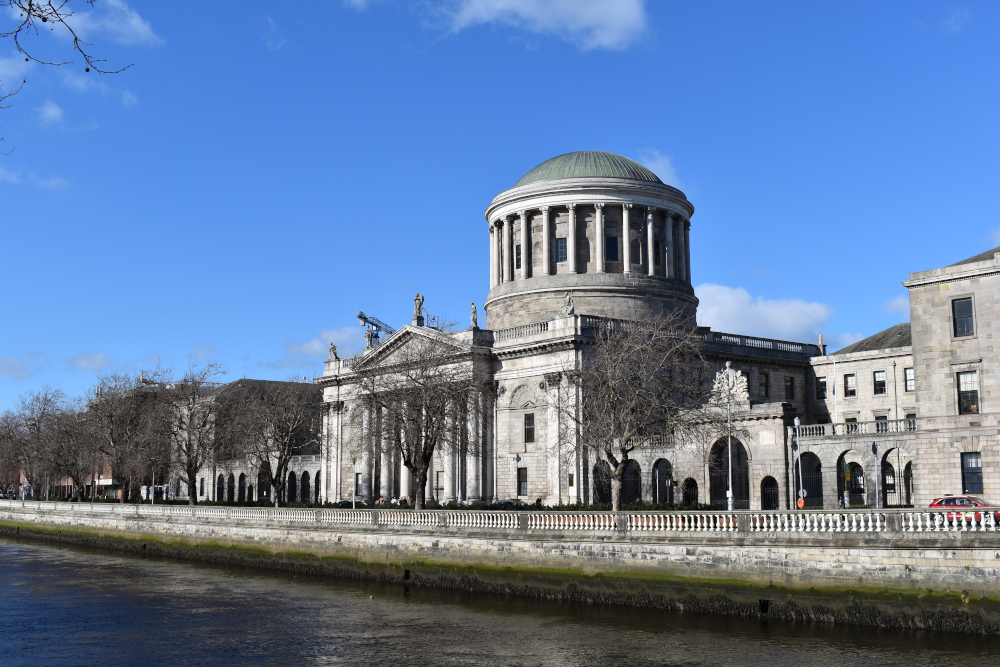
The Supreme Court has dismissed the appeal of Jason Bonney, a driver in a convoy who ferried gunmen from the Regency Hotel attack, finding that he could not raise points in relation to the admissibility of rebuttal evidence for the first time on appeal.

About this case:
- Citation:[2026] IESC 38
- Judgment:
- Court:Supreme Court
- Judge:Ms Justice Niamh Hyland
Delivering judgment for the Supreme Court, Ms Justice Niamh Hyland opined: “To allow matters to proceed without demur and then seek to complain on appeal that the trial was unfair undermined the SCC’s ability to address and, if necessary, remedy the issue when it arose. To take this approach in the context of a 53-day trial, without any reason given for the failure to raise the point, makes the application even more unmeritorious.”
Background
In February 2016, a gangland shooting took place at the Regency Hotel in Dublin resulting in the death of one Mr David Byrne.
The gunmen fled the scene to St Vincent’s GAA park and were removed by a convoy of six vehicles, including a black BMW X5.
The prosecution alleged that the appellant, Jason Bonney, as the driver of that vehicle, committed the offence of facilitating the commission of a serious offence by a criminal organisation or any of its members by providing access to a motor vehicle, contrary to s.72 of the Criminal Justice Act 2006.
At trial before the Special Criminal Court (SCC), the appellant’s primary defence was that he was not the driver of the BMW at the relevant times and he called two witnesses to attest to this.
The appellant’s first witness, Ms McGlynn, testified inter alia that the appellant and his father Willie Bonney were both present at her mother’s house at Newbrook Avenue on the day of the shooting, with Willie Bonney leaving in the BMW and the appellant leaving to another house on Newbrook Avenue. Ms McGlynn suggested that the appellant had left his own vehicle blocking her mother’s driveway and had come out to move it between 14.45 – 14.50.
The second witness, Mr Tyrell, suggested that he had seen the BMW being driven by Willie Bonnie shortly after the shooting and that he had never seen the appellant use the jeep.
The prosecution observed that no alibi notice had been served prior to Mr Tyrell being called as a witness, a matter which the SCC queried with defence counsel.
Thereafter, the prosecution were permitted to call evidence from Willie Bonney’s son in law, Mr Byrne, pursuant to s.20(4) of the Criminal Justice Act 1984 which dictates the timing of evidence rebutting an alibi.
Mr Byrne gave evidence that the jeep which Willie Bonney drove prior to his death in 2019 was a black Lexus, that he had visited Willie Bonney with his wife at around 12pm on the relevant date and had stayed there all afternoon, without Willie Bonney leaving at any stage.
The defence took no issue with the evidence of Mr Byrne being inadmissible or in appropriate.
On 17 April 2023, the SCC convicted the appellant and on 12 May 2023, he was sentenced to 8.5 years’ imprisonment.
The appellant appealed his conviction and sentence to the Court of Appeal.
Court of Appeal
Before the Court of Appeal, the appellant alleged inter alia that the SCC erred in permitting the prosecution to call Mr Byrne to give rebuttal evidence in response to the evidence of Ms McGlynn and Mr Tyrell and that the correct interpretation of s.20(4) of the 1984 Act, considered in People (DPP) v. O’Sullivan [2018] IESC 15, supported that position.
The appellant further argued that Mr Tyrell’s evidence was not “evidence in support of an alibi” within the meaning of s.20(8) of the 1984 Act.
The DPP contended that the appellant had not raised these issues at trial and should not be permitted to rely on them on appeal.
While the Court of Appeal held that those new grounds were not open to the appellant, having considered the points raised, the court determined that the SCC had been entitled to exercise its discretion to allow the prosecution to call Mr Byrne’s evidence and that Mr Tyrell’s evidence constituted alibi evidence.
His appeal having been dismissed, the appellant was granted leave to appeal to the Supreme Court on issues including the correct interpretation of “evidence in support of an alibi” as referenced in s.20(8) of the 1984 Act, and the extent to which the appellant was entitled to raise those issues for the first time on appeal, having regard to People (DPP) v Cronin (No.2) [2006] 4 IR 329.
The Supreme Court
Ms Justice Hyland did not accept that the alibi evidence point had been partially raised by the at trial having regard to the nature of the exchange between defence counsel and the SCC, finding that no other reason had been given for the failure to raise those points at trial.
In this regard, the judge explained that the alleged error on part of the SCC in allowing a witness to give evidence was one which required resolution at trial and “To allow matters to proceed without demur and then seek to complain on appeal that the trial was unfair undermined the SCC’s ability to address and, if necessary, remedy the issue when it arose.”
Finding that the interests of justice did not require those points to be raised for the first time on appeal, the Court nonetheless moved on to consider the interpretation of s.20(8).
Noting that s.20(8) applies to evidence demonstrating that a person was unlikely to be present at the locus of an offence by reason of their presence at an alternative place at a particular time, Ms Justice Hyland emphasised that the section is concerned with geography and “requires evidence that a person was not at the relevant place because he was in fact at a different place.”
Having considered Mr Tyrell’s evidence, the Supreme Court was satisfied that same was limited to the whereabouts of Willie Bonney and did not touch upon the whereabouts of the appellant. In those circumstances, the evidence ought not to have been treated as evidence in support of an alibi within the meaning of s.20(8).
Notwithstanding, the Court concluded that Mr Byrne’s rebuttal evidence was properly admissible as rebuttal evidence to Ms McGlynn’s evidence, in respect of which an alibi notice had been served, and that no unfairness arose in permitting the rebuttal evidence to be given after the defence evidence.
Finally, Ms Justice Hyland highlighted that even absent the rebuttal evidence, the SCC were independently satisfied of the appellant’s guilt and had rejected the evidence of both Ms McGlynn and Mr Tyrell, meaning that had the alibi evidence point been raised at trial, it would have made no difference to the outcome.
Conclusion
Accordingly, the Supreme Court dismissed the appeal.
The People (DPP) v Bonney [2026] IESC 38

Share this article:

Subscribe to our newsletter to not miss articles like this one:
 SUBSCRIBE

