



Written by:

Gillian O'Hanlon BL
Case Reporter
NI High Court: Secretary of State’s decision prohibiting parade through Garvaghy Road upheld
 Reading time: 6 minutes
Written by:
Gillian O'Hanlon BL
Case Reporter
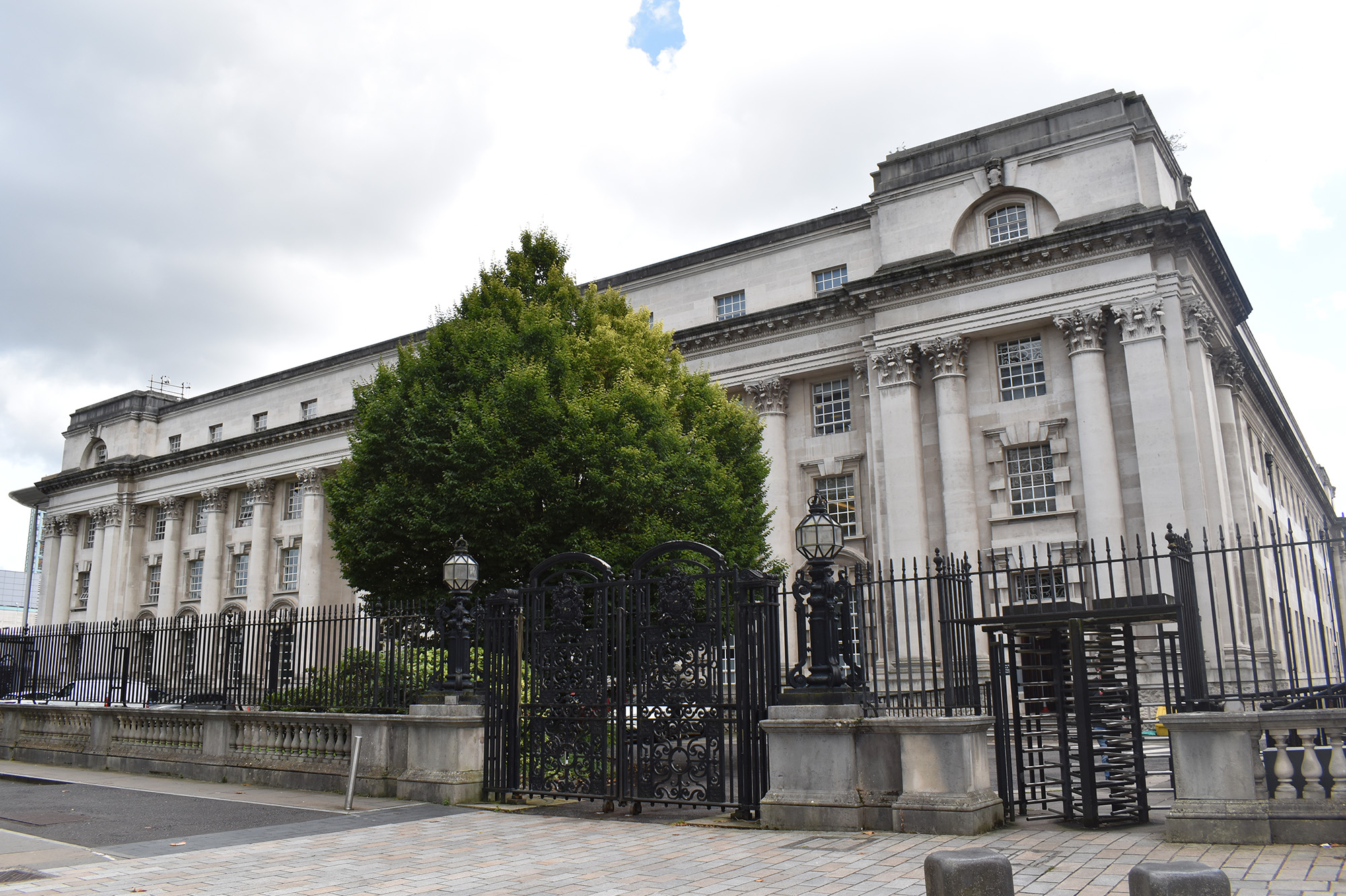
Northern Ireland’s High Court has upheld a decision of the Secretary of State for Northern Ireland prohibiting an Orange Order parade through the Garvaghy Road in Portadown, Co. Armagh.
About this case:
- Citation:[2026] NIKB 59
- Judgment:
- Court:NI High Court
- Judge:Mr Justice David Scoffield
Delivering judgment for the High Court in October, Mr Justice David Scoffield remarked, “Whatever one’s standing or strength of conviction, the law does not apply only when you agree with it or with the outcome of a particular legal process. That is one thing which the court is both entitled, and in my view duty bound, to point out in the circumstances of this case.”
Richard McConkey KC and Emma McIlveen appeared for the applicant instructed by Anderson Gillan Barr Ltd Solicitors, Philip McAteer and Gordon Anthony appeared for the first respondent instructed by the Crown Solicitor’s Office, Peter Coll KC and Terence McCleave appeared for the second respondent instructed by the Crown Solicitor’s Office, Tony McGleenan KC and Mark O’Hara appeared for the Parades Commission for Northern Ireland instructed by the Crown Solicitor’s Office, and Denise Kiley KC and Bobbie-Leigh Herdman appeared for Breandán Mac Cionnaith instructed by Phoenix Law.
Background
On 25 September 2026, the Parades Commission for Northern Ireland determined that subject to conditions, the Portadown District Loyal Orange Lodge No.1 could march down inter alia the Garvaghy Road in Portadown, Co. Armagh, on 27 September 2026.
On that date, the PSNI advised the Lodge that it was not safe to proceed with the march due to a large protest blocking the Garvaghy Road, and a lengthy stand-off between the protesters and Lodge members ensued.
No agreement could be reached between representatives of the Lodge and the Garvaghy Road Resident’s Coalition.
Having considered that all “available, lawful and proportionate” options to facilitate the procession had been exhausted, and that remaining options would have necessitated interventions carrying “an unacceptable risk of serious injury, disorder and a wider contagion across Northern Ireland”, on 9 October 2026 the Chief Constable of the PSNI applied to the Secretary of State for Northern Ireland under s.9 of the Public Processions (Northern Ireland) Act 1998 for a review of the Parade Commission’s determination.
The Chief Constable in his application expressed that “Any such major public order operation would in my view likely fail and have catastrophic long-term consequences for trust and confidence in policing, the Northern Ireland Executive and the peace process.”
That evening, the Secretary of State confirmed the determination but decided that it could not be given effect and that the proposed parade could not take place given the passage of time and significant change in the background context from that considered and anticipated by the Parades Commission at the time of the determination.
In those circumstances, the Secretary of State made an order pursuant to s.11(1) of the 1998 Act prohibiting the procession.
The applicant, a Lodge member, sought leave to apply judicial review of the decisions of the Chief Constable and the Secretary of State made on 9 October 2026. The parties agreed that the question of leave to apply for judicial review and the substantive application could be dealt with by way of a ‘rolled-up’ hearing.
The applicant advanced a number of grounds of challenge to the decisions, including alleged illegality, failure to distinguish risks arising from the parade from the risks arising from third-party obstruction, and error of law and immaterial considerations in the PSNI and Secretary of State’s assessment.
The High Court
Having considered the case, Mr Justice Scoffield considered that the applicant had been prevented by the protest from exercising his right to process along the Garvaghy Road in line with the Parades Commission’s determination, which right involved the exercise of freedom of assembly and association rights under Article 11 of the European Convention on Human Rights (ECHR).
The court set out that the costly PSNI operation, together with the Secretary of State’s efforts to negotiate a resolution designed to facilitate the parade and the ongoing criminal investigation of those who may have acted unlawfully in seeking to obstruct it, discharged the State’s positive obligations under Article 11 to ensure peaceful enjoyment of those rights.
Mr Justice Scoffield further outlined that there was nothing unlawful about the Chief Constable’s decision to apply to the Secretary of State under s.9 of the 1998 Act, where that decision was made for valid policing reasons.
The judge did not find any error of law on part of the Secretary of State in determining that it was no longer possible to give effect to the Parade Commission’s determination, and did not consider that the applicant’s ECHR rights had been violated by the refusal to amend the Commission’s determination as to date, conditions or route.
The court further explained that there was no irrationality or illegality about the way in which the Secretary of State resolved the issues before him, noting that while the rights of unlawful protesters should be given little, if any, weight, “the rights of others – incorporated within the public interest test in section 11 of the Act – were sufficient to warrant any restriction of the applicant’s rights brought about by the Secretary of State’s section 11 order in all of the circumstances of this case.”
Confirming that the powers in s.9 and s.11 of the 1998 Act are a “safety valve” for circumstances where the Secretary of State disagrees with the Commission’s determination or where matters develop such that it is in the public interest to reconsider the determination, Mr Justice Scoffield concluded that the Secretary of State’s decision was lawful and within the margin of discretion afforded to him.
Mr Justice Scoffield remarked, “Those opposed to the procession may well point to the Lodge’s decision to process along a route where they knew they were neither welcome nor wanted. There may be force in that point: the existence of a right does not require its exercise. But the Convention case-law is clear that it protects freedoms of assembly and expression which others may find offensive or unwelcome.”
The judge continued, “As a result of the events of the following weeks, significant concerns have now been expressed about respect for the rule of law in this jurisdiction. That includes amongst some elected representatives, by reason of their participation in the unnotified protest.”
The court concluded, “It is a lesson for those on all sides of the debate in our society, which at least for some remains (as the subject matter of this case demonstrates) deeply divided along traditional faultlines. Such divisions enhance, rather than undermine, the need for respect both for the rule of law and for the decisions of the legal mechanisms established in our democracy to resolve deep-seated disputes.”
Conclusion
Accordingly, the High Court granted leave to apply for judicial review and then refused the substantive application.
In the matter of an application by Alan Hynes for Judicial Review [2026] NIKB 59

Share this article:

Subscribe to our newsletter to not miss articles like this one:
 SUBSCRIBE

