




Written by:

Gillian O'Hanlon BL
Case Reporter
NI Crown Court: Man acquitted of burglary due to poor ID evidence
 Reading time: 5 minutes
Written by:
Gillian O'Hanlon BL
Case Reporter
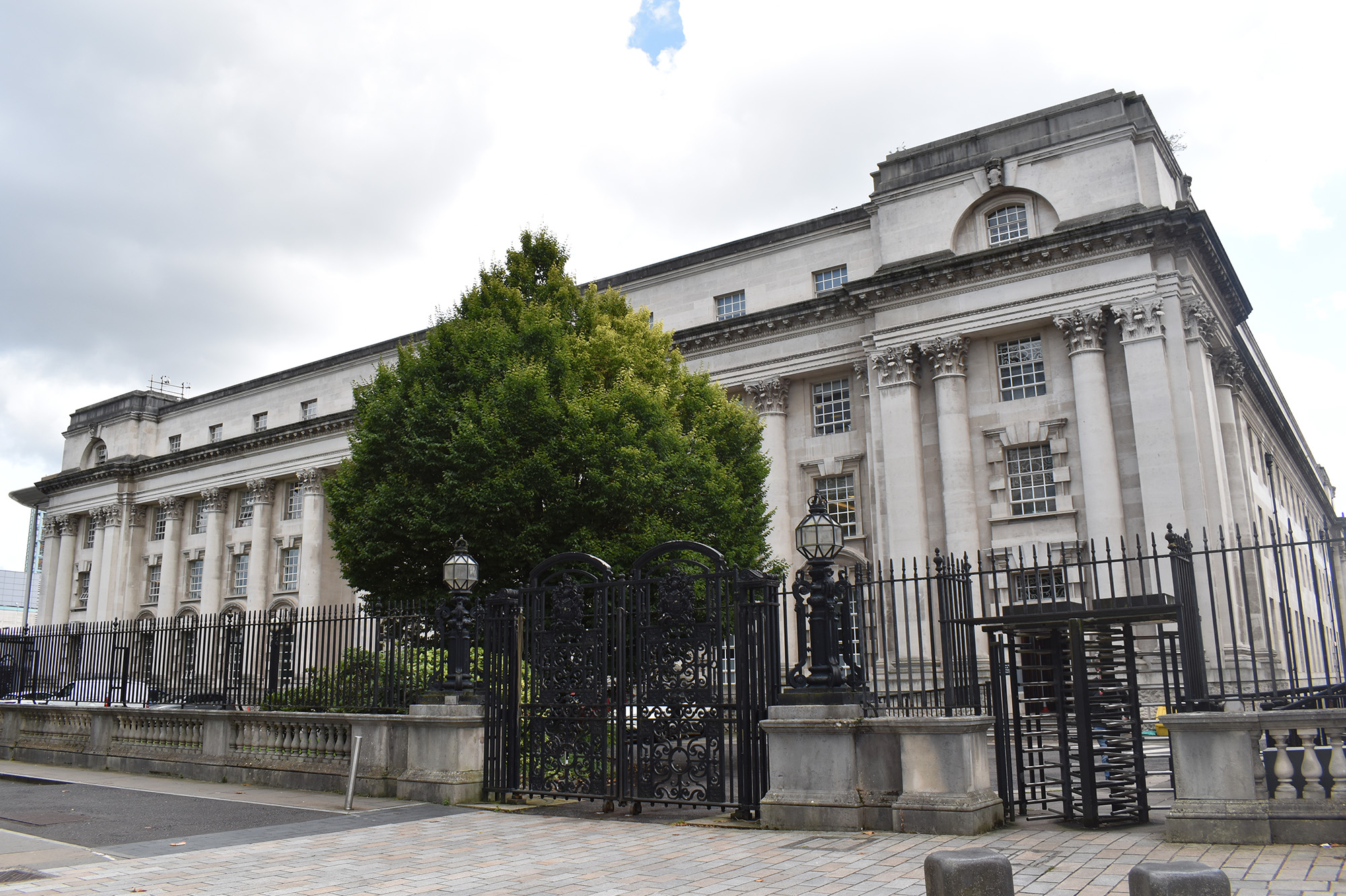
Northern Ireland’s Crown Court has acquitted a man accused of burglary in circumstances where the prosecution case rested solely on seconds of CCTV footage.

About this case:
- Citation:[2026] NICC 22
- Judgment:
- Court:NI Crown Court
- Judge:His Honour Judge Mark McGarrity
Delivering judgment for the High Court, His Honour Judge Mark McGarrity opined, “Whilst acutely conscious that it is important that the judge does not usurp the province of the jury, my analysis of the deficiencies in the evidence means that I am bound to withdraw the case from the jury and direct an acquittal.”
Background
On 1 December 2024, a burglary of a nursery occurred during which a window was smashed and at least four men entered the building, ransacking the property.
CCTV footage was seized showing four masked persons visible for differing periods. The man purported to be the defendant was visible for a total of seven seconds, during which his eyes, nose, cheeks and one ear were partially visible for no longer than four seconds.
Thereafter, the defendant was arrested and at interview, denied committing the offence and denied that he was the person in the CCTV footage.
At trial, an experienced police officer, Constable Nesbitt, gave evidence that he had recognised the defendant by his visual appearance from the CCTV footage and during a controlled identification procedure on 17 December 2024, having attended the defendant’s home on up to 30 occasions in the course of his duties.
Notwithstanding that no written record was made by Constable Nesbitt detailing his recognition of the defendant otherwise than by his name, description of clothing and how long he knew the defendant, Constable Nesbitt gave oral evidence that he had recognised the defendant’s eyes, nose, scarring and blemishes, and considered himself to be “very good with faces”.
In circumstances where there was no other prosecution evidence in the case, the defence contended that there was no case to answer and that the quality of the identification evidence was so weak that the case ought to be withdrawn.
The Crown Court
Judge McGarrity outlined inter alia R v Turnbull [1977] QB 224, which case set out that the poorer the quality of the evidence, the greater the danger of mistaken identification and that when the quality of identification evidence is good, it can be left to the jury without other evidence to support it as long as an adequate warning is given, but if the evidence is poor, the judge should then withdraw the case from the jury and direct an acquittal unless there is other evidence supports the correctness of the identification.
The court further examined whether the application for a direction in the case before it should be considered under Turnbull or R v Galbraith (1981) 73 Cr Rep App 124, or both, noting that the editors of Blackstone’s Criminal Practice (2026) at F19.18 consider that the court must, following Richardson [2012] EWCA Crim 639, apply “an acute combination of Galbraith and Turnbull”.
Having heard the parties’ submissions, Judge McGarrity explained that there were a number of features in the exhibited CCTV footage which “substantially” weakened its value, including the brevity of the portion of footage allegedly relating to the defendant, the fact that the burglar’s face was largely shrouded from view with only a partial view of some facial features being visible, and the reduced clarity of the images due to the CCTV resolution and lighting conditions.
The judge opined, “The CCTV footage is, I consider, insufficiently clear for the jury to reliably compare it with the appearance of the defendant in the dock. The inherent weaknesses in the nature and clarity of the CCTV footage must present limitations and hamper the capacity for identification of the burglar. The shortcomings in the underlying real evidence militate against a reliable identification.”
Noting that there was a need for “anxious examination” of Constable Nesbitt’s recognition evidence in the circumstances, the court afforded weight to his appreciable knowledge of the defendant from his previous dealings with him and accepted that Constable Nesbitt had a genuinely felt conviction in the correctness of his identification.
Confirming that identification did not render the Turnbull guidelines inapplicable, the court identified a material deficiency in Constable Nesbitt’s recording of how he identified the defendant, finding that he had omitted from his statement of evidence “any description of the defendant’s person” which allowed him to conclude that it was the defendant depicted on the CCTV footage.
Judge McGarrity, having given the “greatest weight that any reasonable jury could give” to Constable Nesbitt’s evidence and having evaluated the cumulative effect of the frailties in the CCTV footage and in the identification evidence, did not believe the forage to be of sufficient quality to support recognition.
Conclusion
Highlighting the absence of other strands of evidence supporting the correctness of the identification evidence or pointing to the defendant’s involvement in the offence, the Crown Court withdrew the case from the jury and directed an acquittal of the defendant.
The King v Connors [2026] NICC 22

Share this article:

Subscribe to our newsletter to not miss articles like this one:
 SUBSCRIBE

