


New documentary series explores history of Irish women and the law
 Reading time: 3 minutes
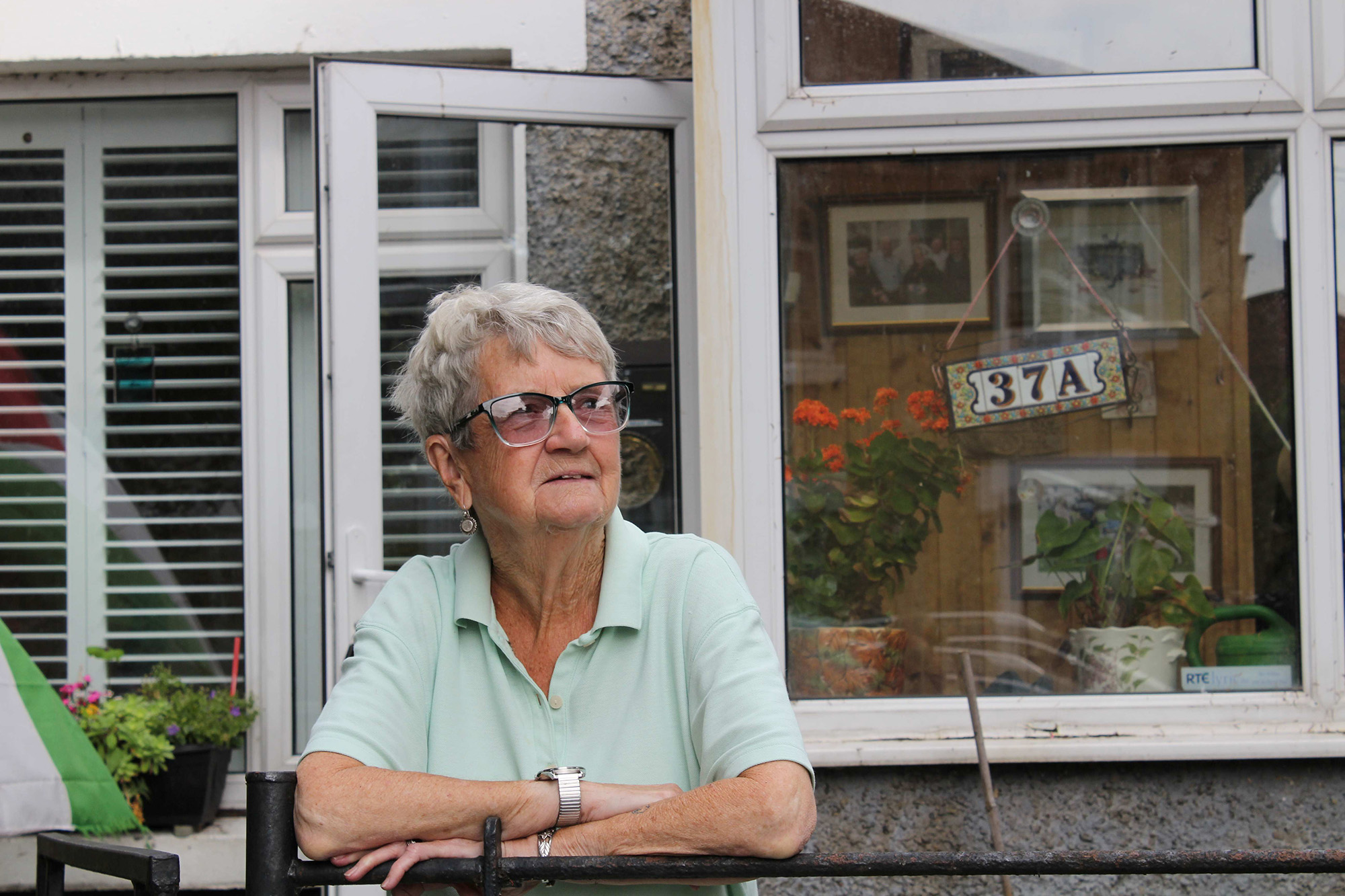
Pictured: Máirín de Búrca, who fought the Supreme Court case in 1976 which resulted in women being allowed to serve on juries.
A new documentary series is to explore seminal moments in Irish history where women took on the legal system.
Ceartas Crua – Mná v An Dlí, a bilingual two-part documentary series to be broadcast on TG4, covers legal action in the Irish courts and legislation enacted in the Oireachtas.
The first episode covers the period from the 1920s to the 1970s, when women were excluded from jury duty, the right to work after marriage and denied access to contraceptives.
In the National Archives, court records from the trial of two Roscommon sisters convicted of infanticide in 1934 are examined as viewers learn that 183 single women stood trial for the murder of an illegitimate newborn at the Central Criminal Court between 1922 and 1950.
In Leitrim, the story of Vera Carey who successfully defied the marriage ban to retain her job as Country Librarian of Leitrim is told.
The archives in the Irish Labour History Museum reveal how a 14-week strike by female laundry workers in 1945 resulted in the fortnight holiday for all Irish workers.
The archaic civil action of “criminal conversation”, where a man could be compensated for the loss of his wife when he claimed she had sexual relations with another man, and which lasted until 1981, is explored through newspaper coverage and records.
The brave actions of the Irish Women’s Liberation Movement are examined, including their stand-off with customs in Connolly Station after their infamous journey to Belfast on the Contraceptive Train in 1971.
The second episode covers Ireland from the new era of the 1970s to the present day.
The constitutionality of the right to use contraceptives was challenged by a young married couple, May and Seamus McGee, who took their case to the Supreme Court asserting their constitutional right to privacy in their marriage.
Máirín de Búrca recalls how she and Mary Anderson, represented by Mary Robinson, fought a Supreme Court case in 1976 which resulted in women being allowed to serve on juries.
The case of Josey Airey is retold by Eilis Barry of FLAC as viewers learn how a mother from Cork, unable to afford a legal separation, took a case to the European Courts of Justice to win the right to secure access to legal aid in Ireland.
Journalist Padraig Yeates details how he covered the story of Sheila Hodgers in The Irish Times in the lead-up to the referendum on the introduction of the 8th Amendment in 1983.
The societal and legal impact of the X case is explored as is the referendum to repeal the 8th Amendment in 2018.
Finally, journalist and disability advocate Niamh Ní Hoireabhaird discusses the results of the 2024 referendums on the proposed changes to the wording of the constitution regarding women in the home, family and care.
Produced by Midas Productions, with support from Coimisiún na Meán agus TG4, the series airs from 11 March 2026 at 9.30pm on TG4 and on the TG4 Player.

Share this article:

Subscribe to our newsletter to not miss articles like this one:
 SUBSCRIBE

