

Written by:
Lawyer of the Month: Niamh Lenihan
 Reading time: 7 minutes
Written by:
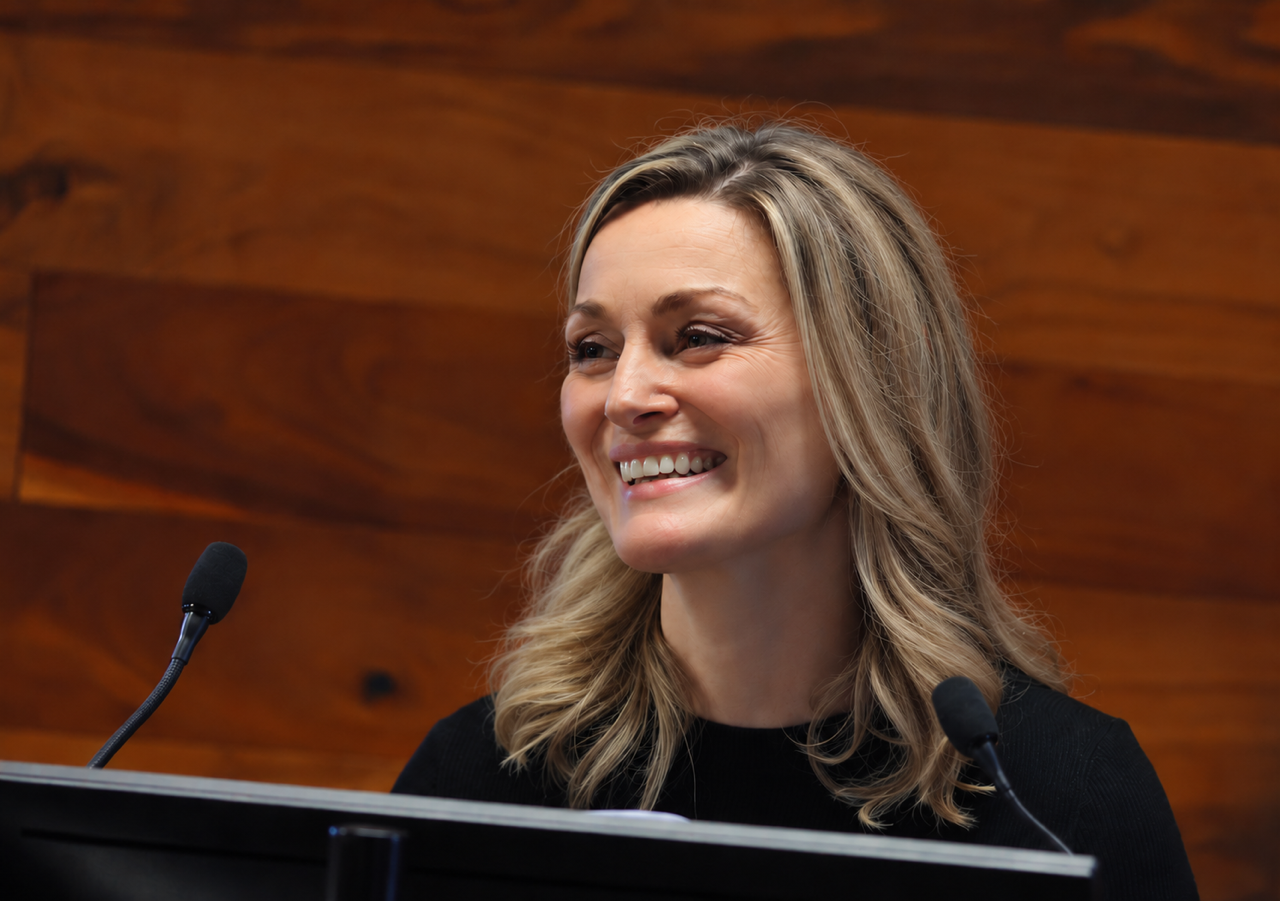
Niamh Lenihan
In an age that’s increasingly shaped by artificial intelligence (AI), automation and technologies capable of influencing, predicting and even making decisions about our lives, John Stuart Mill’s philosophy of liberty has enduring significance.
The 19th century philosopher, political economist and politician’s concern was not merely protecting individuals from the coercive power of the state; he stressed the opportunity for individuals to develop their own faculties, form their own judgments and become, as Niamh Lenihan describes it, “the authors of their own lives”.
His approach has significantly informed Ms Lenihan’s doctoral research and is, she says, extraordinarily relevant when technology can increasingly shape not only what we do, but what we think, believe and desire.
Ms Lenihan, a legal philosopher and practising lawyer is founder of NLG Solicitors, a specialist firm in Dublin’s Baggot Street Upper dedicated to helping organisations and individuals navigate the intersection of law, technology, and regulation and in which she combines legal practice, political and moral philosophy, human rights and AI governance, working with policymakers, researchers, civil society, and industry.
She is also founder of the Centre for Digital Ethics (CDE), a body that aims to bridge the gap between technology, law and humanity and arose from her commitment to protect autonomy and human dignity in an age of rapid technological change.
Last month [OCT] saw a significant event for the CDE when it hosted ‘The Human in Human Rights: Dignity, Autonomy and Democracy in the Age of AI’ at Trinity College Dublin, when former President of Ireland Mary Robinson joined her at the event which was timed to coincide with the official AI Summit held in Dublin.
“The question of what it means to be human, and what are we seeking to protect in the age of AI lies at the heart of everything the centre does,” explains Ms Lenihan. “We often begin conversations about AI regulation by asking what risks a technology presents, what harms it might cause and how the law should respond.
“Those are essential questions but an even more fundamental one comes first: what is it about being human that we value, and how do we ensure technological progress does not come at the expense of those things?”
She adds that we must also reconsider the role of government. “The state must protect people from digital harms, whether manipulation, exploitation, discrimination or invasions of privacy. But if we genuinely value autonomy and flourishing, it must also help secure the conditions that make meaningful freedom possible.”
This goes to the heart of recent developments in AI and rising concern over the technology’s potential to make choices without human oversight, which could diminish accountability and moral judgment in critical situations.
“As AI becomes increasingly agentic, systems are acquiring the capacity to plan, use tools, make decisions and carry out actions with less direct human involvement. That raises fundamental questions about whether we will be able to understand, oversee and ultimately control increasingly powerful systems.”
For Ms Lenihan there are three enduring and inseparable problems to be addressed: how do we protect human autonomy, how do we retain control of increasingly autonomous technology and how do we ensure democratic institutions retain the authority and capacity to govern it?
She describes herself as always having had an acute sense of injustice and unfairness. “Even when I was young, I found it difficult to see people treated unfairly, especially those who were vulnerable or marginalised – or did not have the resources to stand up for themselves – and I saw law as a practical way of helping people and protecting their rights.”
Ms Lenihan, who grew up in Dunboyne in County Meath as the eldest of five children completed her LLB at the National University of Ireland in Galway, gained a Master of Laws at TCD and completed the Professional Practice Course (PPC) at the Law Society of Ireland in 2014 before setting off alone on a journey around the world, travelling through countries that included South Africa, India, Nepal, Sri Lanka, Ecuador, Peru and China.
She describes it as one of the most formative experiences of her life. “Encountering vastly different cultures, ways of living and, at times, profound poverty and deprivation opened my eyes to dimensions of human vulnerability and inequality I had never fully appreciated before.
“Equally, I witnessed extraordinary generosity, resilience, community and human connection, often in places where material wealth was scarce. It broadened my mind enormously and fundamentally changed how I understood the world and my place within it.”
She met her husband shortly after returning to Ireland and decided to do a PhD shortly after their second son was born. “I see that entire chapter of my life as a gradual return to my authentic self. The travels, becoming a mother and rediscovering my intellectual curiosity and sense of purpose were all interconnected,” she recalls.
“The questions that now underpin my research and professional work around human dignity, autonomy, vulnerability and the conditions that allow people to flourish have their roots in that period of my life. My academic work has perhaps given philosophical and intellectual expression to things I first came to understand through my own lived experience.”
She founded NLG Solicitors, she says, to build a practice connected to technology law, human rights and governance while the CDE reflects the fact that litigation and legal advice alone cannot address these challenges.
“We also need research, public education and engagement with the institutions shaping law and policy – so in a way, I’ve come back to the questions I was asking at Trinity 20 years ago but in a world where they have become much more urgent.”
She concedes that the pace of change in the current legal climate is not easy to keep up with. “When I began this research, data protection and privacy were among the central concerns. Then the debate broadened to platform responsibility, content moderation and intermediary liability. With the arrival of ChatGPT and other frontier models, the landscape changed dramatically almost overnight.
“Suddenly we were not just talking about what companies knew about us or what content they hosted. We were dealing with systems capable of generating persuasive content, sustaining human-like conversations and influencing behaviour. Now, with agentic and increasingly autonomous AI, we are facing questions of an altogether different magnitude.”
When not confronting such consequential matters, however, she admits to being a homebody and naturally rather introverted.
“I love being cosy at home with my husband and our little boys playing boardgames, watching a movie or baking. I enjoy reading, being in nature with my family and our little Yorkie Tilly and I keep myself fit and somewhat sane with yoga and meditation,” she says.
“A proper chat with family or friends over coffee or good food probably fills up my cup more than anything.”
This is advantageous when it comes to what she describes as the David and Goliath situation we face regarding the regulation of Big Tech.
“The asymmetry in power, budgets, expertise and influence is immense. Some of the world’s wealthiest corporations are developing systems that affect all of us, while public institutions and civil society organisations often have comparatively limited resources to scrutinise them and insist on accountability.”
Which is daunting – but she believes also points to an enormous opportunity. “We can bring different disciplines together, strengthen public understanding, insist on independent scrutiny and help ensure that democratic institutions and human rights remain central to the future of AI. Independent voices have a very important role to play.”
Ms Lenihan says she now feels she is doing exactly what she always wanted to do with her legal studies. “I’ve finally found a way to bring together law, philosophy and human rights with my desire to protect people and contribute to something worthwhile,” she concludes.

Share this article:

Subscribe to our newsletter to not miss articles like this one:
 SUBSCRIBE