


Written by:

Lawyer of the Month: John Magee
 Reading time: 8 minutes
Written by:
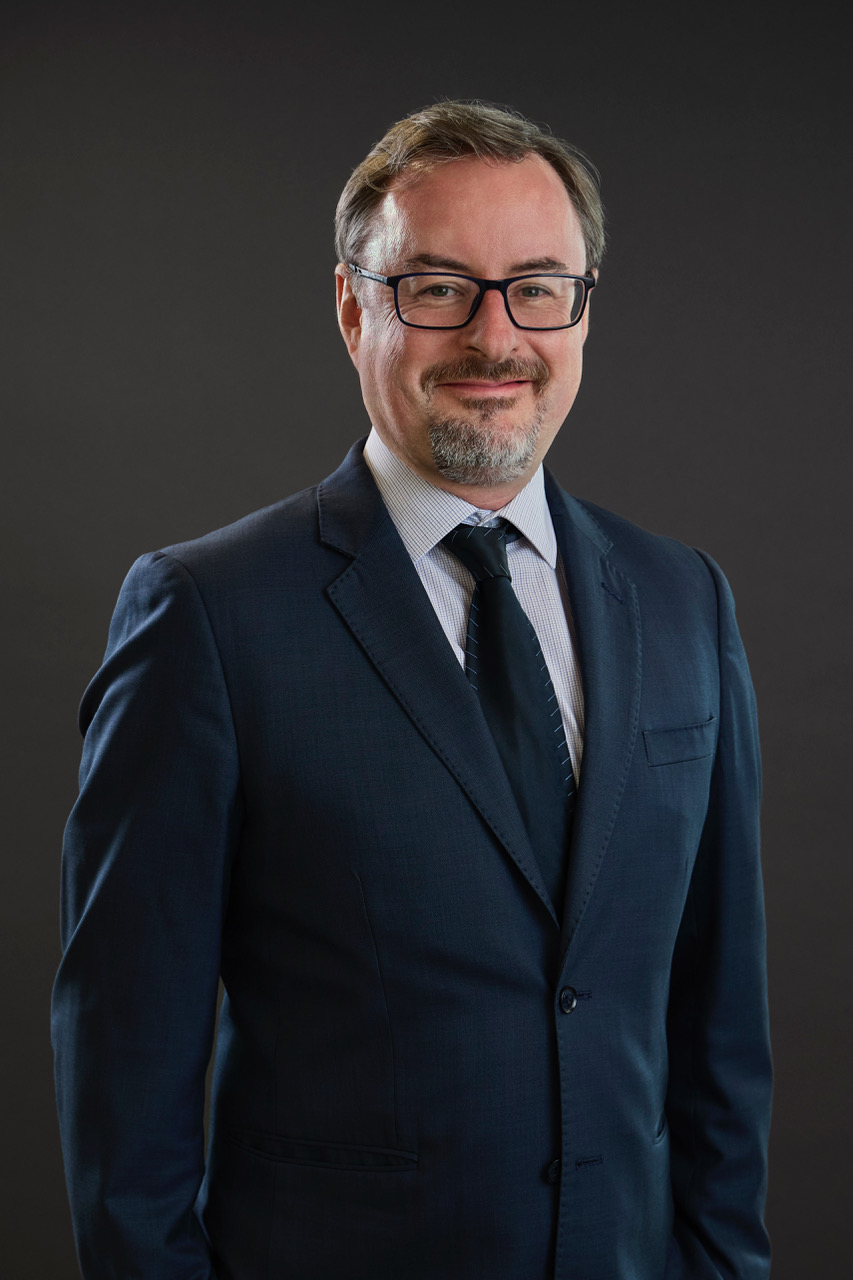
John Magee
Many parents have long had ambitions for their children to pursue careers in medicine or law, professions that are perceived as being synonymous with prestige, intellectual challenge and public service.
John Magee, a partner at DLA Piper in Dublin, was seriously considering a career in medicine until an early visit to an endoscopy clinic provided an unexpected moment of clarity.
He still winces at the recollection. “At school I had decided to do my transition year work experience in the Mater Hospital in Dublin – but going to that clinic sent me literally running away from the prospect,” he says.
Mr Magee’s decision to pursue a legal career proved to be pivotal. Today, he’s a leading figure in the profession, heading DLA Piper’s data protection, privacy and cybersecurity practice at a time when organisations face unprecedented regulatory and technological challenges.
He joined DLA Piper Ireland in 2019 following its entry into the Irish market earlier that year and now, as a global co-chair of the firm’s Data, Privacy, and Cybersecurity Group, he can draw on legal experience of more than two decades and has gained a reputation as one of the world’s leading data protection and privacy lawyers.
After deciding to study law, he received his bachelor of civil law at UCD then gained an LLM in computers and law Queen’s University Belfast and a diploma in cyber and digital security from IBAT Dublin.
The year in Belfast was, he says, a highly significant one and had later unforeseen consequences. “Data protection was a very novel area of practice at the time, and as there were so few universities in Europe were focused on it, we got to travel between Belfast, Bologna, Oslo and London, which were the main centres of excellence at that time.”
While studying on the Socrates Programme at the Università di Bologna he says: “I picked up enough of the language to enable me to chat up the Italian lady who’s now my wife, who I met some years later in Dublin. The year at Queens was a huge one for me, because the two loves of my life resulted from that experience.”
Prior to joining DLA Piper seven years ago, he says he was a partner at the venerable Dublin legal firm William Fry. “The main reason I moved to DLA Piper was that data doesn’t know any borders.
“The issues that arise must be navigated on a multi-jurisdictional, regional and global basis and as I was constantly getting queries from clients about France, Belgium or Singapore, it was clear to me that my career would thrive if I was operating in a global firm and in a global team.”
He believes a significant sign of the firm’s success is that, seven years ago, DLA Piper didn’t have an Irish office or a data protection practice.
“The fact that the firm’s practice is now being globally co-led out of Ireland demonstrates that the demand for those services and the importance of Ireland in the context of global data protection is very evident.”
Many of the world’s biggest tech companies have established their European HQs in Ireland and Irish lawyers have become key advisers in areas such as GDPR, AI regulation, cyber security and cross-border investigations.
“Much of the enforcement under GDPR relates to those big tech companies but there are players in other sectors who are data rich, for example, in financial services, insurance and life sciences,” he says.
“We also act for some of the biggest Irish multinationals in the food, manufacturing and technology industries. Those clients have businesses all over the world and need trusted legal advice in those jurisdictions.”
Those companies, he points out, are regulated under the GDPR’s one-stop shop regulatory mechanism. “All their cross-border activities are subject to subject to enforcement by the Data Protection Commission here in Ireland; it’s for that reason the DPC has become not only the leading regulator in the EU but arguably the global data police.”
Cyber security – and how AI is exacerbating accompanying security risks – represents one of the current big topics in the day and is a big issue in boardrooms.
“It’s also a big part of what we do every day in the DLA Piper team,” adds Mr Magee. “AI has evolved considerably in the very recent past and enables hackers to work faster and smarter. With the availability of toolkits and ransomware, there’s now a much lower entry point for hackers to get into that activity.
Those tactics now mean that the threat actor doesn’t just freeze or decrypt an organisation’s systems but can also exfiltrate large volumes of often very sensitive data – for example, commercially sensitive financial or personal information, such as customer and HR records.
“Threat actors are now looking to shut businesses down and are going after critical national infrastructure. The high-profile 2021 cyber-attack against the Health Service Executive (HSE) was an early example of what has now become a wider trend towards those kinds of infrastructure-based attacks,” says Mr Magee.
In the increasingly volatile world of geopolitics, he adds, cyber security is becoming a key frontline issue for what he describes as a type of warfare. “We are currently supporting a global company where they have been the victim of a high profile, nation-state sponsored attack. The threat of this type of attack has become frightening for society, and indeed the private companies who are caught in the crossfire.”
Keeping up with the pace of change is a constant challenge. “It’s an arms race between threat actors and the businesses trying to catch up and protect themselves and their data and also the legislators who are trying to introduce new laws,” he says.
The clients who are best prepared to tackle that change are those who can find common themes that run throughout these legislations and bring that into their governance programmes.
“While small businesses will struggle and may be overwhelmed, bigger companies have, because of their scale, challenges around siloing and thus sometimes need to work even harder to create that kind of unified governance approach.”
The eye-watering speed of AI’s growth represents another challenge but he says DLA Piper recognises that AI is also a huge opportunity for the profession.
“We’ve acquired 5,000 licenses for Harvey, specialised AI software for the legal industry which helps legal teams research, draft, analyse documents, manage legal knowledge, review contracts and run AI-assisted legal workflows,” he says.
“Interestingly, Harvey has also decided to locate its EU headquarters in Ireland, and we’re pleased to support them as a law firm as well as being one of their largest customers. Using AI on the job, whether it’s Harvey, Copilot or other solutions has become a big feature of our lawyers’ day-to-day life.”
Mr Magee’s “second job” is coaching Na Fianna’s under-12 camogie team in Glasnevin. “Ladies GAA is one of the fastest growing participation sports in Europe and being involved with my daughters and their friends is massively important because involvement in those sports gives girls huge benefits around skills and leadership development, social connection and positive body image,” he says.
“It’s a pleasure and an honour to be involved in supporting the community in that way – and it’s particularly good when we manage to beat our local rivals, St Vincent’s!”
He also writes and speaks on data protection and cyber security matters and has lectured and created course modules for the Law Society of Ireland, the Kings Inns and Trinity College Dublin as well as speaking at international conferences such as the International Association of Privacy Professionals (IAPP).
And while he believes Ireland has a very talented community of lawyers in global firms, local law firms and those working in-house where Ireland is either a global or EU headquarters, he’s especially interested in the development of the next generation of those professionals.
“I think some lawyers going through university and occupied with the textbooks don’t always realise that the people side of things is actually the most important part of the profession,” he says.
His first job was working at the age of 16 as a porter in the impressive Grand Hotel in Malahide. “One of the things I developed there was a strong customer service ethic which has survived throughout my career.
“I try to instil that in the junior lawyers I have the pleasure of supervising – which numbers more than 100 trainee solicitors now – and the most satisfying thing is seeing how they have developed over time, with some of my former trainees now partners in law firms.”

Share this article:

Subscribe to our newsletter to not miss articles like this one:
 SUBSCRIBE