


Written by:

Lawyer of the Month: Donna Ager
 Reading time: 7 minutes
Written by:
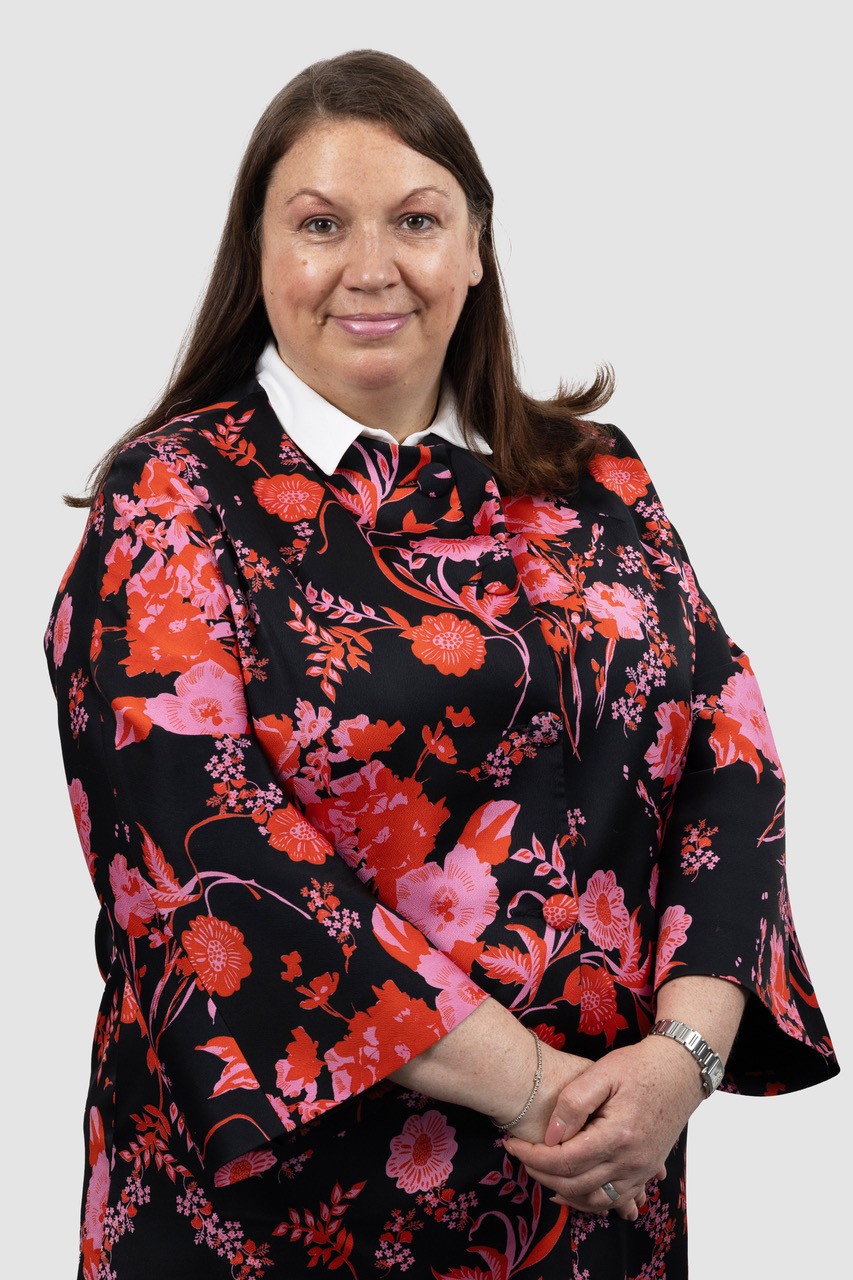
Donna Ager
Ireland’s role as one of the world’s leading aircraft leasing hubs dates to 1975, when the billionaire businessman Tony Ryan founded Guinness Peat Aviation (GPA) in 1975. Ryan, of course, was also one of the co-founders of Ryanair in 1984.
His venture created a pool of experienced aviation finance executives, accountants and lawyers that swiftly attracted more business and now a huge proportion of the world’s aircraft leasing is managed from the country.
Donna Ager, who has more than 20 years’ experience in the aviation sector is a partner in Walkers’ global asset finance team based in London and specialises in Irish law asset and structured finance, focusing on the funding, leasing and financing of aviation assets and the establishment of funds-based aviation platforms.
She recently led Walkers’ global asset finance team in advising KKR on its US$1.4 billion equity commitment to its Altitude III leasing platform, as the global investment firm continued to expand its exposure to leased commercial aircraft in partnership with Altavair, a commercial aviation leasing and servicing company.
The transaction was an example, Walkers says, of the strength of its integrated aviation finance offering, with its team advising on both Irish and Cayman Islands law on the cross-border aspects of the transaction.
While Ms Ager concedes that this specialised area might seem somewhat daunting, she’s happy to explain. “Essentially, we represent investors or lenders who support the acquisition of new or second-hand aircraft for commercial use,” she says.
She began her career at multinational firm Freshfields, one of the ‘Magic Circle’ based in London and was quickly seconded to Airbus, her introduction to the area of aviation finance law.
After almost three years there, she subsequently spent 10 years with Clifford Chance, which, with a presence in 23 countries, is another frequent advisor on headline aviation deals across the world.
“While there I had the opportunity to be involved in some cutting-edge deals and experience the type of transactions that you wouldn’t get exposure to in other firms, particularly in the debt capital markets and bond-issuance space, which are very specialised.”
She agrees that her experience at Airbus proved extremely useful. “Few people get the chance to work with a manufacturer of that magnitude and to be part of its aircraft financing team.
The $1.4 billion involved in the KKR deal, I suggest, sounds like an enormous figure, even for an industry used to eye-watering sums.
Ms Ager is admirably down-to-earth in explicating the complexities of such deals. “We quite often talk in billions – which may sound a bit ridiculous – but this is what we describe as a leasing platform.
“The company puts in money to part-fund a portfolio of aircraft that they will then lease out – so the $1.4 billion is equity. In this case, KKR is a fund manager so these were managed funds from institutional and individual investors in various offshore funds and alongside that, they would also go to the larger investment banks.
“In terms of debt to equity, that ends up at around 60/40 or 70/30, so there is more debt than equity.”
She uses a more familiar analogy, likening aviation financing to buying a house. “When people do that, they put perhaps 20 or 30 per cent of their own money in because obviously the bank is taking a risk on future fluctuations in price.
“They then go to the bank, which lends them the remainder which is paid back over a period and to secure the money they’ve lent, the bank takes a mortgage over the house. In the same way, we in aviation take mortgages over the aircraft to secure the debt.”
Then, she adds, comes the leasing itself and aircraft leasing in Ireland is a huge business, There are, she says, two models: “Wet leasing is when an one airline operates a service on behalf of another.
“You might buy your ticket through an airline but another operates the service for them, including the supply of cabin crew and often the entire service. Whereas dry leasing, which is what we deal with primarily, just means making the aircraft available to an airline which provides everything else.”
Ms Ager recalls how she entered this specialised legal area. “When I joined Freshfields they asked me if I’d like to go to the south of France for six months and at that age it basically sounded like fun,” she smiles.
“I really enjoyed my time there and while I was a novice, it’s proved to be an addictive industry to work in.”
It’s also one that involves working across several jurisdictions: “Aircraft are ‘moveable assets’ so the benefit of that is you can structure transactions in a way that’s tax efficient,” she says.
Walkers is an offshore firm headquartered in the Cayman Islands which practices the laws of jurisdictions that include Cayman Islands, Ireland, Bermuda, the British Virgin Islands and the Channel Islands in offices from Dubai and Guernsey to Singapore.
“Ireland has lots of double tax treaties, with arrangements negotiated with third party countries. At the Irish level, when you lease out to airlines, they are not generally subject to any withholding on their rentals, meaning that 100 per cent of the rental is paid up, while the Cayman Islands is tax neutral and investors are not subject to corporation tax.
“So, in this [KKR] transaction, we were able to tap into the expertise of our people in the Cayman Islands as well as Irish law to maximise efficiencies.”
In this deal the Walkers team was led by Ms Ager, supported by associate Sophia Hitchcock – both practising Irish law from Walkers’ London office – alongside Cayman Islands partner Sarah Humpleby who was supported in turn by associate Alexandra Franklin, meaning the entire project was headed up by women.
Ms Ager works alongside two other Irish practicing partners in asset finance who are based in Dublin. “She emphasises that Walkers is the only firm to offer asset finance Irish law out of both Dublin and London, which she describes as a significant competitive advantage.
“A lot of banks are based in London and in most transactions the main loan documentation is subject to either English or New York law and led by onshore firms often in London.”
In terms of the global commercially operated aircraft fleet, she notes that more than 50 per cent has a touch point in Ireland. “It’s been a very positive story for the country: as people started to become aware that Ireland was an attractive jurisdiction, increasing numbers of companies started setting up there.
“Which means that in addition to the competitive tax regime, if you take the largest 20 aircraft leasing companies, 19 of them are headquartered in in Ireland.”
Ms Ager says she’s lucky to have found her way into aircraft finance. “Despite the contracts being worth millions or billions it’s a nice community. The negotiating environment can be quite intense but it’s generally all very good natured and quite a collegiate area.”
Other benefits of the job are unsurprising and though she travels less these days she has advised on deals across Europe and in the Middle East, Pakistan, India, Asia, Africa and South America.
“I’ve travelled a lot through my job and also enjoy theatre, ballet and strolling around art galleries – and though with children aged six and nine foreign travel can be a challenge I still love it.”
As for work, her approach is encouragingly upbeat: “I think I’ve been lucky in my career and I’m fortunate to be able to regard lots of my clients as friends. I don’t think you can ask for more than that.”

Share this article:

Subscribe to our newsletter to not miss articles like this one:
 SUBSCRIBE