
Justice minister approves demolition of Cork Prison
 Reading time: 3 minutes
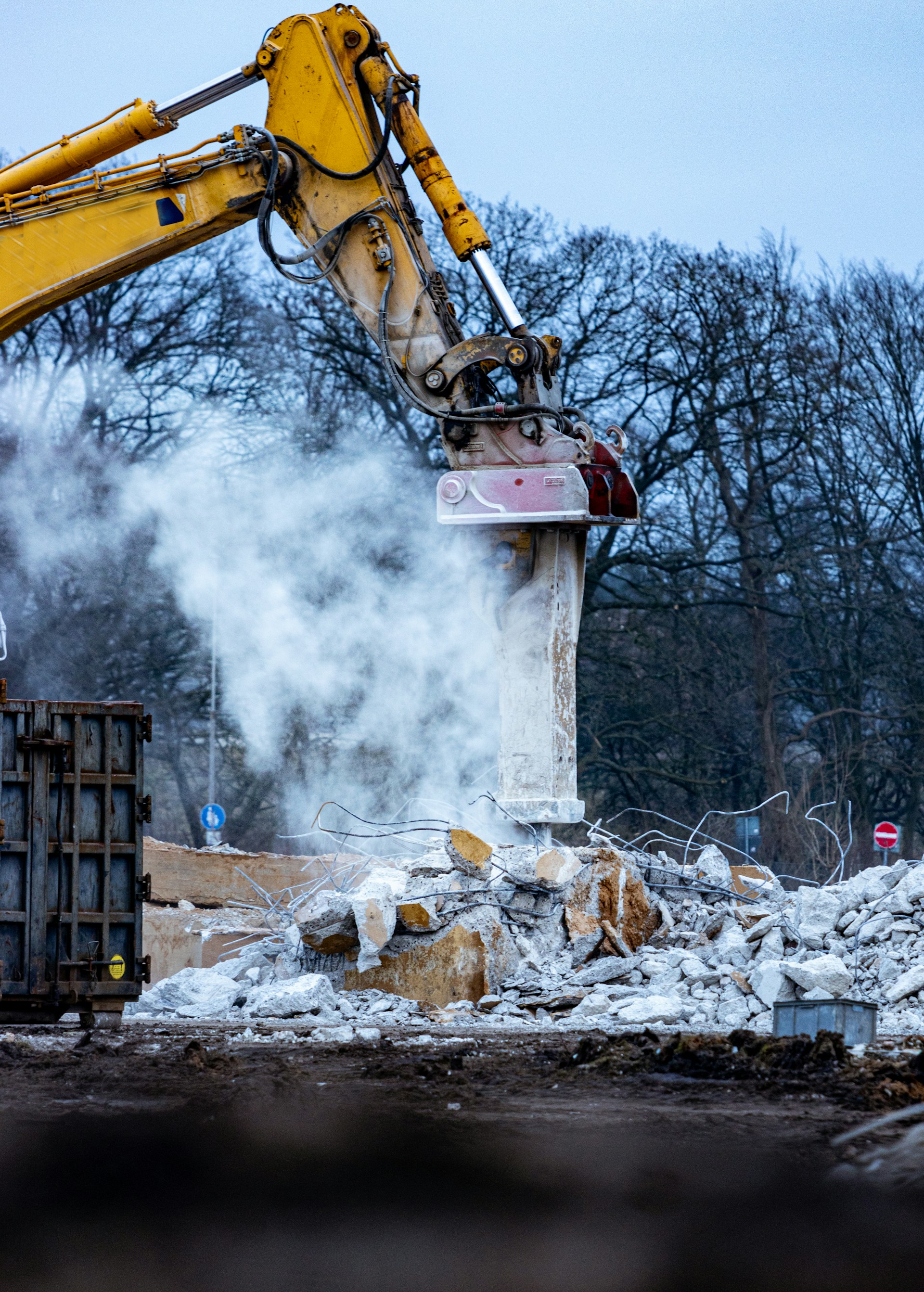
Justice minister, Jim O’Callaghan, has approved plans for demolition of the former Cork Prison site as part of the Cork Prison Extension Project.
Following completion of the statutory Part 9 planning process, the plans submitted by the Irish Prison Service will see the project proceed in such a way that retains the buildings and structures of the old prison site identified as being of historical and architectural significance.
These works will enable further progress on the construction of an extension to the existing Cork Prison on the site of the old, decommissioned Cork Prison.
The Cork Prison Extension Project is a key project under the Government’s plan to construct over 1,500 new prison spaces by 2031 to address capacity constraints across the prison estate. When completed, the extension will provide accommodation for up to 230 male prisoners as well as up to 100 female prisoners.
Following a public consultation on the plans, Mr O’Callghan approved revised proposals which will retain a number of structures and features of the former prison considered to be of particular architectural and historical significance, including:
- The main entrance’s historic gatehouse;
- The cell occupied by Thomas Kent;
- A-Wing and B-Wing immediately adjoining the entrance;
- The stone bastion features and identified sections of the historic prison walls.
Cork Prison started its life as a military barracks opened by the British Government on Rathmore Road in Cork City in 1806. In 1916, during a round-up following the Easter Rising, the Royal Irish Constabulary went to arrest the nationalist Kent family at their home in Castleyons, Co. Cork. The family resisted and in an ensuing shoot-out, Richard Kent and Constable William Rowe were killed. Thomas Kent was convicted of the murder of Constable Rowe. He was executed and buried at the military prison.
Mr O’Callaghan said: “The Cork Prison Extension Project forms an important part of the national prison building programme. I am committed to this project and determined that it progresses in a way that is sensitive to the historical significance of the former Prison site.
“I have carefully considered the views expressed during the public consultation process and I am satisfied that the approach being taken strikes an appropriate balance between protecting the site’s heritage and delivering essential prison infrastructure.
“The prison is closely associated with Thomas Kent, who was held there prior to his execution. It is critical that this association is incorporated into the future development. The cell occupied by Thomas Kent will be retained and preserved as part of the development. The two martyred First Citizens of Cork, Terence MacSwiney and Tomás Mac Curtain, are also associated with the site. Their actions and legacy will also be appropriately acknowledged.
“The Cork prison project is an important part of the government’s commitment to develop over 1,500 new prison spaces by 2031. I am acutely aware of capacity pressures in our prison system and I am determined to alleviate this pressure, support our prison officers and ensure a safe environment for people living and working in our prisons.
“I have approved the progression of the project and I look forward to seeing this important investment delivered as quickly as possible.”
The minister’s plans, however, have not been met with universal approval. Sinn Féin TD for Cork North Central, Thomas Gould, said it was a “shameful day” for the Irish Prison Service and the Department of Justice stating that the conservation plans were “an insult to his memory and the memory of those who fought and died for Ireland.”

Share this article:

Subscribe to our newsletter to not miss articles like this one:
 SUBSCRIBE