


IVCA proposes €1bn investment vehicle for Irish SMEs
 Reading time: 3 minutes
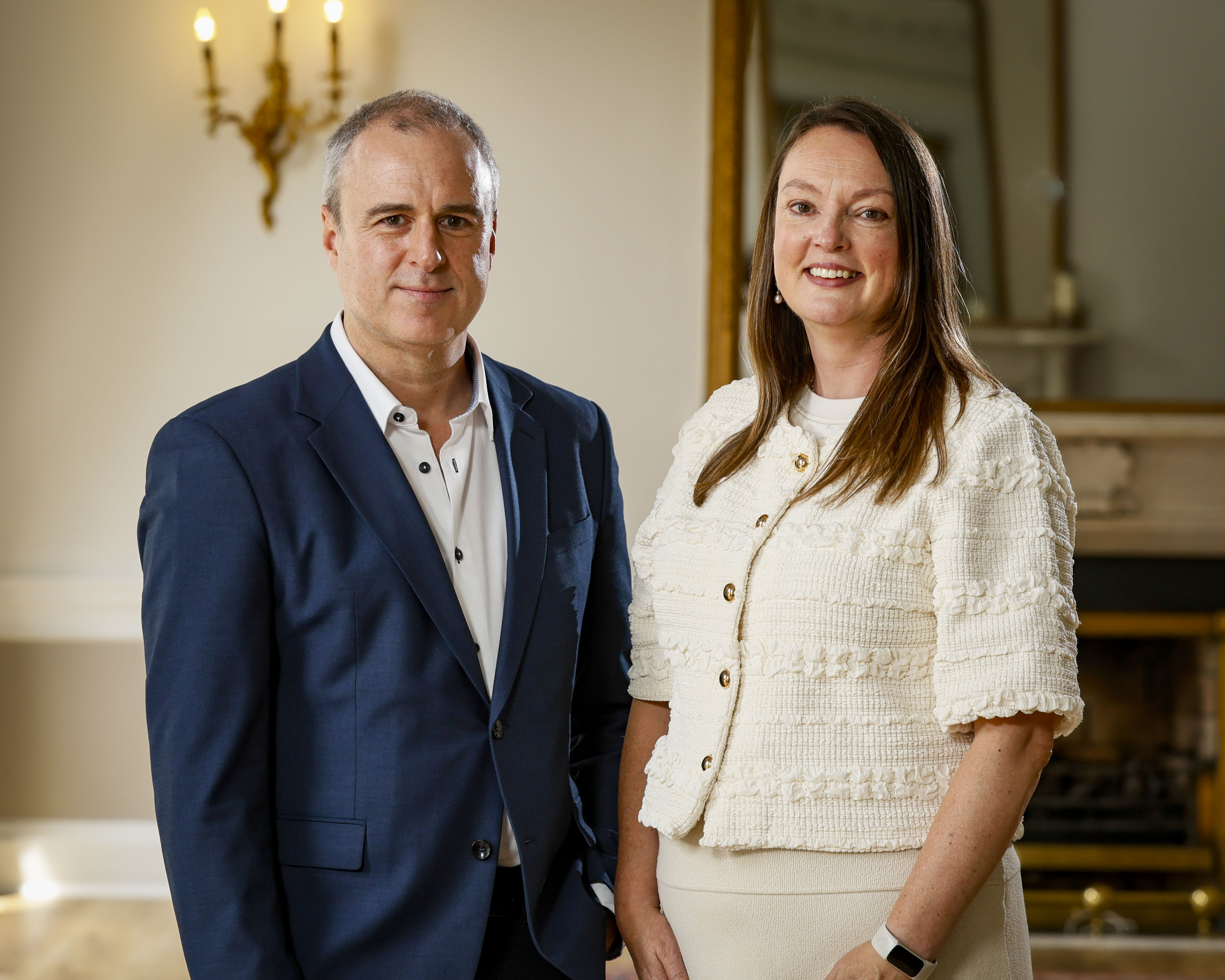
Richard Watson and Sarah-Jane Larkin
Credit: Fennell Photography
Ireland has the opportunity to transform its economy, reduce dependence on overseas investors and raise an initial €1 billion to back indigenous SMEs, without material Exchequer cost, according to the Irish Venture Capital and Private Equity Association (IVCA) in its pre-budget submission published today.
The association calls for a government convened fund-of-funds designed to pool investment in order to minimise risk and boost institutional backing, including pensions, into domestic firms. It says that this would also be an ideal vehicle in which to channel a modest share of savings from the proposed Personal Investment Account into productive domestic investment.
Richard Watson, chairperson, IVCA said: “This can be implemented quickly as we have an off the shelf working example in the Danish Dansk Vaekstkapital model which has pumped more than €1.5 billion into domestic companies.
“Foreign direct investment will continue to be a core pillar of the Irish economy but the rapidly changing international environment and global political uncertainty make it increasingly urgent to strengthen indigenous enterprise.”
Mr Watson added: “Ireland has a good track record in getting start-ups off the ground thanks to government initiatives through EI (Enterprise Ireland) and ISIF (Ireland Strategic Investment Fund), but the gap in institutional scaling finance means that these companies usually have to go overseas to raise the capital necessary to grow into major employers.”
Sarah-Jane Larkin, director general, IVCA, said that quarter one data highlighted the extent of the challenge facing Irish tech SMEs looking to raise funds. “VC investment in the quarter fell by almost 60 per cent to just over €221 million with 85 per cent of the capital raised coming from international investors. That combination points to a market with strong companies and real investor interest, but one that remains heavily dependent on external capital conditions.”
The IVCA pre-budget submission says that the economic impact of boosting institutional investment including pension funds into the domestic economy could be transformative. “Public policy choices in the past such as the expansion of free education and the establishment of the IDA reshaped the country’s economic trajectory for generations. A framework to mobilise domestic institutional capital into Irish venture and growth investment could be similarly important.”
Ms Larkin said: “At a time when all government departments are facing spending pressures, crucially, this can be done without material Exchequer cost. The objective is not to create a new spending commitment, but to use a limited portion of existing ISIF capital strategically to convene, structure and catalyse much larger pools of private investment.”
She added: “This would help create the financial foundations for more indigenous companies to scale from Ireland, deepen domestic ownership of innovation, and build a stronger base of employers over time. This is therefore not only a response to a funding gap, but a time-sensitive opportunity to strengthen the long-term structure of the Irish economy.”
The IVCA warns that Ireland is already falling behind other European nations in mobilising institutional backing for the indigenous sector. The association states: “Other countries have moved quickly to direct pension and institutional capital toward domestic innovation. France, Denmark, the UK, Germany, the Netherlands, and pan-European initiatives are all developing structures that improve the risk-return profile for long-term investors and channel greater capital into venture and growth finance. Ireland should now take deliberate policy steps to ensure that it is not left behind. The opportunity is real, but it will not be captured through policy inertia.”

Share this article:

Subscribe to our newsletter to not miss articles like this one:
 SUBSCRIBE