
Irish Red Cross survey reveals major gaps in public understanding of the rules of war
 Reading time: 4 minutes
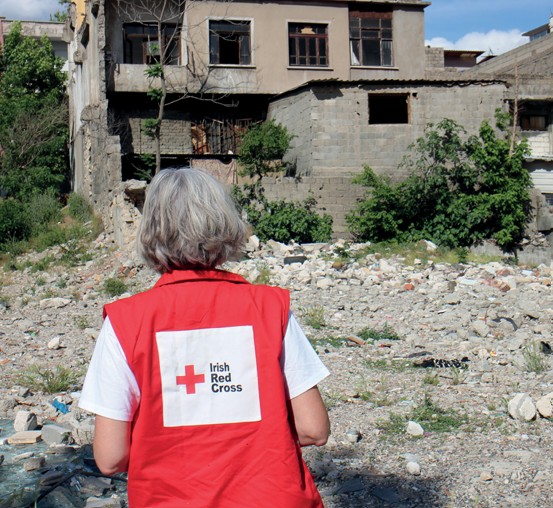
A first of its kind survey by the Irish Red Cross into public awareness of International Humanitarian Law (IHL), often referred to as the Rules of War, has revealed significant gaps in understanding of the laws that govern armed conflict.
The research found that one third (33 per cent) of people in Ireland are not aware that rape and other forms of sexual violence are prohibited under the rules of war. Similarly, almost one third (32 per cent) did not recognise that torturing enemy soldiers to obtain information is also prohibited under IHL.
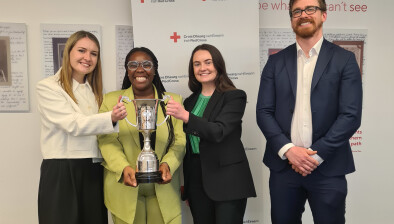
The findings are published in the Irish Red Cross report - ‘Voices for Humanity in Conflict’ - that will be launched at the organisation’s annual IHL Conference today in Dublin. The research investigates what people in Ireland know about the rules that regulate armed conflict, whether they support IHL principles and the type of role they expect Ireland and the European Union (EU) to play in promoting and upholding respect for IHL.
While nearly three-quarters (73 per cent) of people in Ireland are aware that rules of war (IHL) exist, research conducted across the Red Cross global movement shows this is lower than Nordic countries; Sweden, Norway, Denmark and Finland all reflect higher levels of awareness of between 84-90 per cent. The Irish Red Cross survey also reveals that only 35 per cent of respondents reported being familiar with the rules and just 2 per cent can explain IHL in detail.
Speaking ahead of the report launch at the IHL Conference, Deirdre Garvey, secretary general, Irish Red Cross, said, “International Humanitarian Law is under increasing pressure; today there are more than 130 active armed conflicts globally, a stark figure which has more than doubled in just 15 years. Our research confirms strong support for values underpinning IHL among the public in Ireland and an expectation that Ireland and the EU play an active role in promoting respect for IHL and ensuring accountability when it is violated.
“However, the findings also reveal a clear knowledge gap. In an era where images of armed conflict are on our screens daily, IHL provides a framework through which the public can understand that even in war, there are limits to what is acceptable. Public understanding of IHL matters because for the rules of war to be respected, they must be known. We cannot be complacent and must ensure that more focus is put on IHL in school curricula, universities and across general society. The Irish Red Cross is committed to working with public authorities and partners to improve awareness and understanding in Irish society.”
Other findings from the Irish Red Cross report include:
- Overwhelming support for more information to be provided to the public about IHL (84 per cent), and to include IHL in its education curriculum in schools (77 per cent).
- Almost 83 per cent of people agree that Ireland should promote respect for IHL, support international agreements and initiatives that strengthen protection for civilians in armed conflict, and consider respect for IHL when developing diplomatic relations.
- 90 per cent believe the EU should encourage respect for IHL, while 88 per cent believe the EU should promote IHL internationally and ensure Members States comply with it.
- 74 per cent agree that Ireland should take action against states or groups that seriously violate IHL even if it damages diplomatic relations, and 72 per cent agree that Ireland should do so even where there is an economic cost to Ireland.
- Two thirds (67 per cent) reject an ‘any means necessary’ approach to warfare. Instead concern for civilian protection and humanitarian access far outweighing concern for military effectiveness and achieving victory in war. 80 per cent agreed that reducing suffering should be - prioritised, even if it limits military success.
- 88 per cent of people surveyed support the safe passage of humanitarian aid to reach civilians. Notably, this includes delivering aid to enemy-controlled areas, suggesting strong support for the protection of impartial humanitarian aid.
- When asked about specific weapon categories, respondents indicated that chemical weapons (85 per cent), anti-personnel landmines (72 per cent), and autonomous weapon systems (60 per cent) should be prohibited.

Share this article:

Subscribe to our newsletter to not miss articles like this one:
 SUBSCRIBE