

Irish Innocence Project issues statement on ongoing solicitor’s dispute
 Reading time: 4 minutes
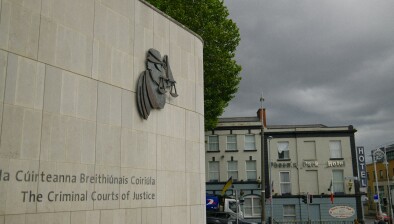
The Irish Innocence Project has issued a statement on criminal defence solicitors ongoing withdrawal of services in the District Court in opposition to the new criminal legal aid scheme.
The statement is entitled ‘The Price of Justice is Measured in More Than Money’ and states that: “A criminal justice system does not exist merely to secure convictions. It exists to secure just convictions.”
The Innocence Project adds that it supports the solicitors in opposing “a unilaterally imposed system which plainly does not meet the needs of the public or the professionals serving them.”
The statement continues: “We do so, not because we speak for a profession, nor because we seek to preserve any particular funding arrangement. We speak for those whose lives have been irrevocably altered by the most profound failure a justice system can produce: the conviction of the innocent.
“The causes may look unremarkable in isolation:-An overlooked witness.
- A line of inquiry never pursued.
- A psychiatric assessment never obtained.
- An expert opinion unavailable.
- Evidence insufficiently tested.
- A defence that, through lack of time or resources, could not be fully prepared.
“Wrongful convictions rarely emerge from a single moment of misconduct. More often, they are the consequence of accumulated weaknesses: small compromises that become, over time, a profound injustice.
“Those who investigate miscarriages of justice across common law jurisdictions know a troubling truth: innocence is not always protected simply because a system intends to be fair. It is protected only when the safeguards of fairness are properly resourced.
“Criminal legal aid is not merely a question of public expenditure. It is a constitutional safeguard. The introduction of a flat-fee model raises concerns because criminal cases do not arrive in uniform briefs. Justice cannot be standardised into predictable units of time.
“A system that creates unavoidable pressure to complete work within arbitrary limits risks transforming the right to representation into the appearance of representation. The distinction matters.
“There is also another group whose interests must remain at the centre of this debate: victims of crime. Victims deserve justice that commands confidence. They deserve more than a conviction; they deserve the assurance that the conviction was reached after a process that was fair, thorough and reliable.
“Victims deserve to know that the evidence in their case, was properly examined, that all relevant issues were considered and that the person held accountable is accountable because the justice system reached the just and proper conclusion. A conviction, obtained through a process vulnerable to inadequate preparation or systemic under-resourcing, does not serve victims.
“The interests of victims and accused persons are therefore not competing interests. They meet at the same point: a justice system whose decisions can be trusted. The greatest service we can offer victims is not simply a conviction. It is a conviction that can withstand scrutiny.
“The Irish Innocence Project readily accepts that reform of the District Courts is necessary. Indeed, reform is overdue. However, meaningful reform requires honesty about where the problems actually lie.
“If the objective is to improve efficiency in the District Court, there are obvious and evidence-based reforms available. The Irish Innocence Project is founded upon a simple principle: evidence matters.
“Every claim of factual innocence must be tested against facts, not assumptions. Conclusions must follow proof. Beliefs must yield to evidence. The same standard should apply to public policy.
“Concerns regarding criminal justice reform should not be driven by anecdote, perception, isolated examples of bad practice or enduring myths about legal practice.
“Reforms should be driven by transparent data, rigorous analysis and a clear demonstration that proposed changes will improve the system without increasing the risk of injustice.
“The Irish Innocence Project urges all stakeholders to return to meaningful engagement and negotiate in good faith towards a resolution as a matter of urgency. We hope that a fair and sustainable resolution can be reached in the interests of justice. Justice delayed is a serious failing. Justice diminished is a far greater one. The price of justice is measured in more than money.”

Share this article:

Subscribe to our newsletter to not miss articles like this one:
 SUBSCRIBE