

Housing, AI and geopolitics among top concerns for Irish businesses
 Reading time: 4 minutes
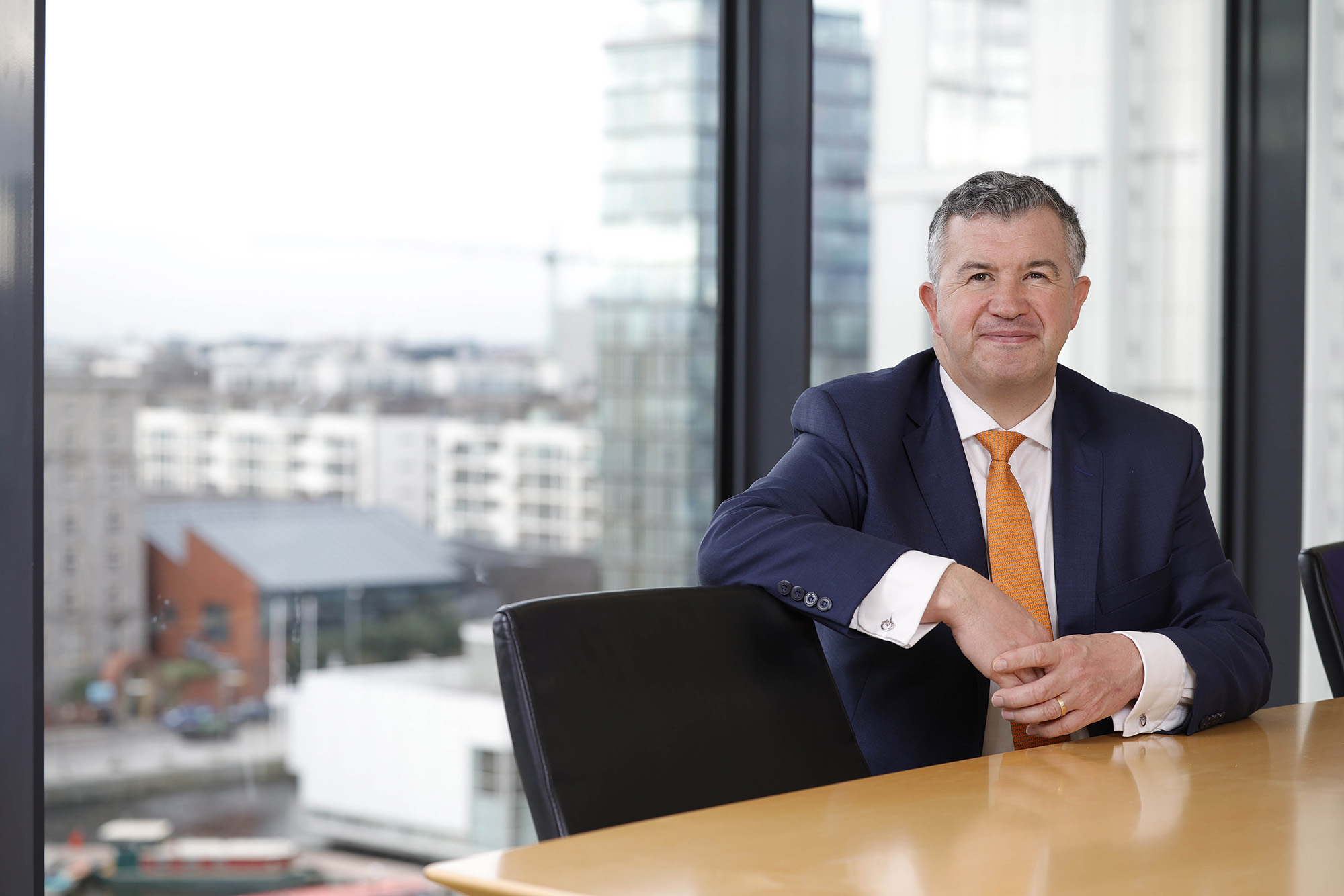
Will Carmody
Irish business leaders are entering 2026 with cautious optimism, but pressing concerns over housing, AI adoption, and global uncertainty are shaping strategic priorities, a survey by Mason Hayes & Curran has found.
The business law firm today published the findings of its third annual business and legal sentiment survey, which polled over 1,000 senior business and legal professionals this month.
Nearly half of respondents (48 per cent) identify housing affordability and availability as the single most important factor for improving Ireland’s competitiveness, up sharply from a third (33 per cent) last year.
Public housing emerges as the top infrastructure priority (48 per cent), with energy infrastructure following closely. One in six (15 per cent) believe electricity interconnection to the UK and Europe is most critical to Ireland’s economic success, and 14 percent point to offshore wind development.
Will Carmody, managing partner at Mason Hayes & Curran, said: “Housing and energy infrastructure continue to shape investment decisions. Unless these pressures ease, Ireland’s competitiveness and business growth could be constrained.
“We are actively working with clients on key housing and infrastructure projects, but the legislative reforms recommended in the recent Accelerating Infrastructure report need to be quickly enacted to fast-track priority developments, remove uncertainty and free up additional investment.”
The survey also found that AI is reshaping workforce planning, with 30 per cent of businesses expecting AI adoption to reduce headcount in 2026, outweighing the 20 per cent who anticipate staff increases.
Nearly four in 10 executives (39 per cent) expect AI to boost productivity.
Mr Carmody noted: “AI is transforming business models and workforce strategy. Careful implementation is critical to avoid future legal issues. We are actively testing AI initiatives to streamline our legal services and enhance efficiencies.”
Just over one third of respondents (34 per cent) expect the Irish economy to grow by the end of 2026. More than half (52 per cent) expect it to remain flat, and only a minority (14 per cent) expect a decline.
By contrast, the firm’s inaugural survey in 2024 found almost a quarter (23 per cent) expected the economy to decline and 45 per cent expected no growth by year end.
While almost half (47 per cent) describe current business conditions as challenging, 44 per cent describe the climate as stable, and nine per cent report optimism. Sentiment has become steadier over the three years since the survey began, reflecting a more measured outlook.
However, business leaders hold limited expectations for Budget 2026. A quarter of respondents (25 per cent) expect it to make business conditions more difficult, while the majority (52 per cent) anticipate no meaningful effect.
Confidence in company-level growth is strong. Nine out of 10 respondents (93 per cent) are very (23 per cent) or somewhat (70 per cent) confident in their organisation’s prospects for 2026.
Private equity expectations remain measured. More than two-thirds of respondents (69 per cent) expect deal activity to remain steady in 2026, while 19 per cent anticipate an increase and 12 per cent expect a decline.
Almost half of businesses (49 per cent) believe Ireland’s regulatory climate poses a competitiveness risk relative to peer countries. Regulatory changes rank as the biggest challenge for 23 per cent of companies for 2026.
Despite concerns about regulatory burdens, Irish businesses are prepared. Almost nine in 10 (88 per cent) say they are ready for expected regulatory changes in 2026.
Technology governance remains the most significant regulatory worry, flagged by almost two-fifths of respondents (39 per cent), followed by financial regulation at 26 per cent.
Two out of five respondents (40 per cent) believe the 2026 US midterm elections will have the greatest impact on Ireland’s economy, outranking even Ireland’s upcoming EU Council Presidency (13 per cent).
Nearly half (49 per cent) are most concerned about potential tariffs on Irish or EU exports, while 39 per cent cite re-shoring pressure on US businesses operating in Ireland.
Broader geopolitical tensions also weigh heavily. Almost two-fifths (39 per cent) see resolution of Middle East or Ukraine conflicts as critical to Ireland’s economic trajectory.
Half of all businesses (51 per cent) rank technology and digital transformation as their top investment priority for 2026. Product or service innovation follows at 19 per cent, while workforce development ranks third at 15 per cent.
On cybersecurity, just over half (52 per cent) feel well prepared to withstand increasing external threats such as fraud and cyber-attacks, with another 43 per cent describing themselves as moderately prepared.
Mr Carmody said: “Irish businesses have matured in their outlook. The shift in sentiment over three years is striking.
“More than two-thirds of leaders expected decline or stagnation in 2024. Almost half expected growth in 2025. The 2026 outlook shows a steadier and more sustainable view of the year ahead.
“Companies are investing strategically, managing risks proactively and positioning themselves for long term resilience.”

Share this article:

Subscribe to our newsletter to not miss articles like this one:
 SUBSCRIBE