


Written by:

Gillian O'Hanlon BL
Case Reporter
High Court: Woman struck by van while standing in parking space awarded €170,564
 Reading time: 7 minutes
Written by:
Gillian O'Hanlon BL
Case Reporter
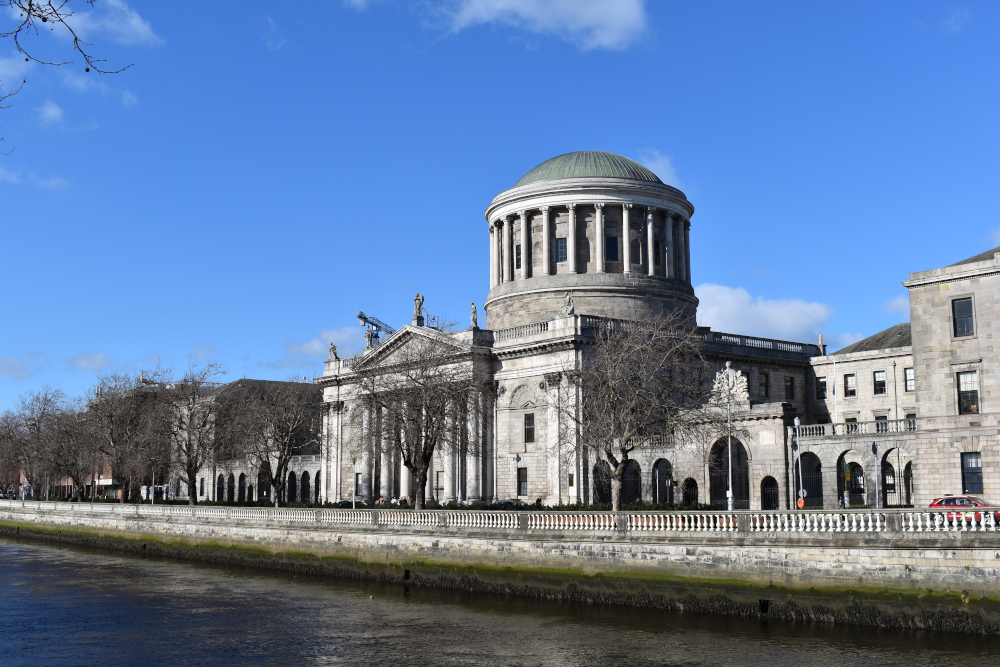
The High Court has awarded the sum of €170,564 to a woman who was struck by a van while saving a car parking space for her husband.

About this case:
- Citation:[2026] IEHC 757
- Judgment:
- Court:High Court
- Judge:Mr Justice Micheál O’Higgins
Delivering judgment for the High Court in December, Mr Justice Micheál P. O’Higgins remarked “the plaintiff unfortunately became overwhelmed by the combination of her psychiatric and physical injuries and that this, combined with her life circumstances, resulted in a major spiral downwards in her life. It is to be hoped that with the conclusion of stress from this litigation and hopefully the abatement of her physical symptoms over time, that the plaintiff will in due course manage to turn a corner.”
Tom Creed SC and Lorraine O’Sullivan SC appeared for the plaintiff instructed by Martin A. Harvey & Co. Solicitors. John Lucey SC and Cian Cotter BL appeared for the defendants instructed by TJ Hegarty Solicitors LLP.
Background
On 13 February 2020, the plaintiff was standing in a car parking space on Main Street, Carrigtwohill, Co Cork with the intention of holding it for her husband’s car. The plaintiff owned and managed a portfolio of rental properties which she owned with her husband, and at the time of the incident, was waiting for her husband to deliver furniture outside one of the properties.
The first defendant’s van pulled up about a foot away from the plaintiff and he asked her to move. The plaintiff told the first defendant that she could not get out of the way because she was waiting for her husband’s van to pull in.
The plaintiff alleged that the first defendant “went for” her in the van while she was standing in the roadway. The plaintiff had her back turned to the van as she was watching for her husband to pull into the space, and as she turned around, the van hit her left knee. The impact caused the plaintiff’s knee to buckle but was not knocked to the ground.
The first defendant was not insured to drive the van in circumstances where he alleged that he had only recently bought the van and had yet to transfer the insurance at the time of the incident. The first defendant alleged that he received verbal abuse from the plaintiff and denied that he struck her, claiming that she was standing on the footpath at the time.
The plaintiff’s claim in respect of her personal injuries came before the High Court.
The High Court
On the evidence, Mr Justice O’Higgins concluded that on the balance of probabilities, the defendant’s vehicle had struck the plaintiff in circumstances where he misjudged the situation, failed to keep a proper lookout and inadvertently struck the plaintiff who was standing on the roadway.
Turning to the medical evidence, the court heard that the plaintiff had undergone a radical personality change since the accident and that having suffered a psychiatric adjustment disorder, she was less able to concentrate on her property management work and was left in a state of subjective distress and emotional disturbance which interfered with her daily life and activities.
Mr Justice O’Higgins was satisfied that the plaintiff’s psychiatric injury was the most serious injury suffered, along with her lumbar back complaint, but found that alleged injuries to the plaintiff’s neck, shoulder and Achilles tendon were not attributable to the accident complained of.
The court noted that the plaintiff’s claim for loss of earnings was the most problematic aspect of the claim, with the advanced figure of €1.752 million comprised of loss of earnings and loss of capital appreciation of certain rental properties which had to be sold.
The court identified issues with the methodology of the plaintiff’s expert accountant, noting that in several respects, he had taken instructions from the plaintiff at face value without carrying out “even basic verification checks”.
The court expressed even greater concern with the fact that the plaintiff had withdrawn an earlier report which advanced a claim for loss of earnings in the amount of €1.4 million, noting that “it is an uncomfortable and off-putting aspect of the case that the plaintiff and her husband appeared to be desirous of wringing every last ounce out of each heading of loss to maximise her claim for loss of earnings”.
Finding that the claim for loss of earnings was not evidentially sustained and that the plaintiff had failed to mitigate her loss where she “steadfastly refused” to hire a property management agent or contractor to do the work that she could not now do, the court explained that in light of the unrealistic claim advanced for future losses and the uncertain claim for past losses, the court would treat the matter conservatively out of fairness to the defendant.
In the circumstances, Mr Justice O’Higgins allowed past losses of €15,000 per annum for a period of four years after the accident, totalling €60,000. The judge explained that this figure also took into account the fact that part of the plaintiff’s incapacity was attributable to injuries not caused by the accident complained of.
As to the injuries complained of, Mr Justice O’Higgins noted that the Personal Injuries Guidelines applied to the case, expressing that while the Review Committee had recommended a 16.7 per cent increase in valuations in line with inflation, the proposed amended Guidelines had yet to have the force of law.
In this regard, the judge noted: “At the same time, however, it would not be unreasonable for the court to take into account, in a general sense, the inflation that has occurred since that date and to not close its eyes to the important development whereby the body responsible for formulating the guidelines has itself determined that they have not kept abreast of inflation and are now, to an extent, out of date.”
The court assessed the plaintiff’s psychiatric injuries as her headline injury, awarding €75,000 in circumstances where same were ongoing and interfered with her quality of life and seriously impacted her ability to carry out her work and her interpersonal relationships for the prior five years.
The court also had regard to the fact that the plaintiff’s prognosis remained unclear but considered that in circumstances where the plaintiff was “able to get by” and did not take psychotropic medications, her injuries would not warrant the application of the higher bracket of the “severe” psychiatric damage category.
The plaintiff’s back and related injuries were assessed as being in the “moderate” category. The court assigned a value of €33,000 to those injuries, discounted by one third to reflect the overlap factors for secondary injuries. Accordingly, an uplift of €22,000 was added to the plaintiff’s award for her psychiatric injuries.
Mr Justice O’Higgins explained that in assigning values towards the top of the damages range for each element, the court had taken account, “in a very general sense”, of the proposed amendments to the Guidelines.
The judge also allowed €13,564 for special damages.
Conclusion
Accordingly, the High Court awarded judgment in the sum of €170,564 to the plaintiff.
Josephine Higgins v Richard Coleman and Motor Insurers’ Bureau of Ireland [2026] IEHC 757

Share this article:

Subscribe to our newsletter to not miss articles like this one:
 SUBSCRIBE