

Written by:

Gillian O'Hanlon BL
Case Reporter
High Court: Tesco fails to secure interlocutory injunction compelling homeware store to continue trading
 Reading time: 6 minutes
Written by:
Gillian O'Hanlon BL
Case Reporter
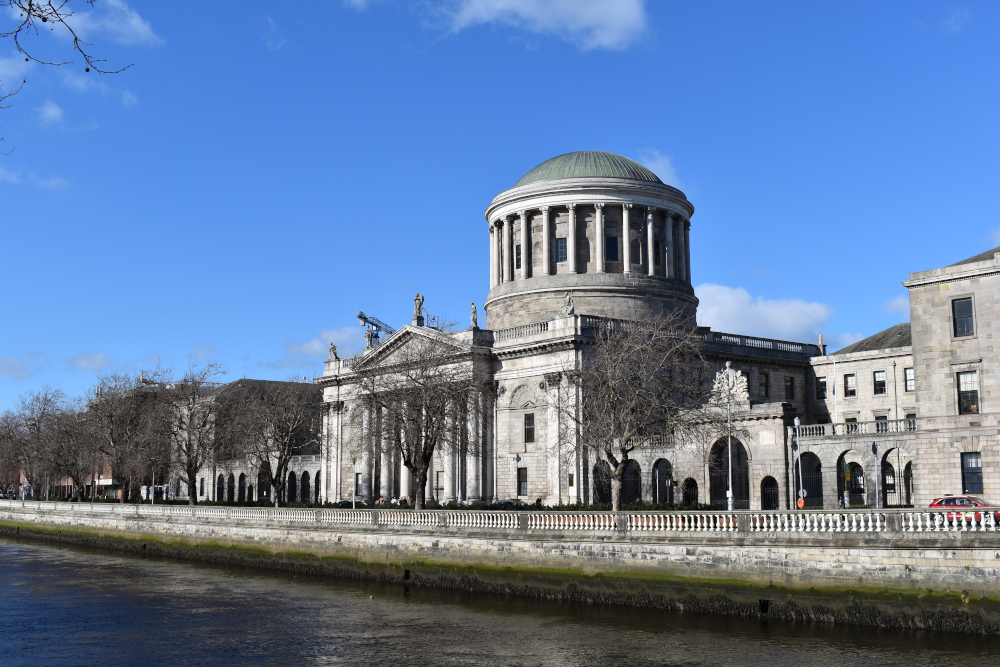
The High Court has refused to grant an interlocutory injunction compelling a homeware store to continue trading at a Tesco supermarket premises in Waterford

About this case:
- Citation:[2026] IEHC 276
- Judgment:
- Court:High Court
- Judge:Ms Justice Marguerite Bolger
Delivering judgment for the High Court, Ms Justice Marguerite Bolger was not satisfied that the defendant company should be compelled to continue trading at Tesco’s premises, where “it would be against the public interest, unwise and would fly in the face of commercial standards of conduct to require the defendant to do so between now and the trial of the action”.
Background
The plaintiff (Tesco) operates a supermarket at a premises in Bath Street, Co. Waterford.
On 4 April 2024, Tesco entered a licence agreement with the defendant for the defendant to run a homeware store for 10 years in an area comprising nearly half of the premises.
On 12 August 2024, the parties agreed by way of side letter that the defendant could break the ten-year licence period after a period of five years, subject to at least three calendar months’ prior written notice.
Prior to the parties entering the licence agreement, there were discussions about inter alia the defendant’s requirements for signage, an issue which continued to be discussed post-contract.
The defendant opened its store on 29 September 2024. The commercial performance of the location was poor, with its business was running at a loss and not projected to be financially viable.
The defendant sought to break the licence agreement early. Tesco sought, by way of an application for an interlocutory injunction, to enforce a “keep open” clause in the licence agreement as against the defendant.
The High Court
Having regard to Merck Sharp & Dohme Corporation v. Clonmel Healthcare Limited [2019] IESC 65, Ms Justice Bolger initially considered whether Tesco had raised a fair issue to be tried.
In that regard, the judge noted Tesco’s claim that it had an unanswerable case in breach of contract and that the burden of proof was on the defendant to prove that the breach was justified.
The defendant claimed that Tesco repudiated the contract, relying on its complaints of difficulties with signage, security and the absence or quality of other tenants.
Ms Justice Bolger was unconvinced that those issues substantially interfered with the defendant’s business.
Relying on Parol Ltd & Caroll Village (Retail) Management Services Ltd v Friends First Pension Funds Ltd & Superquinn [2010] IEHC 498, the judge was not satisfied that the defendant had established that Tesco’s actions substantially deprived it of the benefit of the lease such as to amount to a repudiation thereof.
The court then moved to consider whether, if Tesco succeeded at trial, a permanent injunction would be granted.
Ms Justice Bolger considered that Tesco was required to demonstrate a strong case that it was likely to secure a permanent injunction at trial requiring the defendant to keep its store open in Tesco’s premises for the remainder of the non-break period of the licence agreement, up to 2028.
The judge endorsed CoOperative Insurance Society Ltd v Argyll Stores (Holdings) Ltd [1998] AC 1, noting that it is the clearest case on interlocutory injunctions to compel a loss-making business to continue to trade against its wishes.
The court determined that the analysis of the public interest in terms of the undesirability of forcing a business to trade at a loss against its wishes “to be sensible and reflective of the flexibility of the remedy of interlocutory injunction.”
Noting that Tesco sought, in its plenary summons, both damages in lieu of specific performance of the licence agreement and separately, an order for damages, the court was not satisfied that there was a strong chance that specific performance of the entire licence agreement and side letter would be granted at trial.
On the issue of the balance of convenience, the court explained that there was no real possibility that the matter would not proceed to trial, no suggestion that Tesco was unable to honour its undertaking as to damages, and no suggestion that the defendant could not meet any award for damages which might be made against it at trial.
Tesco argued that damages could never place it in the position which it would otherwise have been in had the defendant complied with its contractual obligations, referring to unquantifiable reputational damage arising from its customers being met with “a swathe of abandoned aisles and shelves in the heart of the store and an overall impression of a sudden collapse in business”.
Ms Justice Bolger, by reference to Somnus GMC Waterford Limited & Anor v Flynn & Anor [2025] IEHC 676, determined that any such damage was quantifiable “particularly as the plaintiff already has had a lengthy period of time since April 2024 with the benefit of the defendant’s presence in its premises and should therefore be able to compare before and after figures of turnover and profit”.
As to Tesco’s submission that permitting the defendant to unilaterally abandon its contractual obligations would create a serious risk of a damaging precedent and might embolden other licensees who wish to cease trading.
In that regard, Ms Justice Bolger opined: “I see no reason why other licensees might take such a step unless they are, like the defendant, trading at a loss and if they are, then they may (depending on the circumstances) fall into the category of the rule as developed and applied in Argyll and in Thompson in potentially being able to resist an interlocutory injunction compelling them to continue to run their loss-making business against their wishes and possibly against the best interests of the company.”
The judge continued: “I have found that to be the correct state of the law and if that has application for the plaintiff’s business model, then so be it.”
As to the preservation of the status quo, the court was not satisfied that the balance of convenience or the interests of justice required the defendant be compelled to continue to trade in Tesco’s premises against its wishes, as to do so would “fly in the face of commercial standards of conduct”.
Conclusion
Accordingly, the High Court refused the reliefs sought.
Tesco Ireland Limited v Multi-Home Retail Limited T/A Choice Stores [2026] IEHC 276

Share this article:

Subscribe to our newsletter to not miss articles like this one:
 SUBSCRIBE