




Written by:

Gillian O'Hanlon BL
Case Reporter
High Court: Teacher struck off register for false representations on 25 job applications
 Reading time: 5 minutes
Written by:
Gillian O'Hanlon BL
Case Reporter
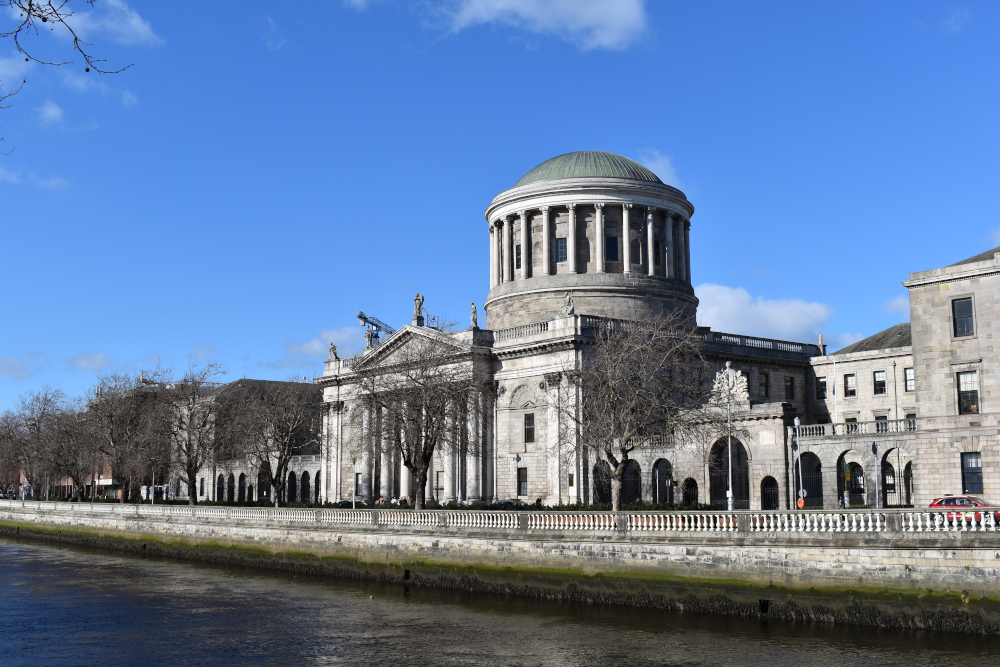
The High Court has confirmed a decision of the Teaching Council to remove a teacher from the register for falsely representing his qualifications, professional status and experience to Cork Education and Training Board

About this case:
- Citation:[2026] IEHC 265
- Judgment:
- Court:High Court
- Judge:Mr Justice David Barniville
Delivering an ex tempore judgment for the High Court, Mr Justice David Barniville determined that there was no “good reason” not to confirm the Teaching Council’s decision where same was appropriate, proper and proportionate and complied with the relevant legal principles relating to sanctioning in professional disciplinary cases.
Background
In March 2024, a complaint was made against the respondent to the Teaching Council’s Investigating Committee by the Chief Executive of Cork Education and Training Board.
The complaint alleged that the respondent, in his applications for 23 teaching positions and two non-teaching positions with the Board, falsely represented inter alia that he held various qualifications including a Masters of Professional Education from the University of Limerick, that he held a full registration as opposed to his conditional registration with the Council and had been employed in certain colleges.
The complaint was referred to the Disciplinary Committee of the Council on grounds of alleged professional misconduct on part of the respondent.
The Teaching Council
A Panel of the Disciplinary Committee held an inquiry over two days which found that the allegations as against the respondent were true. In particular, it was noted that on a number of occasions, the respondent had acknowledged that he had been untruthful in relation to his qualifications to teach and had not denied any of the allegations.
The Panel concluded that even though the respondent had not been successful in any of the competitions, it was essential that information provided by applicants for teaching positions is accurate and reliable for the purposes of protecting the public in the context of a regulated profession.
The Panel found that the respondent had breached a number of the provisions of the Code of Professional Conduct for Teachers (2nd Edition, July 2016) relating to professional integrity, to the requirement on teachers to represent themselves, their professional status, qualifications and experience honestly, and to the requirement to uphold the reputation and standing of the profession.
On 13 March 2026, the Panel reconvened to consider the question of sanction, deciding to remove the respondent from the register and that the respondent could not reapply under s.31 of the Teaching Council Act 2001 (as amended) to be restored to the register for a period of 10 years.
As to the reasons for its decision, the Panel set out inter alia that the respondent’s conduct was manifestly dishonest and that if his deception had resulted in his being appointed to any of the positions applied for, he would have been in a position to teach students in subject areas for which he had no qualification.
Having referred to the Teaching Council Sanction Guidance Document of September 2021, the Panel determined that the removal of the respondent was the sanction that struck the best balance where no mitigating factors justifying a more lenient sanction had been identified, and where numerous aggravating factors were present including a pattern of intentional conduct.
With regard to the need to protect the public, the Panel determined that there was a potential risk of future harm posed by the respondent’s conduct, that it was necessary to deter others in the profession from engaging in similar conduct and to send a reassuring message to the public that teaching is a well-regulated profession.
The applicant applied to the High Court for the confirmation of its decision. The Council also sought an order that it be at liberty to communicate the terms of the order to the regulatory bodies for teaching in Northern Ireland, England, Wales and Scotland.
The High Court
Mr Justice Barniville, President of the High Court, noted that the test in s.44(5) of the 2001 Act provides that the court must confirm the decision of the Council unless it sees “good reason” not to do so, such as procedural impropriety or irregularity, a failure to observe the standards of natural and constitutional justice, a serious and significant error of fact or of law, or where the court is satisfied that the decision is one that no reasonable regulatory body could make on the basis of the evidence.
Mr Justice Barniville explained that the statutory formulation had been considered recently in cases including Medical Council v M.A.G.A [2016] IEHC 779, in Medical Council v Lohan-Mannion [2017] IEHC 401 and in Teaching Council v S.R [2018] IEHC 582, and that he had reviewed the cases and interpreted them in Nursing and Midwifery Board v Burke [2025] IEHC 557.
The court confirmed that none of the factors constituting a “good reason” not to confirm the decision were present in the case before the High Court, and that the Council’s decision was one which was an appropriate, proper and proportionate decision and which complied with all of the relevant legal principles applicable to sanctioning in professional disciplinary cases.
Conclusion
Accordingly, the High Court confirmed the applicant’s decision and gave liberty to the Council to communicate the terms of the order as sought, in circumstances where there is no automatic notification to those bodies under the European Union Internal Market Information Notification System.
The Teaching Council v James Clancy [2026] IEHC 265

Share this article:

Subscribe to our newsletter to not miss articles like this one:
 SUBSCRIBE

