



Written by:

Gillian O'Hanlon BL
Case Reporter
High Court: State’s application for security for its costs refused in visa judicial review case
 Reading time: 6 minutes
Written by:
Gillian O'Hanlon BL
Case Reporter
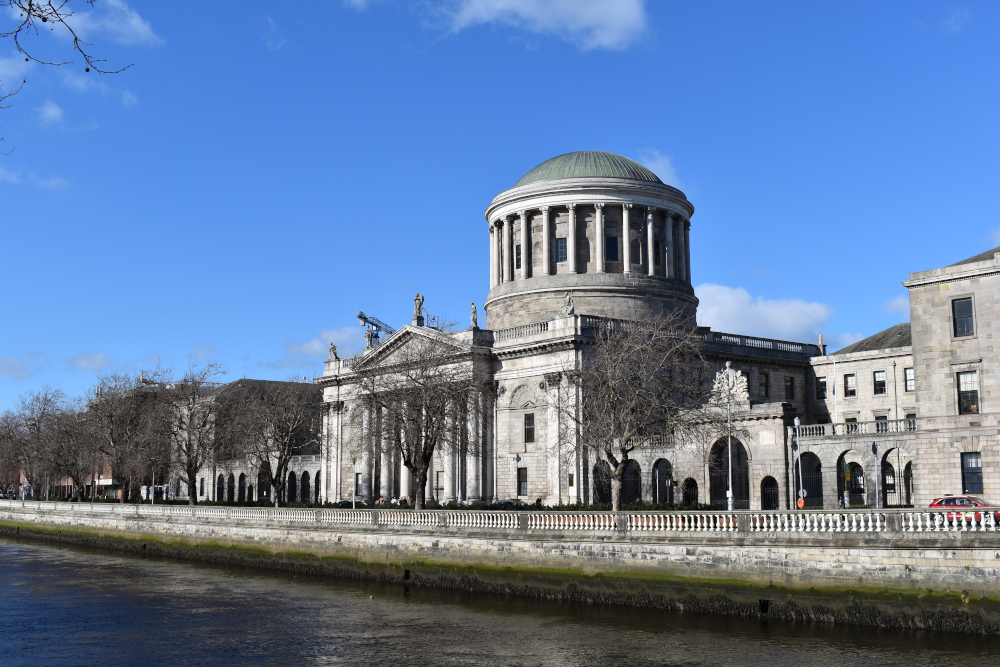
The High Court, in the context of a visa refusal case, has refused an application by the State for security for its costs where acceding to the application would have effectively terminated the proceedings.

About this case:
- Citation:[2026] IEHC 14
- Judgment:
- Court:High Court
- Judge:Mr Justice Barry O'Donnell
Delivering judgment for the High Court, Mr Justice Barry O’Donnell concluded that “where the consequence of an order for security for costs is that the claim will not proceed and in effect be terminated without any adjudication on the merits, I consider that the just outcome should be that the application should be refused”.
Background
The applicant, a Pakistan national, obtained an offer of employment as a chef de partie in an Irish restaurant and obtained a general employment permit which was valid from 1 November 2022 to 31 October 2024.
The applicant then applied for a visa, which application was refused at first instance on 16 January 2023. That decision was upheld in a decision communicated by letter dated 23 January 2023.
The applicant was granted leave to apply for judicial review on 23 June 2024. He alleged inter alia that there had been a failure to have proper regard to the earlier grant of a general employment permit.
The proceedings were fully contested by the respondent, who contended that one of the reasons for the refusal was the applicant had failed to furnish a bank statement covering the six-month period immediately preceding his visa application.
The respondent subsequently brought an application seeking security for its costs pursuant to Order 29, rule 1 of the Rules of the Superior Courts, on the basis that the applicant had failed to furnish security amounting to one third of the respondent’s projected €20,000 cost of defending the proceedings.
The respondent alleged that it had a prima facie defence to the claim, that the applicant was ordinarily resident outside the State, the EU or a Lugano country, that there was no human rights elements to the case, and the case did not raise issues of EU law, constitutional rights or ECHR concerns.
The High Court
Having set out the provisions of Order 29, Mr Justice O’Donnell noted that in the context of judicial review, Order 84, rule 20(7) provides that where the court grants leave to apply for judicial review, “it may impose such terms as to costs as it thinks fit”, suggesting a wide discretion.
The court also considered Farrell v. Bank of Ireland [2012] IESC 42, which observed that the concept of ordering security for costs involves balancing the right of a defendant to recover costs if it successfully defends a claim against the constitutional right of a plaintiff to have access to the courts, and that the consideration starts from the position that in the absence of a significant countervailing factor, the balance of justice requires that no security be given as impecunious parties might be shut out from the court process.
Mr Justice O’Donnell explained that in the case of individual plaintiffs, one such countervailing factor is the presence of a plaintiff outside the State, the EU or a Lugano country, due to the difficulty in recovering costs were a plaintiff is not readily amendable to the process of the Irish courts or other courts which give a high level of recognition to orders of the Irish courts.
The judge found that there was no dispute that the applicant was both resident in Pakistan and was unable to meet any requirement for security, and was further satisfied that the respondent had articulated a prima facie defence.
The court noted that a feature of the case law is that security for costs may be refused where the applicant party has delayed in bringing the application, causing the opposing party to incur additional costs that could otherwise have been avoided.
In this regard, the court explained that while there had already been a full exchange of pleadings, this did not appear to have involved the applicant incurring any substantial additional costs over and above those associated with commencing the proceedings, as he did not reply to the State’s opposition papers.
Finding that the issue for the court was how it should exercise its discretion, Mr Justice O’Donnell considered A.K. (Somalia) v. Minister for Justice and Equality [2018] IEHC 434 which set out that if a grant security for costs would effectively determine the action, this was a factor weighing against the making of such an order, “albeit not an automatic bar”.
The judge also considered G.T. v IPAT and Minister for Justice [2025] IEHC 473, noting that both cases involved judicial review applications in the context of immigration cases engaging issues of human rights and EU law, and involving situations in which the applicants had been residing in the State and their challenges sought to address situations where the respondent’s decision had directly led to their absence from the State.
Mr Justice O’ Donnell highlighted that the “current case, by contrast, does not have a human rights or EU law context”, was “properly characterised as a case concerning the legal regulation of economic migration”, and was not a case where the applicant had ever resided in the State.
Further, the applicant had not established that his inability to meet an award of security for costs was attributable to the wrong complained of, and the respondent had established that the applicant would be unable to meet an order for costs if his substantive application failed.
Nonetheless, the judge was cognisant of the wider impact on cases concerning visa refusals and proper decision-making in the visa context if applications for security for costs were to become commonplace.
The court recognised that the case before it was one in which any decision was likely to result in some level of injustice, finding that in seeking to strike a balance carrying the least risk of injustice, the application should be refused as the consequence of an order for security would be that the claim would be terminated without any adjudication on the merits.
Conclusion
Accordingly, the High Court refused the application.
Hamza v The Minister for Justice [2026] IEHC 14

Share this article:

Subscribe to our newsletter to not miss articles like this one:
 SUBSCRIBE