



Written by:

Gillian O'Hanlon BL
Case Reporter
High Court: Speculative clinical records claim struck out
 Reading time: 5 minutes
Written by:
Gillian O'Hanlon BL
Case Reporter
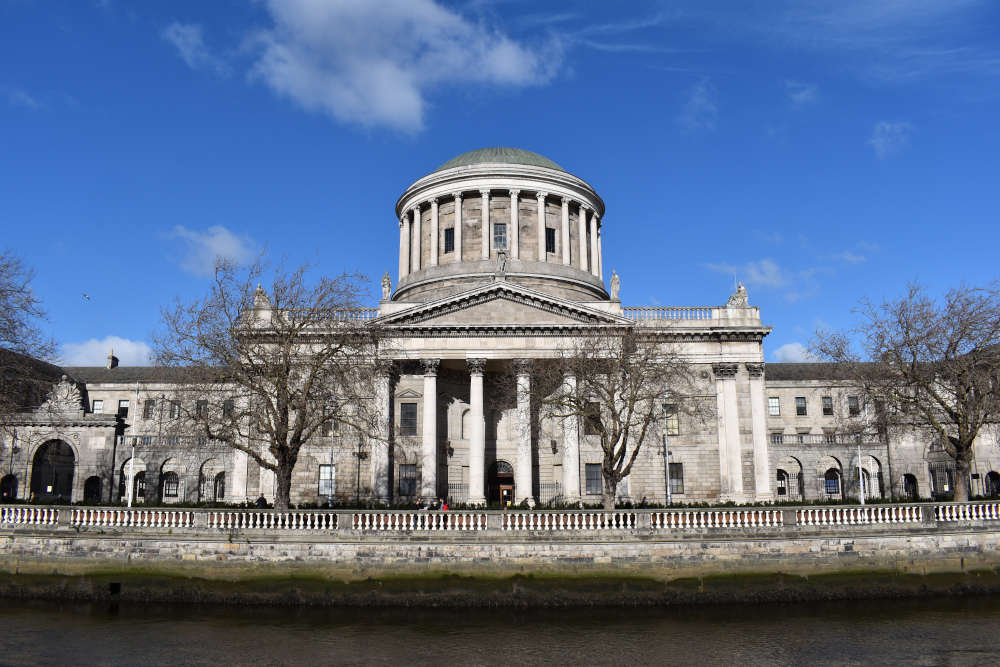
The High Court has struck out proceedings seeking discovery of records alleged to have arisen from an audit of a series of patient cases at Beaumont Hospital from 2010 to 2013.

About this case:
- Citation:[2026] IEHC 672
- Judgment:
- Court:High Court
- Judge:Ms Justice Marguerite Bolger
Delivering judgment for the High Court, Ms Justice Marguerite Bolger determined that the proceedings constituted an abuse of process where they had no prospect of success, emphasising that “Beliefs and suspicions, no matter how subjectively genuinely held they might be, are not evidence and cannot form the basis of a viable cause of action.”
Background
In May 2012, the plaintiff’s mother suffered a stroke and following her admission to the Mater Hospital, was transferred to Beaumont for a mechanical thrombectomy using a device which the plaintiff alleged was manufactured by two of the defendants.
Following her procedure on 9 May 2012, the plaintiff’s mother required 24-hour care until her death in April 2021.
In 2015, an article was published by the first to fifteenth defendants in the Journal of Clinical Radiology which reported the experience of a regional/referral service with endovascular treatment for patients with acute ischaemic stroke and large vessel occlusion, prompting a Freedom of Information request by the plaintiff to Beaumont Hospital for records relating to the article in 2019.
In 2025, the Office of the Information Commissioner determined that Beaumont Hospital’s explanation for refusing the records, that no such records existed, was reasonable.
The plaintiff instituted proceedings in March 2025 seeking discovery of records containing data relating to the study the subject of the 2015 article.
The plaintiff brought various applications, including to amend her plenary summons to include inter alia fraud, deceit, misrepresentation and concealment on part of the defendants, alleging that she had been approached and engaged in a decision-making process in relation to her mother’s procedure which “was presented as legitimate, but which has since been evidenced to have lacked any lawful, clinical or ethical foundation.”
In that regard, the plaintiff claimed that her claims for recovery and disclosure of data pertaining to her mother were first identified on 2 December 2019, the date upon which she apparently became aware of the article, and were not time-barred until the concealment was discovered.
The plaintiff further sought to claim damages for loss of earnings and loss of career opportunities by virtue of her providing care to her mother following her procedure.
A number of the defendants to the action brought an application to dismiss the plaintiff’s proceedings as being bound to fail and/or an abuse of process.
The High Court
The court considered an affidavit sworn by one of the 2015 article’s authors, who confirmed that the article simply recorded the clinical outcomes of patients whose records were reviewed in the study for the article, was not a research project or clinical trial and did not require ethical approval in 2014.
The affidavit alleged that the plaintiff’s proceedings seemed to be based on a “false premise” of some sort of clinical trial having been conducted involving the plaintiff’s mother, when in fact the article was based upon a study of all patients who had a particular treatment at Beaumont Hospital over a three-year period and was a retrospective audit or service review of a series of cases.
Ms Justice Bolger observed that the plaintiff seemed to believe that records must exist arising from the study discussed in the article, noting that “This is to misunderstand that the article was an analysis of records rather than a creation of records.”
The judge found it “difficult to decipher” what the plaintiff’s cause of action was, highlighting that the plaintiff had not pleaded the Freedom of Information Act and that in any event, the court in Doherty & Anor v South Dublin County Council & Ors [2007] IEHC 4 confirmed that where the Oireachtas establishes a specific statutory procedure for the investigation and determination of complaints, a litigant could not circumvent that procedure by seeking to pursue the complaint through plenary proceedings.
The court further considered that while the plaintiff had conducted an extraordinary level of work and analysis over the years following her mother’s surgery in 2012 and her death in 2021, “Beliefs and suspicions, no matter how subjectively genuinely held they might be, are not evidence and cannot form the basis of a viable cause of action.”
Ms Justice Bolger also considered that the plaintiff’s assertions of fraudulent misrepresentation could not implicate the seventeenth and eighteenth defendants, as any complaint against them as manufacturers should have been brought by the deceased’s estate pursuant to the Liability for Defective Products Act 1991 or the relevant European Directives within the statutory limitation period.
Not being satisfied that the plaintiff had established any evidence of fraud, the judge followed Meehan v. Ireland [2025] IECA 59 in finding that the proceedings were an abuse of process where they had no prospect of succeeding.
In the event that she was wrong in that view, Ms Justice Bolger also decided that the plaintiff was “hopelessly statute barred” and in the absence of any evidence of fraud, there was no extension of her date of knowledge.
As to the plaintiff’s assertion that her proceedings sought injunctive relief, the court found that she had no prospect of securing same based on either her current or amended pleadings, which did not seek expressly seek such relief, and having regard to the lengthy delay since she became aware of the 2015 article.
Ms Justice Bolger concluded that the proceedings, whether as already constituted or pursuant to the amended plenary summons, had no prospect of succeeding.
Conclusion
Accordingly, the High Court struck out the proceedings against the first, second, third, fourth, fifth, eighth, ninth, twelfth, thirteenth, fourteenth, fifteenth, and sixteenth defendants, and refused the plaintiff’s applications.
McEvoy v McCusker & Ors [2026] IEHC 672

Share this article:

Subscribe to our newsletter to not miss articles like this one:
 SUBSCRIBE

