

Written by:

Gillian O'Hanlon BL
Case Reporter
High Court: Retired Garda awarded €404,083.96 following shooting
 Reading time: 5 minutes
Written by:
Gillian O'Hanlon BL
Case Reporter
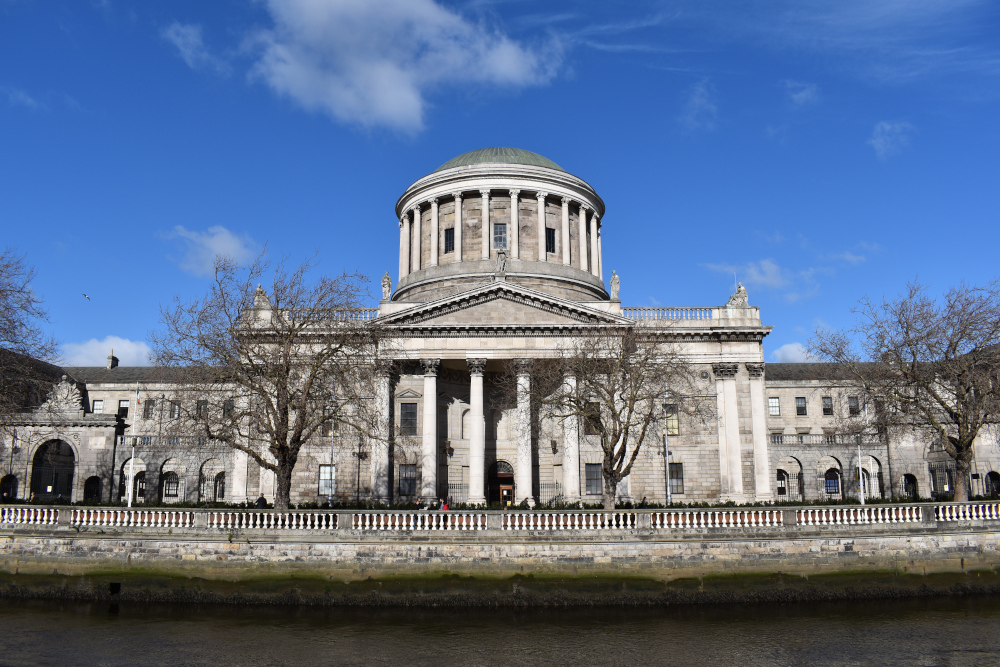
The High Court has awarded €404,083.96 in damages to a former Garda who was shot while on duty in 2017.

About this case:
- Citation:[2026] IEHC 736
- Judgment:
- Court:High Court
- Judge:Ms Justice Leonie Reynolds
Delivering judgment for the High Court in October, Ms Justice Leonie Reynolds in assessing the damages to which the applicant was entitled opined, “The effects of the psychiatric injuries in this case cannot be underestimated and have cost the applicant his career as a member of An Garda Síochána.”
Background
On 7 December 2017, the applicant was shot and sustained serious injuries whilst on duty as a member of An Garda Síochána during a planned search of a premises for controlled drugs and firearms.
The applicant, who was removed by ambulance following his loss of consciousness and blood loss at the scene, was diagnosed with a “through-and-through” gunshot wound in the soft tissues of his left arm, with a displaced cortical fracture of the lateral aspect of the distal left humeral diaphysis and ulnar nerve neuropraxia-related symptoms in the little finger of his left hand.
The applicant underwent emergency surgery and subsequently required further surgical intervention due to ongoing nerve difficulties.
He considered the incident profoundly traumatic and testified to experiencing psychological difficulties, including recurring recollections of the shooting, panic attacks and ongoing distress requiring extensive psychiatric treatment and counselling over a prolonged period.
The applicant’s medical retirement from An Garda Síochána in late 2022 was attributed with regret to those ongoing psychological difficulties, the applicant having successfully passed his inspector’s examination and having ambitions of further advancement in his Garda career.
The applicant was authorised to proceed with his application under the Garda Síochána (Compensation) Acts 1941-1945 (as amended), with malice having been admitted pursuant to s.2 of the Act.
The High Court
Ms Justice Reynolds considered evidence to the effect that despite the applicant’s return to work in February 2019, he had reached a point in 2022 where continuation in An Garda Síochána had become medically unsustainable and as a result of his post-traumatic stress disorder (PTSD), the applicant lost his 22-year career, which he viewed as a vocation.
The judge heard from psychiatric experts that the applicant had availed of appropriate treatment and that while his symptoms had initially improved, they were retriggered by an incident in March 2021 in the Central Mental Hospital, leading to his later retirement on medical grounds.
As to the applicant’s physical injuries, the court considered evidence that inter alia the applicant had suffered injuries leading to permanent deficits in his ulnar digits and cold intolerance.
As to general damages, the court noted the parties’ agreement that the dominant injury in the case was the applicant’s PTSD and that by reference to the Personal Injury Guidelines, there was strong medical evidence to support an assessment in the mid-range of the “severe” category, awarding the applicant €90,000.
As to the non-dominant injuries, being the physical injuries suffered by the applicant, Ms Justice Reynolds determined that an omnibus figure of €50,000 was fair, reasonable and appropriate.
Noting that in the ordinary course, the court is obliged to apply a “step-back” methodology to ensure that the overall award is just and proportionate without duplication of compensation where separate injuries are valued individually, the High Court declined to apply a discount to the damages.
In that regard, Ms Justice Reynolds opined “particular circumstances arise in this case which warrant a departure from that approach, namely, the distinct and separate physical and psychiatric injuries, each of which has had distinct consequences for the applicant and affected different aspects of his life and functioning. Further, the injuries involved limited temporal overlap and continue to give rise to separate residual sequelae.”
The judge further explained that in light of awards under the Guidelines being lower than those made under the Book of Quantum, and in light of increasing inflation and the failure to implement the Board of the Judicial Council’s proposal to increase award levels to preserve the real value of the original award ranges, any discount would be “grossly unfair and unjust to the applicant”.
As to special damages, the court considered the applicant’s contention that “but for” the consequences of the shooting and his psychiatric injury therefrom, he would have continued in his Garda career for many years and would have sought to move up the ranks.
Finding this contention to be supported by several factors, the court expressed that it was nonetheless cognisant that there was no evidence demonstrating that the applicant was likely to be promoted to inspector and that the applicant had conceded that he made a personal lifestyle choice to remain in the fitness company set up by him and his wife without failing to explore other opportunities offering increased remuneration.
Proposing to approach the applicant’s claim for future losses on the basis that he likely would have remained a sergeant until retirement at age 62, the court awarded €118,530 for past loss of net earnings, €73,340 for loss of future net earnings and €60,600 for loss of gratuity, with the remaining special damages being agreed in the sum of €11,613.96.
Conclusion
Accordingly, the High Court awarded the applicant a total of €404,083.96 in damages.
McManus v The Minister for Public Expenditure and Reform [2026] IEHC 736

Share this article:

Subscribe to our newsletter to not miss articles like this one:
 SUBSCRIBE