



Written by:

Gillian O'Hanlon BL
Case Reporter
High Court: Proceedings stayed pending genetic testing of minor
 Reading time: 6 minutes
Written by:
Gillian O'Hanlon BL
Case Reporter
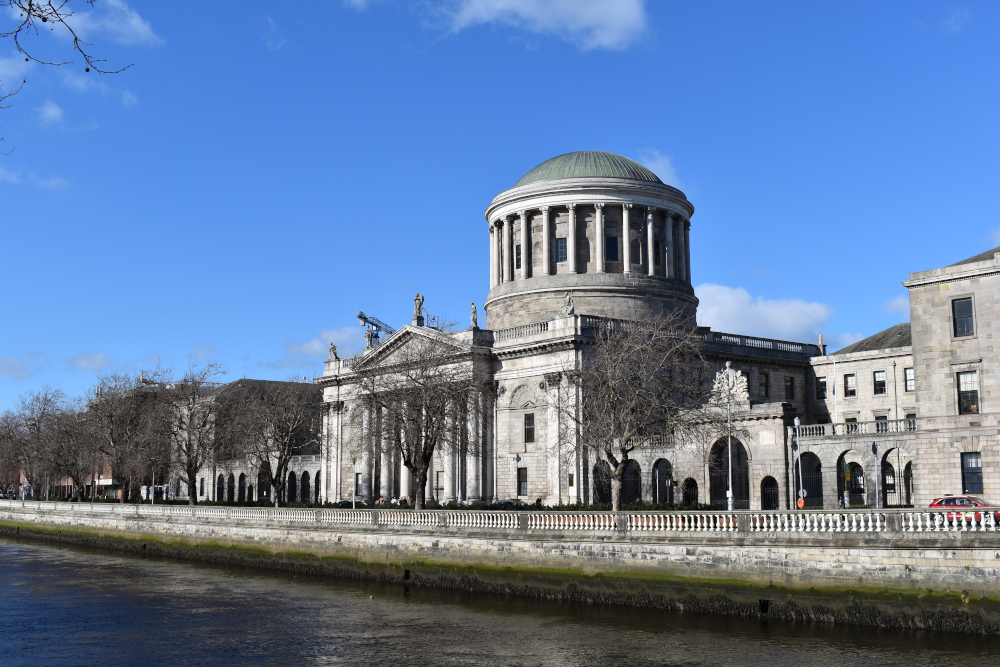
The High Court has made an order staying medical negligence proceedings pending the genetic testing of a minor plaintiff.

About this case:
- Citation:[2026] IEHC 234
- Judgment:
- Court:High Court
- Judge:Mr Justice Garrett Simons
Delivering judgment for the High Court, Mr Justice Garrett Simons concluded that “the results of the medical examination and genetic testing are not only likely to assist in resolving the issues in controversy between the parties, but that the results are likely to have a meaningful bearing on the outcome of the personal injuries action”.
Background
The plaintiff, born in January 2020, was admitted to St Luke’s General Hospital Kilkenny on 9 February 2020 with a two-day history of reduced feeding and reported episodes of vomiting.
The plaintiff remained in hospital until 12 February 2020, during which she suffered nystagmus, was pale and continued to vomit. She was released without head imaging being performed prior to discharge and advice was given to the effect that she suffered with cow’s milk protein allergy and associated reflux.
On 18 February 2020, the plaintiff was brought back to the hospital as her parents were concerned that her condition was worsening. It was pleaded that, notwithstanding her condition, the plaintiff’s file was not available and her parents were advised to take her away.
The plaintiff was brought back to the hospital and was sent away again on 21 February 2020. It was pleaded that on 25 February 2020, a public health nurse reviewed the plaintiff and measured her occipital-frontal head circumference, finding inter alia increased head circumference, a bulging fontanelle and “sun-setting” eyes.
The plaintiff urgently re-attended the hospital on 25 February 2020, with a scan allegedly demonstrating intracranial pathology consistent with hydrocephalus with associated haemorrhagic features. The plaintiff was transferred to Temple Street Children’s Hospital, and an external ventricular drain was inserted.
A subsequent neurodevelopmental assessment and MRI brain scan on 28 February 2020 recorded findings consistent with grade IV intraventricular haemorrhage with parenchymal haemorrhage and surrounding oedema.
It was alleged that the defendant was negligent in its care of the plaintiff resulting in delayed diagnosis and treatment, with consequent brain injury and disability.
The defendant issued a motion seeking to stay the proceedings until such time as the plaintiff and her parents attend for a clinical examination by the defendant’s genetics expert and provide cheek swab samples to allow trio exome sequencing testing to be conducted.
The High Court
Mr Justice Simons considered the inherent jurisdiction of the court to stay proceedings as confirmed in McGrory v. Electricity Supply Board [2003] 3 IR 407, noting that it was not necessary to look beyond our own domestic case law and that the overarching principle is that a plaintiff must not unfairly and unreasonably impede the defence by refusing to attend for a medical examination.
The judge outlined that a balancing exercise was required between the right to defend proceedings and the potential interference with a plaintiff’s rights, particularly to privacy, confidentiality and bodily integrity.
The court explained that the first issue to be addressed was the relevance or materiality of the requested examination to the proposed defence, and once that threshold had been met, the court was obliged to balance the competing rights of the parties, an exercise involving a proportionality assessment.
Mr Justice Simons considered three reports of a consultant clinical and biochemical geneticist retained by the defendant which outlined that the clinicians involved in the plaintiff’s care had suspicions about an underlying genetic diagnosis and that she concurred with them.
The reports outlined numerous proposed safeguards intended to be implemented to ensure that any investigation was proportionate, ethical and tightly confined to the questions arising, and further opined that a genetic diagnosis would provide therapeutic benefit to the plaintiff.
The plaintiff’s legal representatives filed no medical evidence in response, with Mr Justice Simons remarking that an affidavit filed by the plaintiff’s solicitor which purported to criticise certain aspects of the medical expert’s evidence was “entirely inappropriate” where the solicitor had “neither the requisite independence nor the expertise to offer any admissible opinion on genetic testing”.
On the issue of relevance and materiality, the court considered an argument to the effect that the proposed genetic testing did not fulfil the criterion of relevance as the defendant had admitted in its defence that if measurements had been taken earlier, the plaintiff’s hydrocephalus could have been diagnosed and identified earlier.
The plaintiff’s legal team also contended that she had suffered an indivisible injury and as such, if the court were to find that the delay in diagnosis and treatment had made a “greater than negligible” contribution to her injuries, then the plaintiff could recover damages in respect of the entirety of her current medical presentation.
Mr Justice Simons pointed out that the ‘indivisible injury’ principle “does not give rise to a presumption of causation; still less does it reverse the burden of proof”.
Highlighting that the only expert evidence before the court was that of the defendant’s expert, the judge was satisfied that the proposed medical examination was not only relevant, but that the results would likely have some meaningful bearing on the outcome of the proceedings.
The court was not persuaded by contentions on behalf of the plaintiff that prior genetic investigations were extensive and negative, finding that those submissions contradicted the expert evidence before the court which opined that the genetic work carried out to date was incomplete.
Moving to balance the rights of the parties, the High Court was satisfied that the expert’s proposed process adequately addressed the plaintiff’s parents’ concerns related to inter alia privacy, autonomy and data security.
On the other hand, the court considered that the defendant’s right to defend the proceedings would be impeded in the absence of genetic testing.
As to allegations of delay on part of the defendant in issuing its motion, Mr Justice Simons explained that he had liaised with Mr Justice Paul Coffey to ensure that the action would be specially fixed for hearing at the earliest date convenient to the parties, and as such, no material prejudice had been suffered by the plaintiff.
Conclusion
Accordingly, the High Court made an order staying the proceedings until such time as the clinical examination and trio exome sequencing testing were complete.
C (A Minor) v Health Service Executive [2026] IEHC 234

Share this article:

Subscribe to our newsletter to not miss articles like this one:
 SUBSCRIBE

