



Written by:

Gillian O'Hanlon BL
Case Reporter
High Court: Peter Nowak fails to set aside 2017 strike out order
 Reading time: 5 minutes
Written by:
Gillian O'Hanlon BL
Case Reporter
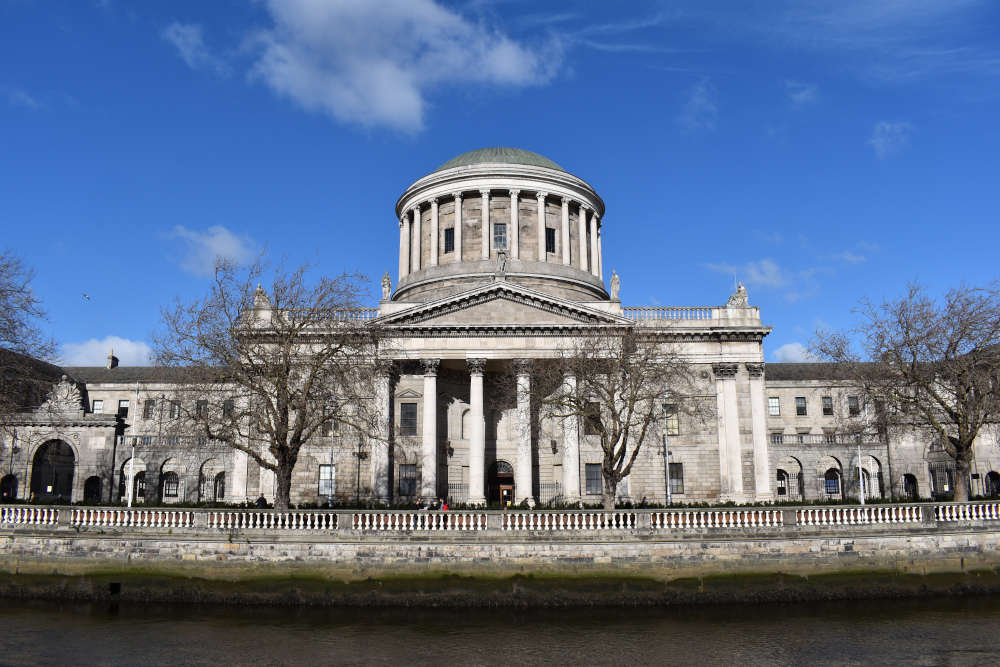
The High Court has refused to set aside a final order of the High Court striking out Peter Nowak’s appeal from a 2016 Circuit Court decision in his favour.

About this case:
- Citation:[2026] IEHC 646
- Judgment:
- Court:High Court
- Judge:Mr Justice Rory Mulcahy
Delivering judgment for the High Court, Mr Justice Rory Mulcahy emphasised that “Whatever interests of justice may have been served by revisiting the strike out Order just after it was made, there could be no merit in doing so nine years later, after Mr Nowak has pursued and failed in other related litigation.”
Background
In 2006, the appellant began his employment with the second respondent, PWC.
In 2009, the appellant was dismissed on the basis of his repeated failure to pass exams required to become a chartered accountant .
The Employment Appeals Tribunal concluded that the appellant had been unfairly dismissed and awarded him the sum of €7,500 euro, which sum was increased to €34,000 upon his appeal to the Circuit Court.
In October 2016, the appellant brought a further appeal to the High Court concerning the Circuit Court’s jurisdiction to address the legal status of the examinations conducted by the Institute of Chartered Accountants of Ireland (ICAI).
The appeal was struck out by Mr Justice Seamus Noonan on 24 February 2017 on grounds that it was frivolous and vexatious and/or an abuse of process and/or was bound to fail and/or disclosed no reasonable cause of action under the Unfair Dismissals Act 1977 and/or raised issues outside the jurisdiction of the High Court.
The appellant had written to PWC’s solicitors in response to the motion in January 2017, stating that PWC was not entitled to rely on Order 19, rule 28 of the Rules of the Superior Courts (RSC) to seek to strike out his appeal as that applied to pleadings in plenary proceedings only.
On 23 January 2026, the appellant issued an application to set aside the order of the High Court dated 24 February 2017 striking out his appeal.
The appellant averred that while he was not in attendance in court for the hearing of the strike out application, he attended before Mr Justice Noonan on 30 May 2017 “to question the reasonableness of his order” and was allegedly forcibly removed from court that day.
The appellant further alleged that the Central Office violated Order 19 RSC by accepting PWC’s irregular notice of motion and that his appeal was struck out in circumstances “amounting to fraud”.
In response, PWC argued that the exceptional jurisdiction which the appellant sought to invoke was not engaged and that this application constituted an impermissible attempt to appeal the strike out order.
The High Court
Mr Justice Mulcahy accepted that “There is no doubt that a jurisdiction exists to re-visit final orders (see, generally, Re Greendale Developments (No. 3) [2000] 2 IR 514 and subsequent case law). However, the jurisdiction is wholly exceptional.”
However, the court observed that, as per G v Director of Public Prosecutions [2023] IEHC 386 and Nowak v Intesa Sanpaolo Vita SpA [2026] IEHC 295, “there must be some doubt whether such a jurisdiction exists at all where an unfettered right of appeal is available”.
The court continued, “even if one assumes for present purposes that a jurisdiction exists to revisit a final order of the High Court on an appeal from the Circuit Court, notwithstanding the constitutional right to seek leave to appeal to the Supreme Court, it is abundantly clear that there is no basis for exercising the jurisdiction in this case.”
Mr Justice Mulcahy noted that insofar as the appellant alleged fraud against PWC, there was no factual or evidential basis for those allegations and his legal submissions relied upon a “fundamental breach of fair procedures” rather than fraud.
In circumstances where it was clear from the terms of the strike out order that the appellant’s objections thereto had been considered by the High Court, the judge determined there had been no breach of fair procedures or denial of justice in the case.
The court explained that even if the appellant was correct that PWC was not entitled to seek the order striking out his appeal, he had “ample opportunity” to make that case at the hearing of the motion, but had deliberately declined to attend the hearing and had expressed a prior intention to appeal and then did not do so.
Mr Justice Mulcahy further highlighted that even if there had been a breach of fair procedures, the appellant’s unexplained delay in seeking relief nine years later would be fatal to his application, drawing an analogy with applications to extend time to appeal.
Finding that “A delay of nine years would require something wholly extraordinary to justify the revisiting of a final order”, the High Court concluded that even if there were merit in the appellant’s underlying complaint about PWC’s motion, “the court’s decision on that motion has become final and the time has long since passed when any step might be taken to revisit the strike out Order. Mr Nowak has not, in any event, identified any basis upon which the court would carry out such an exercise.”
Conclusion
In the circumstances, the High Court refused the application.
Peter Nowak v PricewaterhouseCoopers and PricewaterhouseCoopers Services [2026] IEHC 646

Share this article:

Subscribe to our newsletter to not miss articles like this one:
 SUBSCRIBE