


Written by:

Gillian O'Hanlon BL
Case Reporter
High Court: Pedestrian knocked down by bus awarded €65,400
 Reading time: 5 minutes
Written by:
Gillian O'Hanlon BL
Case Reporter
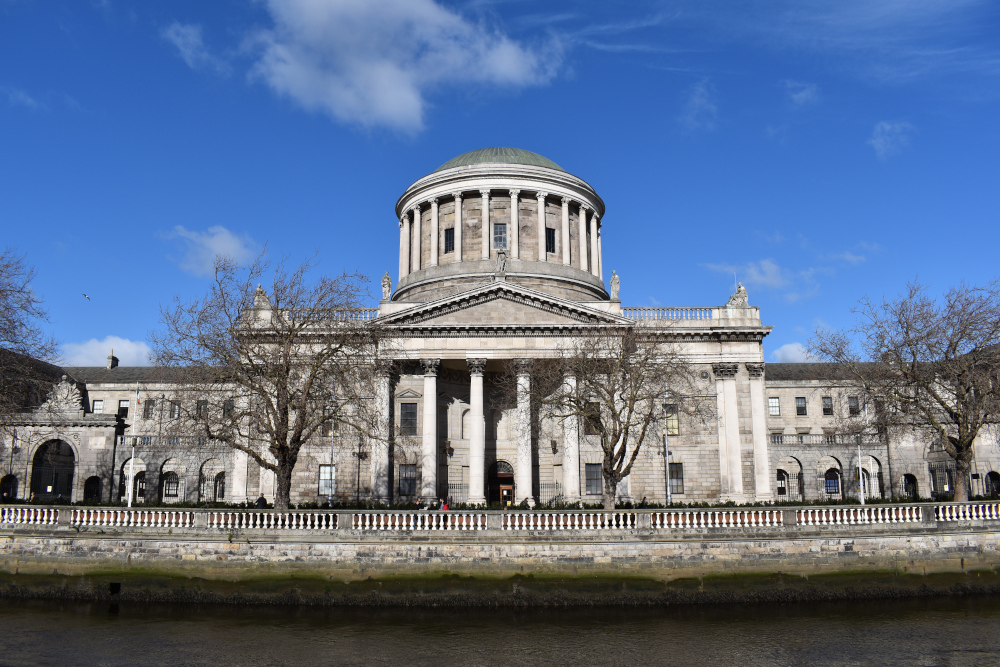
The High Court has awarded €65,400 in damages to a pedestrian who knocked down by a Bus Eireann bus whilst crossing the road.

About this case:
- Citation:[2026] IEHC 691
- Judgment:
- Court:High Court
- Judge:Mr Justice Paul Coffey
Delivering judgment for the High Court in October, Mr Justice Paul Coffey highlighted that whilst there were challenges in assessing the medical evidence in the case, the evidence provided “independent support for the plaintiff’s assertion that, whatever underlying degenerative pathology was present, he had not previously experienced material symptoms on his right side.”
Background
On 28 December 2023 in Cork city, the plaintiff, then in his 60’s, was crossing the road with the pedestrian light in his favour when he was struck by the defendant’s bus as it turned into the junction.
The plaintiff was more than halfway across the road when the collision occurred and he was propelled across to the kerb, striking his head, right shoulder and right hip.
After a friend drove the plaintiff home, he recounted being in shock and vomiting. The plaintiff stated that he experienced soreness on his right hand side and his neck. There was no contemporaneous record of the plaintiff having attended for medical treatment in the immediate aftermath of the accident.
The plaintiff claimed for headaches, injury to his right shoulder and soft tissue injuries to his neck, lower back, right hip and right forearm.
The defendant did not dispute liability, and so the claim proceeded to trial before the High Court on an assessment of damages basis only.
The High Court
Mr Justice Coffey heard inter alia that the plaintiff had, in 2023, suffered a significant domestic fall in which he fell out of bed, attempted to make his way for assistance, and slipped down the last three or four steps of a stairs and remained on the ground for approximately 17 to 19 hours, causing him to suffer rhabdomyolysis and mostly left-sided musculoskeletal consequences.
Noting that at the time of the bus accident, the plaintiff was frail and was still recovering from that domestic fall, Mr Justice Coffey highlighted difficulties in assessing the medical evidence in the plaintiff’s case, including the plaintiff’s poor recollection of dates and medical attendances due to his frailty and vulnerability.
Nonetheless, the court was satisfied that the evidence supported the plaintiff’s assertion that “whatever underlying degenerative pathology was present, he had not previously experienced material symptoms on his right side.”
The judge also outlined the absence of contemporaneous medical evidence following the accident, finding that the first documented medical attendance relating to the accident was with a GP approximately two and a half months later and recorded only the plaintiff’s neck, lower back and right forearm complaints, but no specific complaint concerning his right shoulder or right hip.
Finally, the court was concerned that the specialist orthopaedic evidence was based upon a examinations conducted “well after” the accident and that both specialists had been given inaccurate information.
As to causation, Mr Justice Coffey was satisfied that the plaintiff was in a state of frailty, degeneration and physical decline before the accident and that the accident “made a real contribution” to the plaintiff’s subsequent condition.
Emphasising that the medical evidence did not permit an exact division in every instance between the consequences of the accident and the consequences of the plaintiff’s underlying condition, the court proceeded to consider each injury in the context of the Personal Injuries Guidelines.
As to the plaintiff’s dominant injury, a full-thickness tear in his right shoulder, Mr Justice Coffey was not satisfied that the accident caused the tear and found that on the balance of probabilities, the plaintiff had a pre-existing degenerative right shoulder condition.
However, the court was convinced that the bus accident had caused soft-tissue injury to the right shoulder and had likely rendered the degenerative condition symptomatic. In the circumstances, the judge valued the plaintiff’s shoulder injury at €28,000.
As to the plaintiff’s neck, Mr Justice Coffey observed that the medical evidence indicated significant pre-existing cervical spine degeneration. Nonetheless, the evidence supported a soft-tissue injury which rendered the underlying cervical degeneration symptomatic, an injury which the court valued at €18,000.
As to the plaintiff’s headaches, the court assessed this issue as a “relatively minor and temporary consequence” of the accident, assigning a value of €1,000.
Moving to consider the plaintiff’s modest right forearm soft tissue injury, the court was satisfied that a value of €6,000 was appropriate.
Mr Justice Coffey considered that on balance, the plaintiff had residual accident-related effects from his right hip soft tissue injury lasting beyond two years, and assigned a value of €12,000 for that injury.
Valuing the plaintiff’s lower back soft tissue injury at €15,000, the judge was satisfied that the accident-related component persisted beyond two years, although its contribution diminished with time as the underlying degenerative condition assumed greater importance.
Having regard to the overlap between the plaintiff’s injuries and the obligation to avoid over-compensation and under-compensation, the court considered that an appropriate award of general damages was €65,000.
Special damages had been previously agreed between the parties at €400.
Conclusion
Accordingly, the High Court awarded €65,400 to the plaintiff.
O’ Riordan v Bus Eireann - Irish Bus [2026] IEHC 691

Share this article:

Subscribe to our newsletter to not miss articles like this one:
 SUBSCRIBE