
Written by:

Gillian O'Hanlon BL
Case Reporter
High Court: Nurse who modified scheduling system to increase pay is struck off
 Reading time: 6 minutes
Written by:
Gillian O'Hanlon BL
Case Reporter
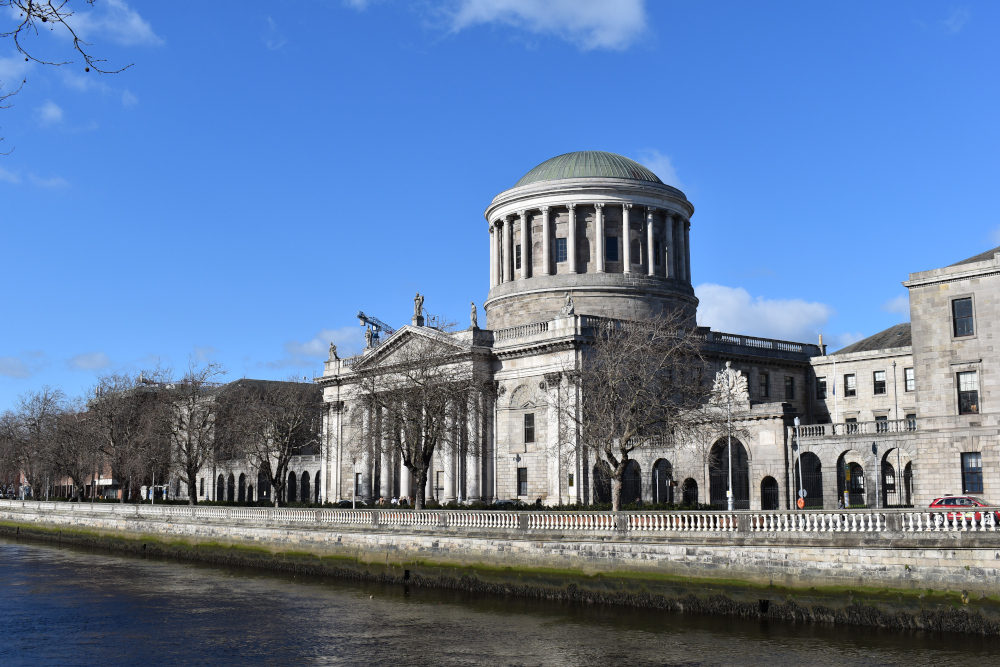
The High Court has confirmed a decision of the Nursing and Midwifery Board to strike off a nurse who manipulated Mater Private Network’s scheduling system to obtain increased pay.

About this case:
- Citation:[2026] IEHC 768
- Judgment:
- Court:High Court
- Judge:Mr Justice David Barniville
Delivering an ex tempore judgment for the High Court, Mr Justice David Barniville observed that the amounts received by the respondent nurse as a result of his dishonest manipulation of the system were “staggeringly high” and that the Mater Private Network was still at a loss of €36,000 as a result of his actions.
Background
The respondent was a registered nurse and a senior manager in the Mater Private Network.
In August 2022, a discrepancy in the respondent’s use of a time and attendance system which informed the Network’s payroll system was discovered. The respondent was informed of the issue at the end of August 2022 and was suspended with pay pending an investigation.
Following a three month review of his use of the system, it became clear that the respondent, a user with broad access privileges, was making manual changes to the system which lead to his receiving payments to which he was not entitled.
In early September 2022, the respondent was informed of 290 allegations against him in respect of the period between May 2021 and August 2022, the potential value of the discrepancies totalling over €56,000.
Prior to his scheduled attendance at an investigation hearing on 9 September 2022, the respondent agreed to pay back €20,000 and to submit his resignation, with the effect that the Network did not complete the internal formal investigation.
Nonetheless, the Network’s director of nursing considered that the respondent had likely engaged in serious professional misconduct and made a report to the Preliminary Proceedings Committee (PPC) of the applicant Nursing and Midwifery Board of Ireland.
The Nursing and Midwifery Board of Ireland
On 30 November 2022, the PPC opined that the issues referred to it gave rise to a prima facie case warranting further action being taken in relation to the complaint and referred same to the Fitness to Practise Committee on grounds of alleged professional misconduct and non-compliance with the applicable code of professional conduct.
The notice of inquiry alleged that the respondent had, firstly, modified his time and attendance record on the Network’s “Softworks” system without adequate authority to cause payments to him at premium rates to which he was not entitled and to reflect that he had earned time in lieu to which he was not entitled, and secondly, that he did so in circumstances where he knew or ought to have known that this was inappropriate.
The inquiry proceeded over various dates in December 2025, at which the respondent made admissions in respect of the first allegation against him only.
The Committee’s report found that both allegations against the respondent had been proven beyond reasonable doubt and amounted to professional misconduct and a finding that the respondent had not complied with the Code of Professional Conduct and Ethics for Registered Nurses and Registered Midwives dated December 2014 and May 2021.
Being satisfied that the respondent’s fitness to practise was impaired and that action was necessary to protect the public and to maintain proper standards, the Committee observed that a number of mitigating and aggravating factors were present in his case.
By way of mitigation, the Committee outlined that the respondent had admitted certain of the facts alleged which shortened the inquiry, had repaid €20,000 to the Network prior to 9 September 2022, had a clear disciplinary record, had worked for an extended time for the Network and that there was no evidence of a deficiency in the clinical care provided by him.
As to the aggravating factors, the Committee considered that the respondent’s actions were dishonest, that the had abused his position of trust and had demonstrated a pattern of behaviour over the period in question which amounted to moral turpitude and infamous and disgraceful character.
The Committee was also concerned by the respondent’s lack of demonstrated insight into his circumstances or into the seriousness of his actions, as inter alia he expressed no remorse, had disengaged from the disciplinary process.
The Committee determined that the cancellation of the respondent’s name from the register would uphold the reputation of the nursing profession, would maintain public confidence in the profession and would deter the respondent from repeating his behaviour.
Having recommended the cancellation respondent’s registration, the Committee furnished its report to the applicant.
At a meeting on 20 May 2026, the applicant adopted the rationale of the Committee and agreed to cancel the respondent’s registration. The respondent was informed of that decision by letter dated 22 May 2026.
In circumstances where no appeal was brought by the respondent, the applicant made an application to the High Court under s.74(1) of the Nurses and Midwives Act 2011 (as amended) for the confirmation of its decision.
The High Court
Mr Justice Barniville, President of the High Court, considered that pursuant to s.74(2) of the 2011 Act, the court was required to confirm the decision unless there was “good reason” to the contrary.
As to the meaning of the phrase “good reason”, the President explained that the court was obliged to confirm the decision unless satisfied that there had been some “serious irregularity in the process, some breach of natural and constitutional justice, some serious error of fact or of law in the adjudicative process, or unless the decision is one which no reasonable board could take in the circumstances.”
Noting that there was no suggestion that any of those factors were present in the case before the High Court, Mr Justice Barniville found no irregularity in the process, no breach of natural and constitutional justice, no error of law or fact, and that the relevant and correct legal principles governing sanction had been applied by the Committee and by the applicant.
The court was further satisfied that it could not be said that the decision was one which no reasonable board could have taken, where the allegations were extremely serious “and effectively amounted to the Respondent manipulating the Network’s time and attendance system for personal gain.”
The court opined, “The amounts involved are staggeringly high. The total amount estimated to have been received by the Respondent as a result of his dishonest manipulation of the system exceeds €56,000. While the Respondent repaid €20,000 of that sum, that still leaves in excess of €36,000, for which the Network is at a loss as a result of the admitted manipulation by the Respondent of the time and attendance system.”
Conclusion
Finding that this was not a case in which there was good reason not to confirm the applicant’s decision, the High Court granted the application and ordered the cancellation of the respondent’s registration.
The Nursing and Midwifery Board of Ireland v Joseph Feliciano Valenton [2026] IEHC 768

Share this article:

Subscribe to our newsletter to not miss articles like this one:
 SUBSCRIBE