




Written by:

Gillian O'Hanlon BL
Case Reporter
Novel argument on appeals to High Court rejected
 Reading time: 7 minutes
Written by:
Gillian O'Hanlon BL
Case Reporter
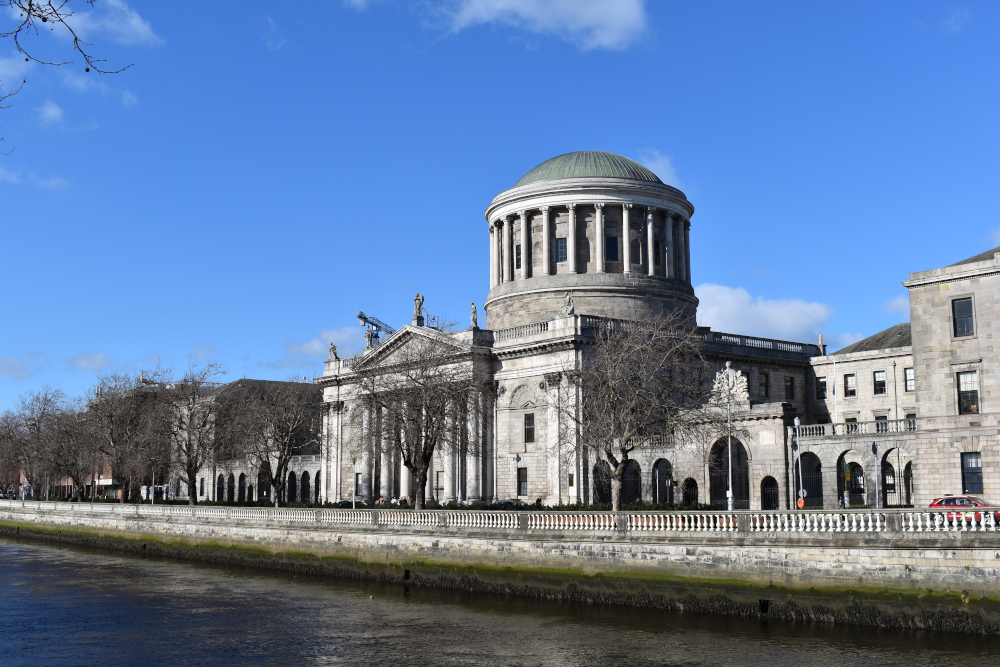
The High Court has rejected an argument to the effect that the term ‘re-hearing’ in s.38 of the Courts of Justice Act 1936 entitled the appellant to re-argue his case based on evidence already given before the Circuit Court and that his appeal should not proceed by way of de novo hearing

About this case:
- Citation:[2026] IEHC 232
- Judgment:
- Court:High Court
- Judge:Mr Justice Michael Twomey
Delivering judgment for the High Court, Mr Justice Michael Twomey noted that in appeals pursuant to s.38 of the Courts of Justice Act 1936, there is no equivalent of the principle, applying in s.37 appeals, that no evidence given in the Circuit Court shall be given in appeal in the High Court, without leave of the judge.
Background
The plaintiff nominees of the Harbour House Sports Club alleged that a sum of €75,000 was owed by the defendant relating to work done on lands used by the club and owned by the second plaintiff.
The dispute arose from the terms of a 2020 contract between the plaintiffs and the defendant providing for the construction of protective earthen berms on the lands in question to contain the Club’s shooting ranges.
The work consisted of placing a considerable amount of waste material on the lands, such that a party to such a contract would be willing to pay for the right to dispose of the waste material on the lands.
The plaintiffs alleged that the obligations under the contract fell to be performed by the defendant personally, while the defendant alleged that performance was for Gill Recovery Services Limited, a company of which the defendant was a director.
The defendant alleged that the proceedings should be dismissed as they should have been taken against the company and not against him. At trial, the Circuit Court found in favour of the plaintiffs.
On appeal to the High Court, counsel for the defendant raised a novel preliminary point to the effect that in light of Northern Bank v Charlton [1979] IR 149, an appeal to the High Court from the Circuit Court should be heard on the basis of evidence that was heard in the Circuit Court and not on the basis of a de novo hearing where the witnesses would give their evidence again to the High Court.
The High Court
Mr Justice Twomey explained that this issue arose in the case because, based on the defendant’s alleged entitlement to that type of appeal, the defendant claimed that he needed a copy of the Digital Audio Recording (DAR) from the Circuit Court before proceeding with the appeal in the High Court.
On that basis, the defendant’s counsel sought an adjournment from the High Court of his appeal in order to obtain the DAR.
The defendant relied upon the interpretation in Northern Bank of the term ‘re-hearing’, that “the Court will normally be precluded from hearing or seeing the witnesses whose oral testimony was the core of the hearing in the High Court. So the appeal will be ‘by way of re-hearing’ only to the extent that that will be possible by examining documentary material, particularly a written version or report of the evidence.”
Counsel argued that having regard to the Supreme Court’s reference to the “written version” of the evidence used in an appeal which is described as a ‘re-hearing’, the term “re-hearing” contained in s.38 of the Courts of Justice Act 1936, does not refer to a de novo hearing, but means a re-arguing by counsel of the case heard in the Circuit Court based on a ‘written version’ of the evidence, in this case, the DAR transcript.
Mr Justice Twomey highlighted that the interpretation of ‘re-hearing’ in Northern Bank was not concerned with the use of the term in s.38 of the 1936 Act, but rather its use in O.58 of the Rules of the Superior Courts.
The judge explained: “Crucially, Henchy J in the Northern Bank case specifically referred to the term ‘rehearing’ as a ‘term of art’ in the context of an appeal to the Supreme Court, and it is clear therefore that its meaning in that context (i.e. of an appeal to the Supreme Court) is not necessarily the same in another context.”
The court also outlined that the Supreme Court in Northern Bank was, in the peculiar circumstances of an appeal to the Supreme Court, adopting a strained interpretation of the term “re-hearing” and that in appeals from the Circuit Court, the High Court is not precluded form hearing witnesses and so that interpretation had no application to the case before it.
Mr Justice Twomey also found it relevant that in s.38 appeals such as the defendant’s, there is no restriction on the introduction of new evidence on appeal, supporting the view that the appeal is by way of a new hearing.
Finally, the judge drew attention to LD v ND [2020] IEHC 267, in which the High Court stated that in appeals between the Circuit Court and the High Court, “where oral evidence is given in the Circuit Court, the appeal hearing is by way of a rehearing of both sides and their witnesses”.
Refusing to adjourn the case, the court proceeded to analyse the issue of whether the contract was with the company or with the defendant personally.
The court recognised that there was a clear conflict of evidence, in that the defendant stated that he had told the second plaintiff, at the time of signing the contract, that the contract was with the company.
The second plaintiff denied this and stated that the first time he had heard of the involvement of the company was on the day of the Circuit Court hearing.
Turning to the documentary evidence before the court, Mr Justice Twomey did not find that the reference in the contract to “Mr John Gill of Gill Recovery Services” was sufficient to support a finding that the contract was with the company, having regard inter alia to the parties clause, which stated that the defendant could engage subcontractors to work on “his” behalf rather than on “its” behalf.
The judge also drew attention to the plea at paragraph 4 of the plaintiff’s Civil Bill, which described the defendant as operating a waste disposal business trading as Gill Recovery Services, a matter which the defendant did not require proof of in his Defence.
Mr Justice Twomey considered that “Mr. Gill is clearly accepting that he, and so not the Company, operates a registered waste disposal business trading as Gill Recovery Services.”
The judge reasoned: “Mr. Gill cannot have it both ways, he cannot plead that he personally was trading as Gill Recovery Services, but when it suits him, to say that Gill Recovery Services is not his trading name, but ‘it’ is the Company.”
The court also had regard to the facts that in the contract, the defendant signed as the contractor, and not as the director of the company, and that the defendant’s solicitors in his replies to the plaintiffs’ Notice for Particulars, and in a letter which had as its subject the proceedings against “John Gill”, referenced an agreement entered into by the plaintiffs and the defendant.
Conclusion
Accordingly, the High Court affirmed the decision of the Circuit Court and ordered costs in favour of the plaintiffs.
Thomas O’ Brien & Anor v John Gill [2026] IEHC 232

Share this article:

Subscribe to our newsletter to not miss articles like this one:
 SUBSCRIBE

