





Written by:

Gillian O'Hanlon BL
Case Reporter
High Court: Norwich Pharmacal order for nursing home footage granted against RTÉ
 Reading time: 7 minutes
Written by:
Gillian O'Hanlon BL
Case Reporter
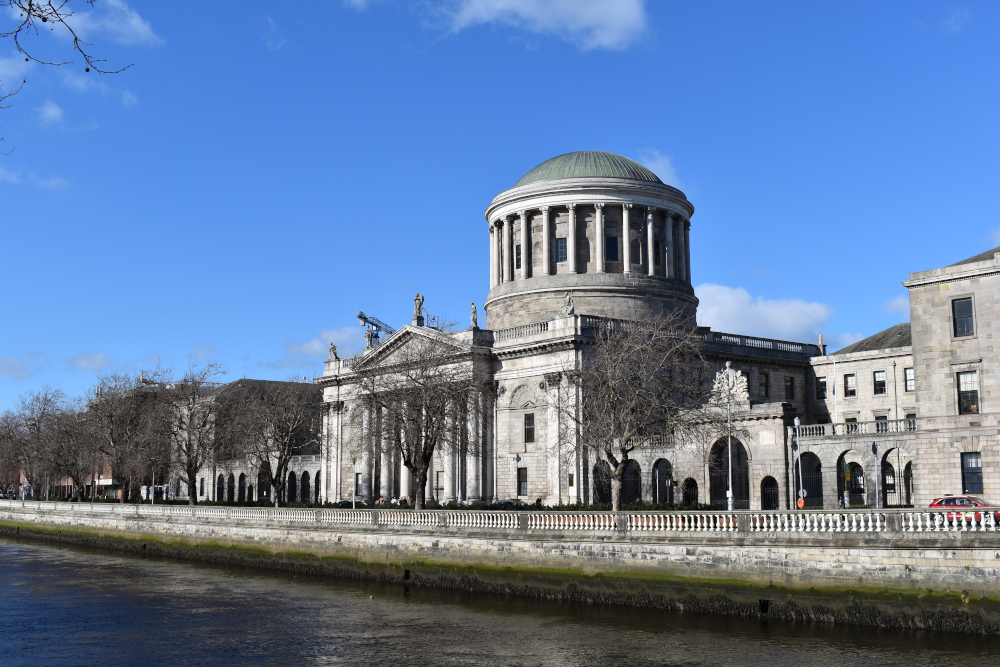
The High Court has granted a Norwich Pharmacal order compelling RTÉ to provide unedited footage of wrongdoing in two nursing homes

About this case:
- Citation:[2026] IEHC 445
- Judgment:
- Court:High Court
- Judge:Ms Justice Emily Egan
Delivering judgment for the High Court, Ms Justice Emily Egan opined: “This is a case in which at the end of the analysis, it would be surprising if the jurisdiction could not be exercised. In this particular case, the nature of the wrong alleged, its reporting by RTÉ and the requirement that such wrongdoings are redressed and prevented in the public interest, justify the granting of the order.”
Background
In June 2025, RTÉ broadcast a television programme including anonymised extracts from covertly recorded and unedited footage obtained by undercover researchers at two nursing homes: The Residence Portlaoise and Firstcare Beneavin Manor.
The footage appeared to reveal practices demonstrating prolonged and systemic failures of care, including disrespect for residents’ privacy and dignity, residents being treated roughly or left unattended for prolonged periods, and the falsification of records. RTÉ furnished the Health and Information Quality Authority (HIQA) with detailed reports of its findings.
The Chief Inspector of Social Services, designated by the Board of HIQA to inspect and regulate nursing homes, considered the practices depicted in the programme to raise serious safety and welfare concerns regarding residents and he requested that RTÉ provide the complete unedited footage.
While RTÉ welcomed the regulatory action, it maintained that it could only release the unedited footage pursuant to a court order having regard to its journalistic guidelines, confidentiality obligations and GDPR concerns. RTÉ had already released unedited footage to An Garda Síochána in June 2025 pursuant to a court order.
In the circumstances, the Chief Inspector applied for a Norwich Pharmacal disclosure order, contending inter alia that the programme showed very poor behaviour and practices and that without having seen the complete unedited footage, it was very difficult to identify the nature of further regulatory action that could be required. RTÉ took a neutral position on the application.
The High Court
Ms Justice Egan considered the relevant legislative framework under the Health Act 2007, the Health Act 2007 (Care and Welfare of Residents in Designated Centres for Older People) Regulations 2013 and the National Standards for Residential Care Settings for Older People in Ireland (2016), directed toward safeguarding vulnerable persons residing in nursing homes.
Outlining that the statutory scheme relies upon the Chief Inspector having access to sufficient information to determine what regulatory action is necessary to protect residents, the court observed that while s.65 of the 2007 Act empowers the Chief Inspector to require registered providers, such as the nursing homes, to furnish information necessary for the performance of his functions, “this power does not extend to entities other than registered providers.”
Having set out the legal principles in respect of Norwich Pharmacal relief and having considered the test as endorsed in Blythe v The Commissioner of An Garda Síochána [2023] IECA 255, the court acknowledged the submission that three aspects of the Chief Inspectors application were atypical.
Firstly, the Chief Inspector he did not seek the unedited footage for the purpose of bringing civil proceedings against the wrongdoers, but instead for the purposes of regulatory action. Secondly, a question arose as to whether the “mixed up in” condition for the grant of a Norwich Pharmacal order could be satisfied where it was not contended that RTÉ facilitated or was mixed up in the wrongdoing of the nursing homes, and thirdly, more than the mere identification of the wrongdoer was sought.
As to the “arguable wrong” condition, which mandates that the applicant demonstrate a good arguable case that a legally recognised wrong has been committed against them by a person, the High Court was satisfied that the wrongdoing requirement was met and that the footage provided “genuine and plausible evidence that the Nursing Homes have acted in breach of statutory duty and in breach of the Regulations and national standards.”
Ms Justice Egan then turned to the “possession condition”, which requires that an order ought not to be made unless the information sought is likely to be in the possession of the defendant, is necessary for the purposes of bringing court proceedings or for the purpose of pursuing some other legitimate remedy arising from the alleged wrongdoing, and the applicant has no other practicable or more appropriate means of obtaining that information.
In this regard, the judge acknowledged that RTÉ was in possession of the footage and could furnish same within two weeks, and accepted that while CCTV was in operation in the nursing homes, it could not be realistically contended that the level of detail captured by RTÉ’s footage could be obtained by any other means.
The court further considered that while the Chief Inspector had not indicated any intention to bring court proceedings or to seek redress against the nursing homes, “he clearly has a sufficient and legitimate interest in the regulation of these Nursing Homes and in the enforcement of standards. The order sought is to protect and vindicate the rights of others whom it is his statutory function to protect and vindicate. I accept that given the functions conferred upon him by the Oireachtas for the protection of others, this exercise of statutory function can be equated with taking action to protect oneself against wrongdoing.”
The judge was further satisfied that disclosure of the unedited footage was necessary for several reasons, including for the purpose of confirming that further regulatory action is in fact well-founded and what precisely that further regulatory action should be.
As to the “mixed up in” condition, “the most controversial of the issues arising”, Ms Justice Egan considered that while RTÉ was not engaged in the wrongdoing itself, it was engaged in the investigation, recording and exposure of the wrongdoing and acted in a role “analogous to a whistleblower and has reported matters of public concern to the regulator” rather than being a mere witness or bystander.
Having regard to the caselaw and the circumstances of the case, the judge was satisfied that the Norwich Pharmacal jurisdiction has historically developed on an incremental basis and that the case before the court “represents an appropriate incremental development of that jurisdiction.”
As to the “overall justice” condition, the court pointed out that this condition “reflects the fact that the courts recognise that satisfaction of the threshold conditions does not mean that an order is available as of right. Even where such threshold conditions are satisfied, the order is a matter of judicial judgment or discretion.”
Citing the factors set out in Rugby Football Union v Consolidated Information Services Ltd [2012] UKSC 55, [2012] 1 WLR 3333 and repeatedly endorsed in this jurisdiction, the court was satisfied inter alia that the Chief Inspector had a strong case that there were regulatory breaches by the nursing homes, that there was a strong public interest in permitting him to access the maximum amount of material to facilitate his investigation and that the rights of vulnerable residents would be vindicated.
The court further considered that privacy concerns on part of the staff members and operators of the nursing homes must yield to the effective implementation of the statutory scheme and that the privacy of the residents would be protected by the draft order.
Ms Justice Egan concluded that although she was conscious that such orders must be approached with circumspection, “I am nonetheless of the view that the requirements of flexibility and pragmatism demand the order made.”
Conclusion
Accordingly, the High Court granted the order sought.
The Chief Inspector of Social Services v Raidió Telifís Éireann [2026] IEHC 445

Share this article:

Subscribe to our newsletter to not miss articles like this one:
 SUBSCRIBE

