



Written by:

Gillian O'Hanlon BL
Case Reporter
High Court: Man hit by driverless truck awarded €128,521
 Reading time: 6 minutes
Written by:
Gillian O'Hanlon BL
Case Reporter
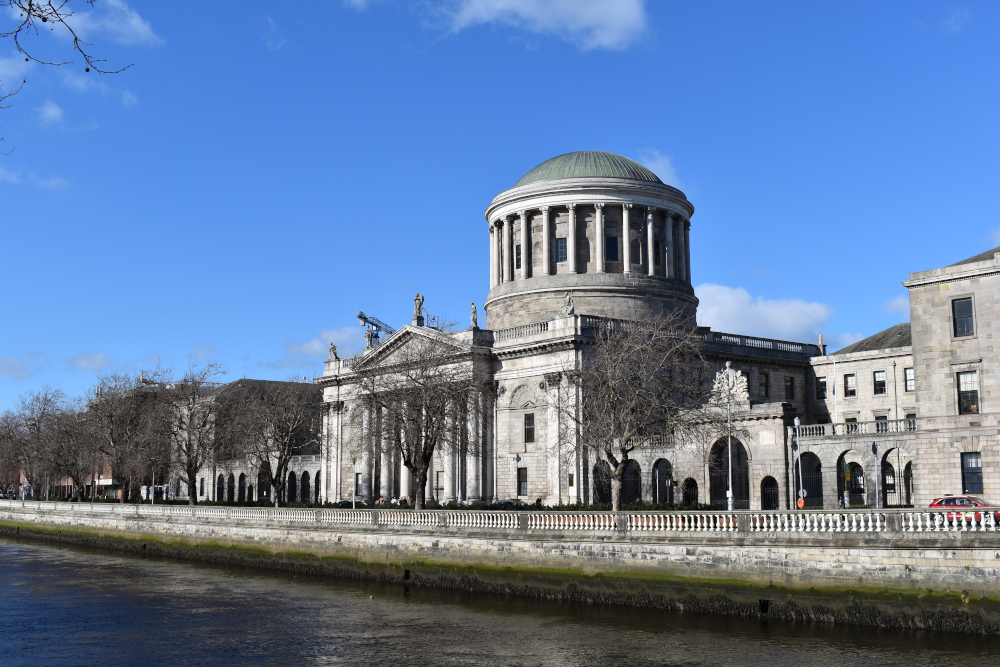
The High Court has awarded €128,521 in damages to a man who was injured when a driverless runaway truck collided with his vehicle

About this case:
- Citation:[2026] IEHC 266
- Judgment:
- Court:High Court
- Judge:Mr Justice Oisín Quinn
Delivering an ex tempore judgment for the High Court, Mr Justice Oisín Quinn remarked that “During his evidence it was clear that the plaintiff did not seek to exaggerate or make much of his injuries. Nonetheless the medical evidence indicates that the plaintiff has had a difficult time of things.”
Background
On 21 March 2023, the plaintiff was driving along a pubic road in County Limerick, when a truck appeared to pull out from a filling station and collided into the side of the plaintiff’s small van.
The plaintiff was able to get out of his van unaided and he discovered that there was no driver in the truck. The driver came rushing from the filling station, having apparently failed to apply the brakes on the truck properly, causing it to roll out of the filling station and across the road.
The plaintiff was collected by his partner from the scene and was brought to the hospital on 25 March 2023. Examinations revealed that he had fractured his right clavicle, an injury which did not heal and resulted in surgery under general anaesthesia on 8 May 2023. The plaintiff also suffered temporary eye issues, neck and shoulder pain and seatbelt bruising.
The plaintiff’s eye problems resolved, but the metal plates and screws implanted during his surgery caused issues and the plaintiff continued to struggle with neck and shoulder pain which affected his sleep. The plaintiff also suffered with headaches and anxiety when driving.
X-rays showed that the plaintiff’s clavicular fracture had healed but that there was an irregularity of the adjacent acromioclavicular joint and he was re-admitted for further surgery, this time to remove the metal plate and screws, on 5 March 2025.
The plaintiff had previously sustained serious injuries as a child in a horse and cart accident and was in receipt of a weekly disability allowance of €275.50, which permitted him to work 18.5 hours a week as a tiler.
The plaintiff issued personal injuries proceedings against the driver and owner of the lorry.
The plaintiff claimed inter alia that if he were to receive a substantial award as a result of his personal injury proceedings, he would be at risk of losing the means-tested disability allowance and consequently an additional sum was claimed to compensate him for that loss.
The High Court
Mr Justice Oisín Quinn identified three main evidential conflicts:
i) Whether the plaintiff would need any significant ongoing physiotherapy into the future;
ii) Whether there was any real likelihood that, in the event that the plaintiff received a substantial award, the Department of Social Welfare would reduce the plaintiff’s disability allowance;
iii) Whether the plaintiff suffered any significant neck injury separate to the injury to his shoulder/clavicle.
On the first issue, notwithstanding the defendants demonstrating that the plaintiff had only had minimal physiotherapy since his operation in 2025, Mr Justice Quinn noted that “the medical evidence indicates real and ongoing problems that may need surgery. The plaintiff is entitled to try to get back as much mobility and strength as is reasonable given that he leads an active life and has a reasonable desire to be in a position to do physical work around his home.”
In the circumstances, the court allowed half of the plaintiff’s claim for six physiotherapy sessions per year for the rest of his life, amounting to €5,763.
As to the second issue, the court was satisfied that the evidence established that his disability allowance would be reduced in light of a substantial award.
Mr Justice Quinn did not think it appropriate to approach the matter on the basis that the plaintiff could make a series of tax-free gifts to his children to essentially divest himself of a large proportion of his damages in order to bring himself below the threshold.
Acknowledging that this was “an imaginative proposition”, the judge explained that “the award is for the Plaintiff’s personal benefit to compensate him for the pain and suffering and loss he has experienced and it would not be fair to him to reduce it on the basis that he can make a variety of gifts to his children – even if in fact he decides to do that”.
On the third issue, Mr Justice Quinn was satisfied based on the plaintiff’s own account of his injuries and the medical evidence that the plaintiff sustained a separate soft tissue injury to his neck.
Turning to the application of the Personal Injuries Guidelines, the court considered that the plaintiff’s dominant injury was his right clavicle injury, falling within category D(b) of the Guidelines of serious shoulder injuries where the range is €40,000 to €70,000.
Finding that, in the circumstances, that injury was in the upper end of the range, the court found that the appropriate value for the plaintiff’s right shoulder injury was €65,000.
As to the plaintiff’s anxiety, the court considered that the appropriate value was €22,500, before the discount applied to lesser injuries in multiple injury cases. In this regard, Mr Justice Quinn highlighted that “he suffered a traumatic experience and had a difficult time for a few years, experiencing headaches and sleeplessness and anxiety while driving to the extent that his partner had to take over driving on occasion. He was also prescribed medication for his anxiety.”
The court placed a value of €17,500 on the plaintiff’s soft tissue neck injury, before adjustment.
For the plaintiff’s temporary drooping eyelids, the court considered that this was a minor problem resolving within a few weeks and placed same within the midpoint of category A(g) at €1,000 before adjustment.
The court applied a discount of one third to the cumulative total of €41,000 for the three lesser injuries, reducing that figure to €27,333.
The court then applied that figure as an uplift to the award for the plaintiff’s dominant injury, bringing his general damages to €92,333.
The court also awarded the additional sum of €2,068 for hospital fees and the sum of €5,763 in respect of future physiotherapy by way of special damages, and in light of the likely loss of disability allowance, awarded a further sum of €28,377 representing the midpoint of the sums claimed by the plaintiff in that regard.
Conclusion
Accordingly, the High Court awarded the sum of €128,521 to the plaintiff.
Duggan v Logan & Anor [2026] IEHC 266

Share this article:

Subscribe to our newsletter to not miss articles like this one:
 SUBSCRIBE

