



Written by:

Gillian O'Hanlon BL
Case Reporter
High Court: “Kingdom Water” CEO fails to secure injunctive relief against media
 Reading time: 5 minutes
Written by:
Gillian O'Hanlon BL
Case Reporter
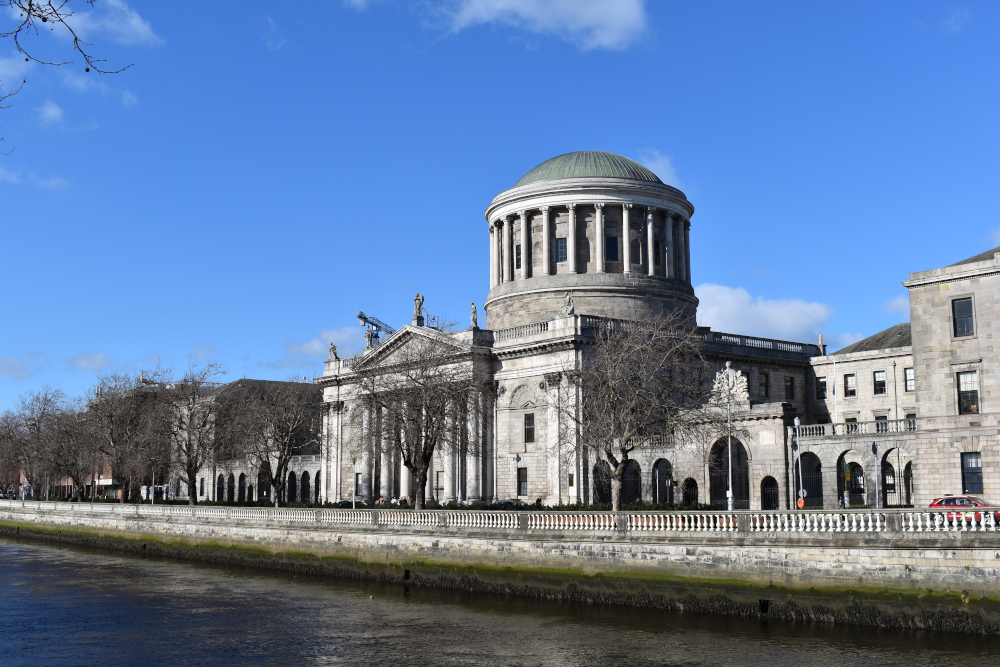
The High Court has refused to grant injunctive relief to Kingdom Water CEO in respect of statement in “fact-checking” article.

About this case:
- Citation:[2026] IEHC 614
- Judgment:
- Court:High Court
- Judge:Mr Justice Liam Kennedy
Delivering judgment for the High Court, Mr Justice Liam Kennedy opined that “this would not be an appropriate case to restrain publication, not only because of her apparently gratuitous joinder of unnecessary parties but, more importantly, because the controversial Statement was only a minor part of a more substantial piece and because the Court is slow to interfere with free speech or to prevent journalists and fact checkers undertaking their role.”
Background
The plaintiff sought injunctive relief pursuant to s.33 of the Defamation Act 2009 restraining the defendants from publishing or republishing a statement in an online article published on 9 December 2025.
The article was published as part of The Journal’s series “The Journal Fact Check”, which scrutinises public commentary from third parties for disinformation and corrects it where necessary.
The defendants maintained that the article sought to correct disinformation in public comments published by the plaintiff on Facebook as to the level of financial aid provided by the Irish government to Ukraine, which she stated amounted to billions of euro.
The plaintiff did not take issue with the description of her as someone who spreads disinformation, rather, she alleged that the article described her as someone who “runs a company selling water”, which, following her complaints, was amended to read “runs a company called Kingdom Water, which she has previously said intends to sell ‘luxury water’ from streams were revealed to her by angels”.
The plaintiff claimed that this statement was false and defamatory, as neither she nor the company had ever sold water and the statement meant inter alia that she was engaged in the commercial exploitation and sale of water; acted dishonestly, misleadingly or without integrity in her business affairs and misrepresented her business activities to the public.
Maintaining that serious and foreseeable damage to her reputation, brand and goodwill had occurred, the plaintiff referred to a notification from Meta Platforms on 30 December 2025 which stated that her content would be labelled as “False Information”.
The defendants denied that the statement was defamatory and invoked defences of truth and public interest publication.
The High Court
Having heard the submissions of the parties, Mr Justice Kennedy concluded that there was “no plausible basis” for the plaintiff’s application and that it was “impossible to discern a defamatory meaning in the article”, with the plaintiff ignoring the gravamen of the article to focus on a “minor inaccuracy in a detail” without demonstrating how that inaccuracy could damage her reputation.
The judge explained that the plaintiff had failed to satisfy the test outlined in Gilroy v. O’Leary [2019] IEHC 52 to restrain the (re)publication of defamatory material where the onus was on her to establish that the statements were defamatory and that the defendants had no defence which was reasonably likely to succeed.
The court reasoned that even if selling water or intending to do so was a defamatory allegation, publications of similar claims by the plaintiff and Kingdom Water on its website undermined any basis to complain and offered a strong basis for the defences.
Mr Justice Kennedy opined, “Even the name of her own company, Kingdom Water, might reasonably be interpreted as a representation by her and by the Company that they were in the business of selling water. The clue is in the name.”
The judge further recognised that “It appears that the plaintiff is correct to the extent that neither she nor Kingdom Water had started to sell water, but that does not matter since, firstly, it is only a matter of timing given the plaintiff’s and Kingdom Water’s statements of intent. Secondly, whether true or false, the suggestion that the plaintiff had sold water or intended to do so was not defamatory.”
The court agreed that responsible fact-checking of public discourse by established media is an extremely important function in a modern democracy and emphasised that the court “would need to reflect carefully before interfering with that role.”
Finding that the plaintiff had “fallen at both hurdles” of s.33, the judge pointed out that even if the plaintiff had met both limbs, relief is discretionary and there were compelling reasons not to exercise the discretion in any event.
The court highlighted inter alia the fact that the plaintiff had not articulated a coherent reason for the joinder of the defendants other than The Journal, noting that “The gratuitous joinder of parties without a legitimate basis to do so is an abuse of process and is particularly egregious in defamation proceedings where the effect may be to intimidate, discourage or limit public discourse.”
Mr Justice Kennedy expressed that this was a “particularly unmeritorious application” as the plaintiff had taken issue with a minor possible inaccuracy in a less significant aspect of the article, and there was no obvious basis to suggest that any harm, even if substantiated, was due to the reference to the plaintiff selling water as opposed to the other issues raised in the article.
Conclusion
Emphasising that nothing in the judgment limited the plaintiff’s ability to pursue her claim to trial on the basis of a properly particularised claim against appropriate defendants, the High Court refused the application for injunctive relief.
Michelle Keane v The Journal Media Limited trading as Thejournal.ie & Ors [2026] IEHC 614

Share this article:

Subscribe to our newsletter to not miss articles like this one:
 SUBSCRIBE

