




Written by:

Gillian O'Hanlon BL
Case Reporter
High Court: Irish qualified barrister restrained from practising in Ireland without approved insurance
 Reading time: 7 minutes
Written by:
Gillian O'Hanlon BL
Case Reporter
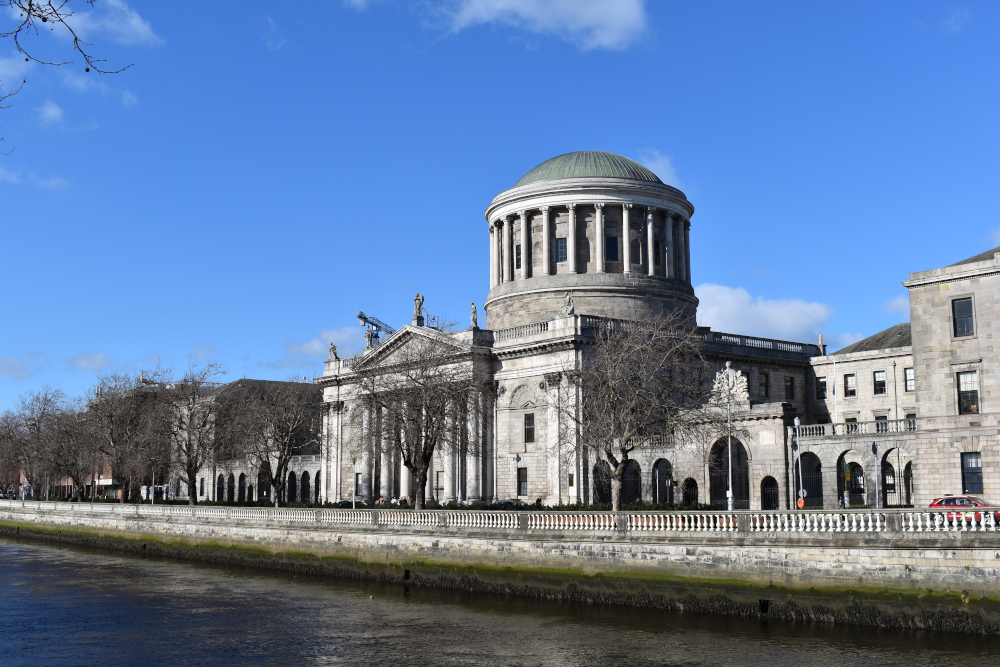
The High Court has, on a novel application, made orders prohibiting an Irish qualified barrister from providing legal services in the State until he obtains an approved policy of professional indemnity insurance.

About this case:
- Citation:[2026] IEHC 334
- Judgment:
- Court:High Court
- Judge:Mr Justice David Barniville
Delivering the decision of the High Court, Mr Justice David Barniville reasoned: “It is essential for the protection of the public and for clients of Mr Sallabi to whom he provides legal services as an Irish barrister in Ireland that he has a compliant professional indemnity insurance policy in place. As things stand, he does not. However, on the evidence, it appears that that deficiency can easily be remedied.”
Background
In May 2025, the respondent, a barrister who qualified from the Honourable Society of the King’s Inns in October 2023, informed the Legal Services Regulatory Authority (LRSA) that he had registered with the Brussels Bar Association and had subscribed to the “Brussels Bar’s insurance policy”.
The respondent asserted to the LSRA that the Brussels Bar policy, issued by two Belgian co-insurers, provided coverage for his professional activities across all EU Member States.
The LSRA disagreed, finding that the policy did not cover legal services provided by the respondent as a barrister in Ireland and did not comply with the statutory requirements for a policy of professional indemnity insurance under the Legal Services Regulation Act 2015 and the Professional Indemnity Insurance for Barristers Regulations 2024 (S.I. No. 490 of 2024).
The LSRA required the respondent to cease practice until he had a professional indemnity insurance policy in place. The respondent declined and asserted that the LSRA’s insistence that he take out another policy was in breach of EU law, imposing impermissible restrictions on his freedom to provide services and rights of establishment of lawyers.
The LSRA applied for orders pursuant to s.35 of the 2015 Act prohibiting the respondent from providing legal services and from holding himself out as being a practising barrister currently entitled to provide legal services in the State, unless and until he obtains an approved policy of professional indemnity insurance.
The LSRA also sought an order requiring the respondent to produce to the LSRA proof that he has such an approved policy of professional indemnity insurance prior to providing any legal services in the State.
The respondent maintained that his entitlements under Chapters 2 and 3 of Title IV (Free Movement of Persons, Services and Capital) of the Treaty on the Functioning of the European Union were breached by the LSRA’s position.
The respondent further explained that while he had obtained a quotation for an approved Irish policy, he declined to purchase it as it would facilitate claims against him by certain persons and their legal advisors and that he was concerned that future premiums might become unaffordable and lead to his exclusion from the legal profession.
The High Court
The President of the High Court highlighted that the respondent had advanced, through his replying affidavits and written submissions, “completely wild and unsubstantiated allegations against a host of entities, firms and people including the LSRA itself, solicitors and counsel and even a High Court judge” which he had not formally resiled from or withdrawn.
Mr Justice Barniville was satisfied that the LSRA was entitled to the orders sought against the respondent in circumstances where he is a practising and qualifying barrister for the purposes of the 2015 Act, and that in holding himself out as entitled to practise without an approved policy of professional indemnity insurance, was a person likely to contravene the provisions of s.46(1) of the 2015 Act and Part IV of the 2024 Regulations.
The court was satisfied that on its proper interpretation, the Brussels Bar policy was not intended to cover, and does not cover or provide an indemnity, in respect of legal services provided by the respondent as an Irish barrister providing legal services in Ireland, and does not comply with the 2015 Act and the 2024 Regulations.
The court was further satisfied that the respondent had “fundamentally misunderstood” the provisions in the Treaty and the case law of the Court of Justice of the European Union (CJEU).
Mr Justice Barniville determined that while the respondent contended that he had established himself as a lawyer in Belgium in January 2025 and had tendered some evidence, including his certificate of admission from the Dean of the Brussels Bar, in support of that contention, inter alia his failure to update his registration details with the LSRA and his home and correspondence addresses, was inconsistent therewith.
The President concluded that notwithstanding the respondent’s contention that he moved to establish himself in Belgium under his professional title as an Irish barrister, he had not exercised any EU right of establishment or freedom to provide services when providing legal services in Ireland as an Irish barrister.
The court was satisfied that the respondent’s “Home Member State” for the purposes of inter alia Directive 98/5/EC of the European Parliament and of the Council (the Lawyers’ Establishment Directive) is Ireland and that the “Host Member State” for the same purposes is Belgium.
Mr Justice Barniville was further satisfied that similarly, “Member State from which [Mr Sallabi] comes” for the purposes of Council Directive 77/249/EEC (the Lawyers’ Services Directive) is Ireland and the relevant “Host Member State” is Belgium, and was not a “visiting lawyer” within the meaning of that term in the Irish regulations implementing the Lawyers’ Services Directive.
The High Court outlined: “As an Irish barrister seeking to provide legal services in Ireland, Mr Sallabi is required to comply with the provisions of the 2015 Act and the 2024 Regulations, including the provisions concerning professional indemnity insurance. When providing those legal services, in Ireland, he is doing so as an Irish barrister and not as a Belgian avocat/advocaat/rechtsanwalt.”
The court continued: “When exercising his right of establishment or his freedom to provide services in Belgium, Mr Sallabi is doing so by virtue of his professional qualification as an Irish barrister and similarly not as a Belgian avocat/advocaat/rechtsanwalt.”
As to the Brussels Bar policy, Mr Justice Barniville considered that on its proper interpretation, the policy does not indemnify the respondent in respect of legal services provided in Ireland as an Irish barrister and that despite numerous attempts by the respondent to obtain express confirmation from the Brussels Bar, the policy brokers and from the insurers, “none of them provided such confirmation”.
The court further explained that the policy inter alia did not comply with the 2024 Regulations, where only one of the co-insurers who issued the policy was licensed and authorised to transact business in the State, and had sought to exercise its right to do so and was registered on the Central Bank of Ireland’s register for that purpose.
Mr Justice Barniville rejected further arguments on part of the respondent concerning the validity of an approved Zurich policy, and as to the court’s jurisdiction to determine the issues before it, remarking that it was “astonishing” that the respondent had decided not to subscribe to the Zurich policy, that this “whole exercise is a scandalous waste of time and money by Mr Sallabi” and that the allegations made against the LSRA and other lawyers were “improper, inappropriate and irresponsible”.
Conclusion
Accordingly, the High Court granted the reliefs sought by the LSRA and stated its intention to make the orders permanent following the delivery of its judgment until the respondent puts an approved professional indemnity insurance policy in place.
The Legal Services Regulatory Authority v Joseph Sallabi [2026] IEHC 334

Share this article:

Subscribe to our newsletter to not miss articles like this one:
 SUBSCRIBE

