




Written by:

Gillian O'Hanlon BL
Case Reporter
High Court: Injunction refused in Blanchardstown Shopping Centre car park dispute
 Reading time: 6 minutes
Written by:
Gillian O'Hanlon BL
Case Reporter
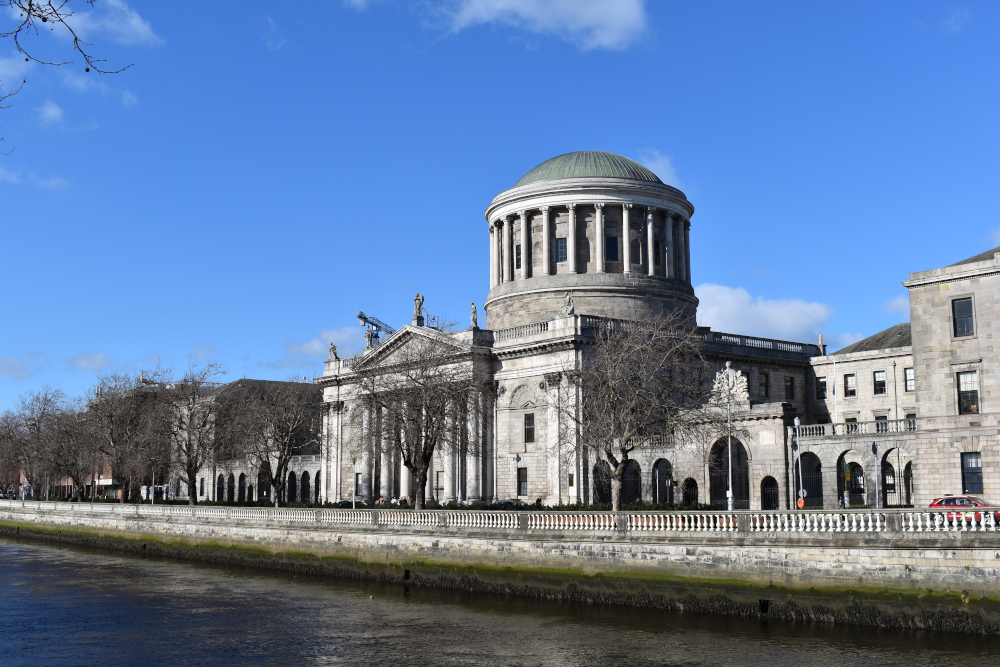
The High Court has refused to grant an injunction compelling the removal of a taxi rank from a car park used by Leisureplex customers at Blanchardstown Shopping Centre.

About this case:
- Citation:[2026] IEHC 311
- Judgment:
- Court:High Court
- Judge:Ms Justice Marguerite Bolger
Delivering judgment for the High Court, Ms Justice Marguerite Bolger determined: “The plaintiff has failed to satisfy me that damages would not be an adequate remedy for the loss it believes it will suffer if it, or its sub-tenant’s customers, have 26 less car park spaces available to them and/or have to go elsewhere in the Centre to locate a car park space.”
Background
The plaintiff leased a property in Blanchardstown Shopping Centre from the defendant, which runs as the entertainment outlet ‘Leisureplex’.
The lease included a provision concerning the use of a 586-space car park adjoining the property, which allowed various parties, including the tenant and its customers, to use the car park for free for 24 hours per day, every day of the year.
The clause permitted periods of temporary interruption to the rights of the tenant and its customers to use the car park, due to maintenance, repair, extension or alteration of the car park.
In December 2025, the plaintiff wrote to the defendant to advise it that the defendant’s proposed development of the shopping centre, including changes to the car park by the creation of a taxi area, was not permitted under the lease.
The defendant responded in February 2026, acknowledging the right of Leisureplex customers to use designated parking areas free of charge pursuant to the lease but asserting that the landlord had unequivocal rights under the lease to carry out works and to implement carparking changes.
In March 2026, the plaintiff claimed that it became aware that a section of the car park had been fenced off.
The plaintiff issued proceedings on 27 March 2026, with its application for an interlocutory injunction coming before the court in April 2026.
The plaintiff sought orders restraining the defendant from carrying out works on the car park and from reducing the number of car park spaces, removing the site compound which had been erected, and reinstating the car park to its original condition.
The High Court
The court observed that the mandatory injunctive relief sought by the plaintiff required it to satisfy the ‘strong case’ test.
On the issue of the delay, the court heard from the defendant that the plaintiff delayed in applying to halt the works and reinstate the car park spaces, where the plaintiff had been aware of the defendant’s intention to develop the car park since December 2025.
Highlighting that “a delay of four months could defeat a claim for equitable injunctive relief”, the court was satisfied that the earliest the plaintiff could have known of the works was in February 2025 when the defendant erected fencing, or possibly upon seeing the fencing in March.
Ms Justice Bolger examined the lease, noting the parties’ disagreement about whether its terms allowed the defendant to reduce the number of car park spaces available to the plaintiff and the plaintiff’s reliance on the English decisions of London and Blenheim Estates Ltd v Ladbrokes Retail Parks Ltd [1993] 1 All ER 307 and Duchess of Bedford House RTM Co Ltd & Ors v Campden Hillgate Ltd [2023] EWCA Civ. 1470, which establish that the right of a tenant to park in a shared car park is an easement.
The judge acknowledged that while neither decision was binding on the High Court, both were persuasive in the absence of Irish authorities on whether access to shared car parking spaces constitute an easement.
Finding that the plaintiff had established a strong case likely to succeed at trial in establishing that the creation of the taxi area, and the loss of 26 car park spaces, was not permitted by the lease and that the plaintiff’s shared right to allow its customers to park in the car park was an easement, Ms Justice Bolger moved to assess the balance of convenience.
The judge considered the plaintiff’s position that an interference with its easement property right was incapable of being remedied by an award of damages, in line with AIB Plc v Diamond [2011] IEHC 505, [2012] 3 IR 549, and O’Flaherty’s (Nassau Street) Ltd v The Setanta Centre Unlimited Company [2020] IEHC 272.
Ms Justice Bolger opined “I do not think the situation is anything as definitive as the plaintiff asserts, which is somewhat inconsistent with the inherently flexible nature of the remedy of an interlocutory injunction”, pointing out that AIB v Diamond did not establish that damages could never be an adequate remedy for breaches of property rights.
As to O’ Flaherty’s, the judge recognised that the breach of the plaintiff’s rights in that decision was “of a very different nature, as it involved the demolition of a building with no possibility of returning to the status quo”.
As to the nature and extent of the detriment alleged by the plaintiff and whether any loss could be remediated or not, the court found no irremediable loss in circumstances where inter alia the defendant could not argue at trial that its planning permission precluded the removal of the taxi area.
Ms Justice Bolger considered that the plaintiff’s averments in relation to the damage it believed it would suffer were “speculative and devoid of any evidential basis” and did not accept that a claimed difficulty in quantifying the plaintiff’s exposure to damages justified the absence of analysis as to the plaintiff’s generation of income and profit from when Leisureplex customers had access to 586 car park spaces, as compared to the position with fewer spaces.
In the circumstances, Ms Justice Bolger was not satisfied that damages would not be an adequate remedy for the plaintiff if it, or Leisureplex customers, have 26 fewer car park spaces available to them or have to go elsewhere in the shopping centre to locate a car park space.
The judge further noted inter alia that the lease did not give the plaintiff the right to a minimum number of car park spaces, that the defendant could authorise users other than the plaintiff to use the car park, which “must include taxis”, and that the defendant had made 165 additional spaces available in the immediately adjacent car park.
Conclusion
Accordingly, the High Court refused the relief sought.
International Investments ICAV v Blanche Retail Nominee Limited [2026] IEHC 311

Share this article:

Subscribe to our newsletter to not miss articles like this one:
 SUBSCRIBE

