




Written by:

Gillian O'Hanlon BL
Case Reporter
High Court makes orders excluding Burke family members from attending court in person
 Reading time: 5 minutes
Written by:
Gillian O'Hanlon BL
Case Reporter
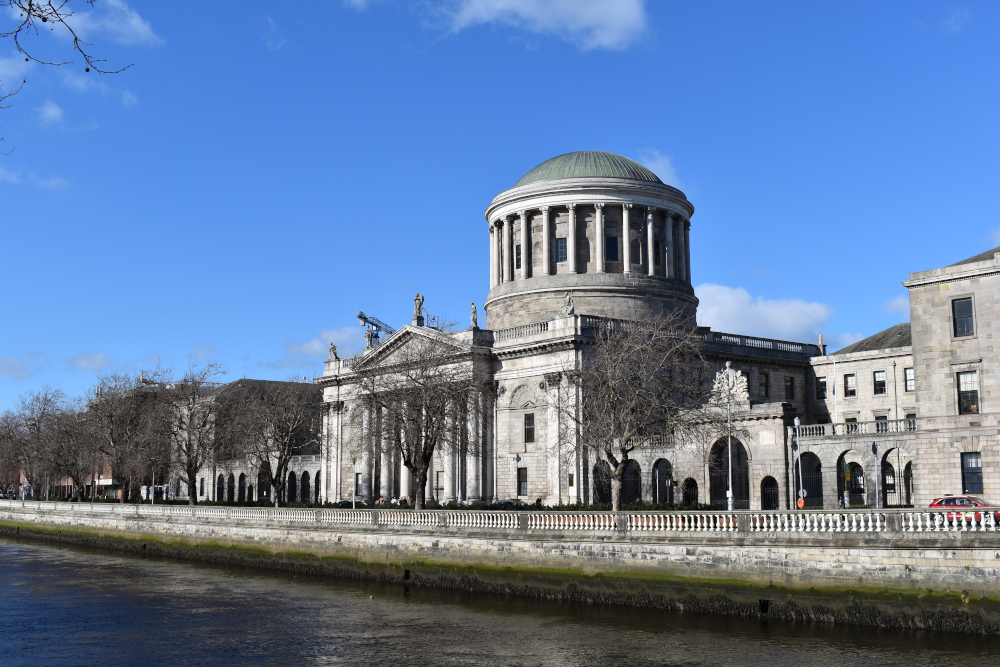
The High Court has prohibited members of the Burke family from attending court in person during future High Court hearings relating, directly or indirectly, to Mr Enoch Burke’s dismissal from Wilson’s Hospital School and his proceedings against the Teaching Council of Ireland.
Delivering judgment for the High Court, Mr Justice Cregan observed: “The Burkes demand strict adherence to fair procedures for themselves, whilst simultaneously acting in such a manner as to deprive their opponents of fair procedures. The Burkes demand to be heard, whilst simultaneously refusing all other parties a right to be heard. The Burkes demand respect from the courts, whilst simultaneously treating the courts with the utmost contempt and disrespect.”

About this case:
- Citation:[2026] IEHC 509
- Judgment:
- Court:High Court
- Judge:Mr Justice Brian Cregan
Background
In March 2026, the High Court indicated that it was considering making an order pursuant to the inherent jurisdiction of the court and/or pursuant to s.11 of the Civil Law and Criminal Law (Miscellaneous Provisions) Act 2020 excluding Mrs Martina Burke, Ms Ammi Burke and/or Dr Isaac Burke (the Burkes) from the courtroom for all cases involving Mr Enoch Burke.
The court was considering permitting the Burkes to attend court online only, in light of their disruptive behaviour in High Court proceedings concerning Mr Burke’s dispute over his dismissal from Wilson’s Hospital School for gross misconduct.
The High Court
Mr Justice Cregan explained that the reason why such an order was being contemplated was that in every case involving Mr Enoch Burke, the Burkes and others “behaved disgracefully, repeatedly interrupting court proceedings, refusing to obey directions of the court, refusing to keep quiet, shouting at the court and their opponents, and refusing even to leave the court when directed to do so by the court.”
Having regard to Walsh v. the Minister for Justice and Others [2019] IESC 15, the judge noted that it is well established that the courts have power to ensure that proceedings are not persistently disrupted by protestors, which power includes the ability to remove such persons from court and to exclude them from further hearings.
The court emphasised that “of all the places in which order must be maintained, the first place is in the courtroom itself” and that constant disruption and speaking over judges is “not only rude and inconsiderate but also often amounts to simple bullying” and when carried out in a concerted manner, is menacing and intimidatory.
Disagreeing with the Burkes’ submission that pursuant to Article 34.1 of the Constitution, which requires that justice be administered in public, they have a right to attend court, Mr Justice Cregan highlighted that Article 34.1 does not give an entitlement to cause “enormous disruption to the case before the court, or to shout at judges, and at opposing counsel.”
The judge continued: “Moreover, the exclusion of certain individual members of the public does not mean that the hearing is not being conducted in public or that the public does not have access to the courts, which is what the Constitution requires. It just means these three persons cannot be admitted to the court room.”
Mr Justice Cregan pointed out that the Burkes would still be allowed to attend remotely, and so there would be no reduction of their rights to see and hear proceedings in court.
The court further rejected the contention that he lacked the impartiality required to make the proposed orders in circumstances where he had made comments critical of Mr Burke over the past number of months, noting that he had been critical of Mr Burke “because his behaviour deserves to be criticised.”
Emphasising that requesting the recusal of judges has become a repeated pattern of Mr Burke and his family, Mr Justice Cregan considered the Burkes’ submission that they required specific details of the conduct alleged against them so that they could defend themselves accordingly.
Stating that the Burkes were “well aware” of their behaviour and disruptions in court, the judge outlined that he had lost count of the number of times that he had directed the Burkes not to interrupt hearings and that Gardaí were required to remove them from the courtroom.
Recounting the High Court’s recent finding of contempt of court on part of Mrs Burke and Ms Burke and their two-week imprisonment, Mr Justice Cregan opined: “I had thought that the period of imprisonment might bring about a halt to their interruptions but it did not”.
Acknowledging that in the “heat of battle”, litigants in person can understandably sometimes exceed the bounds of what is acceptable courtroom behaviour, the court expressed that “I have never experienced anything like the constant level of interruption, shouting, roaring and deliberate disruption of court proceedings by these three individuals since October 2025.”
Recalling that in the course of Mr Enoch Burke’s proceedings, “What usually happens, is that Mr Burke makes whatever application he wants to make and then, when the time comes for his opponent to respond, he or she is invariably interrupted and shouted down by the Burkes”, Mr Justice Cregan condemned the behaviour as “an intolerable interference with the administration of justice.”
The High Court also considered that on any day in which Mr Burke’s proceedings are listed in court, the registrars need to notify Gardaí so that they can attend, “a serious waste of Garda time”.
Conclusion
Accordingly, the High Court made an order prohibiting Mrs Martina Burke, Ms Ammi Burke and Dr Isaac Burke from attending in person in the courtroom during future hearings before the High Court which relate, directly or indirectly, to Mr Enoch Burke’s dismissal from Wilson’s Hospital School and/or his proceedings against the Teaching Council of Ireland.
The Board of Management of Wilson’s Hospital School v Burke (No. 8) [2026] IEHC 509

Share this article:

Subscribe to our newsletter to not miss articles like this one:
 SUBSCRIBE

