


Written by:

Gillian O'Hanlon BL
Case Reporter
High Court: Garda Commissioner unlawfully deprived aircraft mechanic of fair procedures
 Reading time: 6 minutes
Written by:
Gillian O'Hanlon BL
Case Reporter
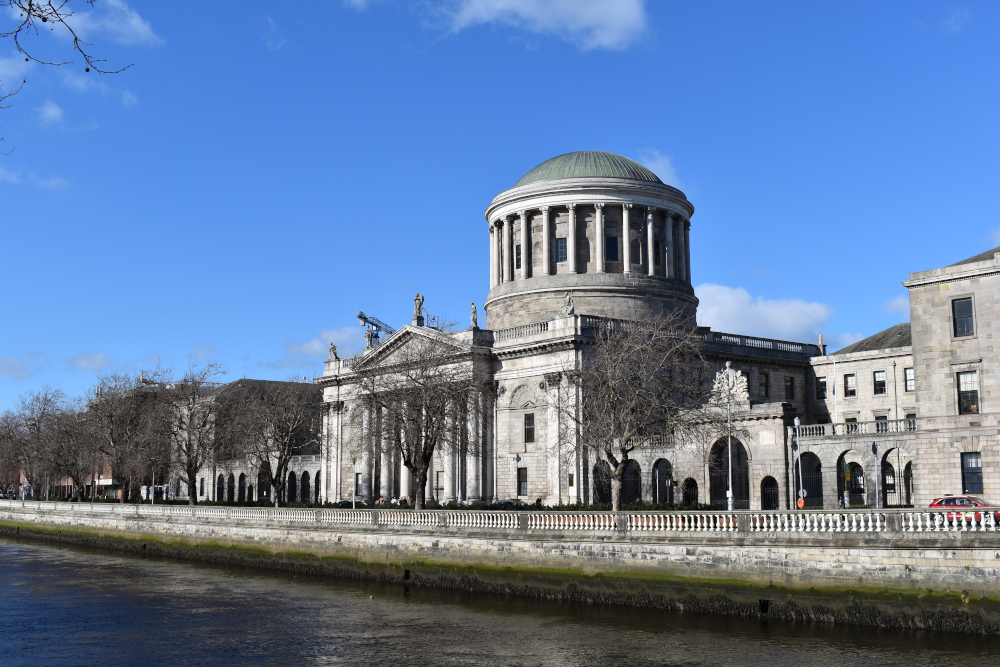
The High Court has quashed an appeal concerning the revocation of an aircraft mechanic’s security clearance at Dublin Airport.

About this case:
- Citation:[2026] IEHC 25
- Judgment:
- Court:High Court
- Judge:Mr Justice Michael Twomey
Delivering judgment for the High Court, Mr Justice Michael Twomey opined: “It seems to this court that the failure to provide Mr Doyle with the reason for the decision, to which he was entitled, meant that Mr Doyle had an appeal in name only, since he was not able to make whatever representations on this reason, as part of the appeal process.”
Background
The applicant, an aircraft mechanic, worked at Dublin Airport until 2 December 2024, when he was notified of a decision by a Detective Chief Superintendent of An Garda Síochána revoking his security clearance.
The decision was made the day after the applicant was involved in the creation of a video in an aeroplane on the premises supporting the general election campaign of Gerard Hutch, which was posted online on 26 November 2024.
Although the applicant suspected that his security clearance was removed because of this incident and notwithstanding that he sought reasons for the decision, he was not provided with same. The loss of security clearance led to the suspension of the applicant’s airport identification card, which he required for his work at the airport.
On appeal, the decision was affirmed by the respondent, the Garda Commissioner.
The basis for the decision was only provided to the applicant by letter dated 14 April 2025, after the appeal decision had already been made. It was clarified that a risk arose in relation to the applicant’s ability to facilitate nefarious activity within restricted areas of the airport, posing a security threat to the airport and by extension, to the State.
The applicant brought judicial review proceedings claiming that he was denied fair procedures in the appeal, as he did not know inter alia the basis for the decision and was not in a position to make any meaningful submissions to the Commissioner.
The Commissioner claimed that the failure to provide reasons to the applicant was justified on the basis of the public interest in withholding secret and sensitive intelligence.
The High Court
Mr Justice Twomey noted that it was not disputed that a public law decision regarding the grant to an individual of access to sensitive and secure areas in Dublin Airport is subject to the principles of fairness and natural justice.
Rather, the judge considered that the issue was the extent to which an appellant can be deprived of information, alleged to be secret and sensitive intelligence, in relation to the conduct of his appeal.
The court outlined that as per the Supreme Court in AP v Minister for Justice [2019] 3 IR 317, “while in some cases, one could end up disclosing little or no information, in order to protect legitimate State interests, the starting point is nonetheless that a person who is subject to a public law decision is ‘ordinarily’ entitled to participate in the process”.
Recognising that there may be competing interests in relation to the disclosure of information and that this was the exception upon which the Commissioner was relying, the court considered that a person’s entitlement to reasons should only be impaired to the minimum extent necessary to protect legitimate State interests.
Mr Justice Twomey clarified that “it is important that the decision maker does not simply apply a blanket refusal to provide any information, but instead considers the extent to which legitimate considerations can justify declining to provide any information”.
The judge continued that “the real difficulty, in this court’s view, with the Commissioner claiming that he was justified in not disclosing any information to Mr Doyle because he would have been revealing ‘secret and sensitive intelligence’, if he did so, is that it is clear, that on the particular facts of this case, there was relevant information, which was not ‘secret and sensitive intelligence’, which could have been revealed to Mr Doyle”.
The court pointed out that the Commissioner did in fact have relevant information which was not secret and sensitive intelligence which he had failed to disclose to the applicant in advance of his appeal, as was evidenced by the contents of the letter of 14 April 2025.
Mr Justice Twomey explained that if the Commissioner was able to share the reason for the decision after the appeal was decided, it was “obviously not secret and sensitive intelligence so as to be subject to public interest privilege” and by withholding that information from the applicant, his entitlement to know the reasons for the decision “was impaired more than was necessary to protect the legitimate State interests”.
In the circumstances, the court indicated that it would grant an order of certiorari quashing the appeal.
As to the effect of the invalidity of the appeal on the first-instance decision, Mr Justice Twomey considered that if the court found the decision itself to be invalid, the applicant would be entitled to regain access to secured areas of the airport.
Explaining that the court would not strike down the decision “even though it also clearly failed to provide the reason for that decision”, the judge observed that the court was “dealing with issues of national security, namely airport access, which are matters of huge national interest and hugely sensitive and are very far removed from a typical fair procedures case… where a failure to give reasons for a first-instance decision might invalidate that decision.”
In this regard, the court highlighted that a key attribute of the process of doing background checks is that it is grounded in the prevention of potential threats, rather than the adjudication of past wrongdoing.
The court further considered inter alia that an adverse outcome in an initial decision on a background security check will result in the withdrawal of authorisation or another benefit, rather than the removal of a right, and neither involves a finding of fault nor an imposition of a penalty by An Garda Síochána.
The court concluded that “this is a situation where primacy can be given first to the removal of a perceived risk (which risk could have massive negative consequences), and once this risk has been removed, consideration can then be given to the provision of reasons for that removal (as part of any appeal process, should the affected person appeal)”.
Conclusion
Accordingly, the High Court quashed the appeal but refused to set aside the decision revoking the applicant’s security clearance.
Doyle v The Commissioner of An Garda Síochána & Ors [2026] IEHC 25

Share this article:

Subscribe to our newsletter to not miss articles like this one:
 SUBSCRIBE