

Written by:

Gillian O'Hanlon BL
Case Reporter
High Court: Extension of time to bring defamation proceedings refused
 Reading time: 7 minutes
Written by:
Gillian O'Hanlon BL
Case Reporter
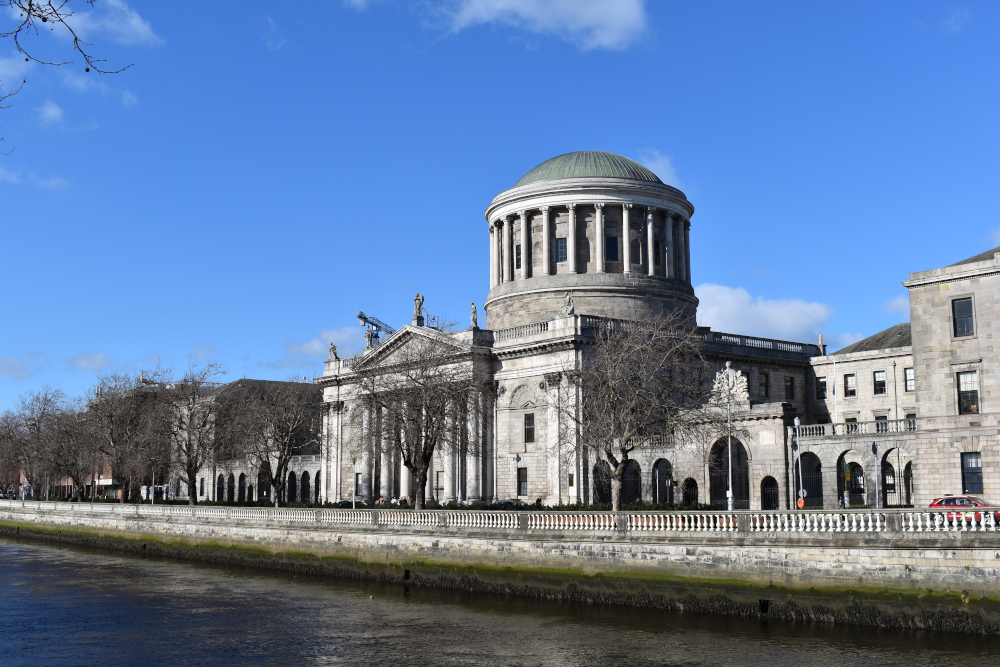
The High Court has refused to extend time for the widow of a deceased man to bring defamation proceedings against parties including the HSE, the Mater Hospital and two medical professionals.

About this case:
- Citation:[2026] IEHC 173
- Judgment:
- Court:High Court
- Judge:Ms Justice Siobhán Phelan
Delivering judgment for the High Court, Ms Justice Siobhán Phelan explained that “the Deceased was unwell in the period prior to his death by overdose. It would be surprising if this did not impact on his relationship with his wife and his wider family such that ambiguity in relation to his true wishes does not necessarily reflect badly on anyone.”
Background
The applicant’s late husband had a history of mental health issues dating back many years and it was alleged that in the year before his death, his health appeared to have deteriorated following his receipt of the Covid-19 vaccination.
The deceased attended at the Mater Misericordiae University Hospital in April 2021 and again in October 2021. He was subsequently transferred to Naas Hospital where he was admitted under the care of the first named respondent, a consultant psychiatrist.
Whilst in the Mater Hospital, the deceased was noted to have identified his adult daughter as his next of kin and that he was “currently going through a divorce”. He was discharged from Naas Hospital to the UK after five months.
On 19 March 2022, days after his discharge, the deceased died in the UK from an apparent overdose of prescribed drugs.
The applicant, a mental health professional working in the State, then sought access to the deceased’s medical records, which request was refused on the basis that the applicant was not his next of kin. That decision was upheld on appeal to the Data Protection Commissioner and to the Information Commissioner.
The applicant subsequently issued wrongful death proceedings in 2024 and also claimed under the UK Vaccine Damage Payment Scheme alleging that the deceased had suffered adverse reaction to the Covid-19 vaccination.
The applicant sought leave to issue defamation proceedings out of time pursuant to s.11(2)(e) of the Statute of Limitations Act 1957 (as amended) and pursuant to Order 1B of the Rules of the Superior Courts (RSC) based upon communications dating up until 2022 which were released to her in March 2025 through the discovery process in her wrongful death proceedings.
The applicant alleged inter alia that she had been falsely described as the deceased’s “ex-wife” in hospital documentation, claiming that they had a good relationship until his psychiatric deterioration.
The applicant further took issue with communications between the deceased’s GP and/or the HSE and the administrators of the UK Vaccine Damage Payment Scheme to the effect that records could not be released based on the authority of the consent provided by the applicant.
The High Court
At the outset of her analysis, Ms Justice Phelan set out s.11(2)(c) of the 1957 Act, which states that a defamation action shall not be brought after the expiration of one year, or such longer period as the court may direct not exceeding two years from the date on which the cause of action accrued.
In this regard, the judge highlighted that the accrual of the cause of action is defined in s.11(3B) of the 1957 Act as the date upon which the defamatory statement is first published.
As to the timing of an application for an extension of time within which to bring defamation proceedings, the court had regard to McKenna v. Kerry County Council [2020] IEHC 687 in confirming that a plaintiff “must ultimately issue defamation proceedings within two years of the accrual of the cause of action” and that there is no jurisdiction to extend time in respect of a publication occurring more than two years prior.
Ms Justice Phelan also highlighted that it “is now well established that there is no discoverability rule in relation to defamation claims”.
In the circumstances, the judge considered that she had no jurisdiction to extend time in respect of the content of decisions on the release of records which were communicated to the applicant in 2022.
The court also found no evidence of fraud or concealment such that the applicant could rely upon s.71 of the 1957 Act.
As to the matters occurring more than one year but less than two years ago, Ms Justice Phelan considered that the court had the power to extend time to issue proceedings in defamation provided that the statutory test in s.11(3A) was met.
The judge explained that the test involves a consideration of the interests of justice and an assessment of the balance of prejudice, with the court being required to have regard to the reason for the failure to bring the action within time, and the extent to which evidence is by virtue of the delay no longer capable of being adduced.
The court focused on the applicant’s allegation that the deceased’s GP had informed the UK Vaccine Damage Payment Scheme administrators by telephone that there had been a “decree” preventing the release of the records to the applicant or based on her consent, noting that “if those words were used, could be understood as suggesting active steps by the Deceased to legally preclude the Applicant from accessing his records in a manner which the Applicant contends undermines a defence of qualified privilege”.
Having considered the parties’ positions, the court was satisfied that the applicant’s prospects of success were weak “even without a time issue” and that the prejudice to the applicant from refusal of an extension of time “is, in truth, minimal”.
The court considered inter alia that the GP may have been mis-recorded or misunderstood as to what she said, that she had a legitimate difficulty in releasing the records in the circumstances.
Ms Justice Phelan also expressed that in circumstances where concerns had been raised and upheld in relation to whether the deceased’s records should be disclosed to the applicant under the Freedom of Information process, and where it was not disputed that divorce proceedings had been filed, “it is questionable whether there has been any damage to the Applicant’s reputation at all”.
The court was further satisfied it would not be a proper exercise of the court’s discretion to extend time for defamation proceedings to be taken as against the HSE in respect of its communications with the Vaccine Drug Payment Scheme administrators in respect of the applicant’s authority to access the deceased’s records.
In that regard, the judge highlighted: “The concerns identified as justifying refusal to release records were upheld by the OIC and DPC as legitimate concerns and those decisions were not challenged at that time in accordance with law. Proceedings by way of defamation cannot be deployed by way of collateral challenge in respect of the said decisions.”
Ms Justice Phelan remarked that insofar as the records sought were necessary for prosecuting her wrongful death proceedings, the High Court “will be able to safeguard the fairness of that process within the legal parameters of that claim and has already made discovery orders in favour of the Applicant in those proceedings”.
The judge continued: “The existence of such an order provides the necessary legal basis for disclosure of records for the purpose of the wrongful death proceedings. The order made also transparently and openly establishes the Applicant’s interest in accessing records for the wrongful death proceedings, mitigating and rebutting the tarnish to the Applicant’s personal reputation which she apprehends.”
Conclusion
Accordingly, the High Court refused the reliefs sought.
McAndrew-Bergson v Hennelly & Ors [2026] IEHC 173

Share this article:

Subscribe to our newsletter to not miss articles like this one:
 SUBSCRIBE