


Written by:

Gillian O'Hanlon BL
Case Reporter
High Court: Enoch Burke was lawfully transferred to Castlerea Prison
 Reading time: 5 minutes
Written by:
Gillian O'Hanlon BL
Case Reporter
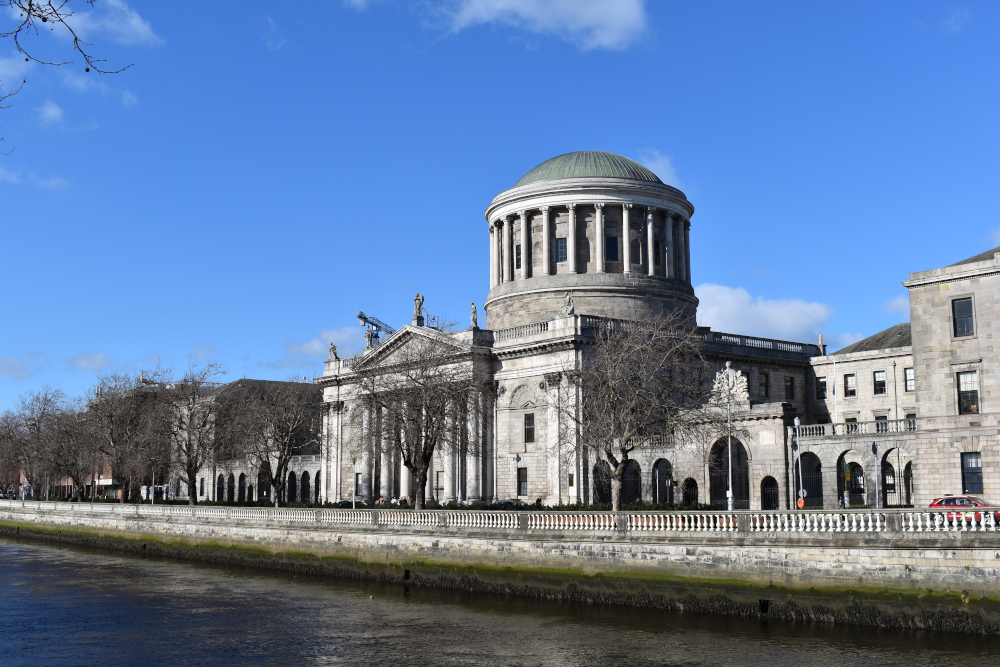
The High Court has determined that Enoch Burke was lawfully transferred from Mountjoy to Castlerea Prison.

About this case:
- Citation:[2026] IEHC 171
- Judgment:
- Court:High Court
- Judge:Mr Justice Brian Cregan
Delivering judgment for the High Court, Mr Justice Brian Cregan determined that the transfer occurred for reasons which were neither arbitrary, capricious nor unjust and reiterated that “Mr Burke has the keys to his own prison cell in Castlerea Prison, just as he has in Mountjoy Prison”.
Background
On 14 January 2026, Mr Burke was released from prison where he was incarcerated for repeated breaches of a High Court order not to trespass on the plaintiff school’s property.
Mr Justice Cregan released Mr Burke to enable him to prepare his case against members of the Disciplinary Appeal Panel, but warned Mr Burke that if he trespassed on the school grounds again, he would be immediately returned to prison.
Mr Burke decided to return to work at the school the next day. The school having brought another application for attachment and committal, Mr Justice Cregan found Mr Burke to be in contempt of court again and made an order for his committal to Mountjoy Prison on 19 January 2026.
Mr Burke was subsequently moved from Mountjoy to Castlerea Prison on 1 March 2026.
Both Mr Burke and his brother, Dr Isaac Burke, subsequently raised an issue with the court as to whether the transfer was lawful or not, particularly in circumstances where Mr Burke was imprisoned for civil contempt as opposed to being charged with or convicted of a criminal offence.
Mr Justice Cregan made orders adding the Governors of the prisons to the proceedings as notice parties. The matter came back before the court on 12 March 2026.
The High Court
Having examined the applicable law and the affidavit evidence before the court, Mr Justice Cregan noted that by reason of Mr Burke’s civil contempt of court, he had been committed to a specified prison (i.e. Mountjoy Prison) in accordance with Order 44 of the Rules of the Superior Courts (RSC).
The judge explained that once he had been committed to prison, Mr Burke came within the definition of a “prisoner” under the Prisons Act 2007 and under s.2 of the Prison Rules 2007 (as amended) [S.I. 252 of 2007].
Mr Justice Cregan considered that as a prisoner, Mr Burke was subject to being detained in “any prison to which the Prison Acts apply” in accordance with s.17(2) of the Criminal Justice (Administration) Act 1914 and could be removed therefrom during the term of his imprisonment to any other prison at the direction of the Minister for Justice, a power delegated to the prison Governors.
The court had regard to an affidavit sworn on behalf of the Governor of Mountjoy Prison, which explained that Mr Burke was not suitable for housing within the general prison population due to potential risks to his safety and to prison security, but that due to overcrowding at Mountjoy Prison, detention in a single-occupancy cell was impractical.
In that regard, the affidavit noted that “as of 6th March 2026, there were 1,124 persons detained in Mountjoy Prison, versus a bed capacity of 831. It was therefore operating at 135% capacity, with 84 persons required to sleep on the floor in a multi-occupancy cell.”
Having regard to the affidavit evidence, the court was satisfied that Mr Burke had been lawfully transferred from Mountjoy to Castlerea Prison for a multitude of reasons which were neither arbitrary, unjust nor capricious, including maintaining prison discipline, Mr Burke’s own safety and for reasons of overcrowding.
Mr Justice Cregan was also satisfied that Mr Burke could be produced online for court hearings “as easily in Castlerea Prison as he can be from Mountjoy Prison, as has already been demonstrated” and that Mr Burke was free to make a request to the Governor of Castlerea Prison that he be brought before the High Court to purge his contempt “just as much as he had that ability with the Governor of Mountjoy Prison”.
Mr Justice Cregan remarked: “Mr Burke comes to this court and argues that court orders are sacrosanct and must be obeyed by everyone, including the Governor of Mountjoy Prison. Yet, he makes this argument whilst simultaneously being in prison for over 600 days for refusing to obey a lawful order of the High Court not to trespass on school property. As far as he is concerned, everyone must obey court orders – except him.”
The judge continued:
“Mr Burke is not in prison because of his religious beliefs which he is perfectly entitled to have. However, he must obey the order of the court not to trespass on the plaintiff’s property. If he gives such an undertaking, then he will be free to leave prison… Mr Burke does not have to ‘bend the knee to transgender ideology’ as he repeatedly puts it. The court order does not require that he do so. It simply requires him not to trespass on school grounds.”
Conclusion
Accordingly, the High Court dismissed the application.
The Board of Management of Wilson’s Hospital School v Enoch Burke (No. 5) [2026] IEHC 171

Share this article:

Subscribe to our newsletter to not miss articles like this one:
 SUBSCRIBE