




Written by:

Gillian O'Hanlon BL
Case Reporter
High Court: Doctor convicted of drink driving, possession of cannabis and driving while disqualified struck off register
 Reading time: 6 minutes
Written by:
Gillian O'Hanlon BL
Case Reporter
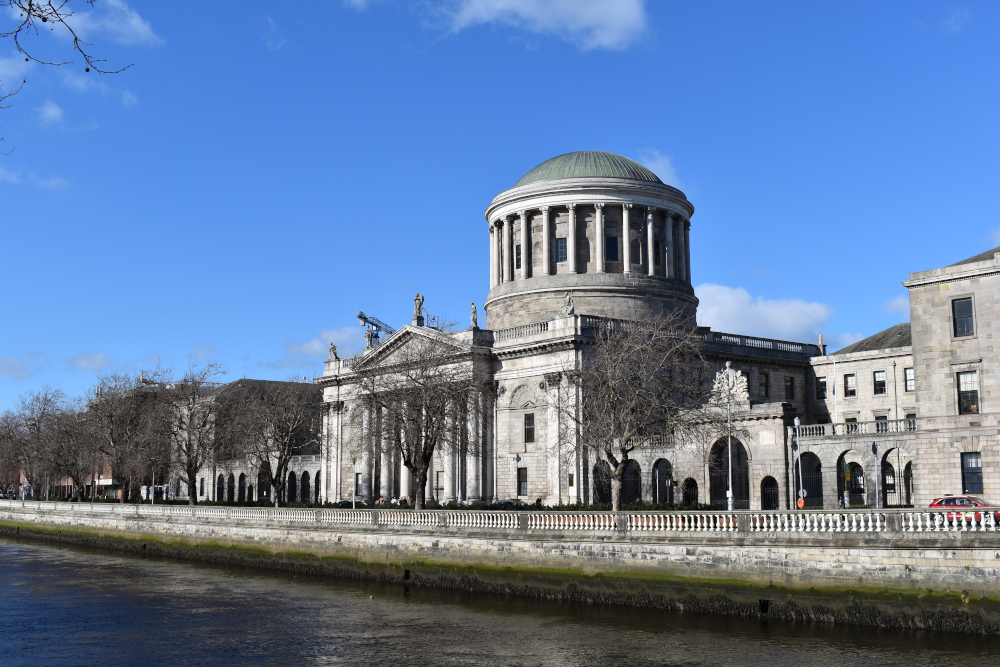
The High Court has ordered that a doctor convicted of road traffic and drug offences should have his registration cancelled.

About this case:
- Citation:[2026] IEHC 458
- Judgment:
- Court:High Court
- Judge:Mr Justice David Barniville
Delivering an ex tempore judgment for the High Court in June, Mr Justice David Barniville opined: “This is a case that was described by the Council’s Fitness to Practise committee…as being one of the most serious cases to ever come before it, and it is indeed an extremely serious case.”
Background
In May 2021, a complaint was made to the Preliminary Proceedings Committee (PPC) of the applicant to the effect that the respondent doctor, in completing his Annual Retention Application Form (ARAF), responded to a query as to whether he had been convicted of any criminal offences in or outside the State by stating “careless drink driving without insurance”.
The applicant sought further information and in December 2020, the respondent clarified that he had been charged by a court sitting in Cavan with “drunk careless driving with no insurance and with possession of marijuana.”
In light of the information disclosed, the Council applied to the court in November 2021 for an order suspending the respondent’s registration and prohibiting him from engaging in the practice of medicine until further steps were taken under the fitness to practise provisions. The respondent gave an undertaking not to practise until further steps were taken.
The respondent’s registration was ultimately suspended in March 2023 when he failed to comply with those undertakings.
In October 2022, the PPC decided that further action against the respondent was warranted on grounds of alleged professional misconduct, an alleged contravention of a provision of the Medical Practitioners Act 2007 (as amended) and an alleged relevant medical disability arising out of the complaints concerning his drink and drug driving convictions.
A second complaint was made to the PPC in June 2023 concerning the alleged breaches by the respondent of his undertakings to the court, including an allegation in relation to the respondent’s alleged exhibiting of a falsified reference to an affidavit sworn by him.
In March 2024, the PPC formed the opinion that further action was warranted in relation to those complaints on grounds of alleged professional misconduct and/or professional performance.
A combined Notice of Inquiry was sent to the respondent in March 2025 in relation to the complaints and further alleging inter alia that the respondent had driven while disqualified and without insurance on 14 February 2022 and that on 19 May 2022, he was convicted of those offences.
The Notice further alleged that the respondent suffered from a medical disability in the form of an addiction to alcohol and/or drugs which might impair his ability to practise medicine.
Inquiry and report
An inquiry took place in July 2025, with the Fitness to Practise Committee finding that the allegations against the respondent in relation to breaching undertakings and driving while disqualified and without insurance were proven and amounted to professional misconduct.
In that regard, the Committee was satisfied that the respondent had demonstrated a total disregard for the rule of law and that his conduct was “dangerous, reckless, antisocial and disgraceful when carried out by any person but particularly so when carried out by a professional person such as a medical practitioner”.
The Committee also found that the respondent’s breaches of his undertakings fundamentally undermined the values of integrity and honesty which doctors are required to uphold in their practice.
In light of those findings and the aggravating and mitigating factors of the case, a recommendation was made that the respondent’s registration be cancelled and that he be prohibited from applying for restoration to the register for three years.
In that regard, the Committee considered that the conduct itself, its repeated nature, the absence of insight and lack of remorse shown by the respondent, and his non-participation in the process placed the case within the category of a most serious case.
The applicant agreed with the recommended sanctions, noting that it had acted with as much leniency as possible in relation to sanction but that the need to protect the public and the seriousness of the case warranted confirmation of the sanction of cancellation.
In the circumstances, the applicant applied to the High Court for the cancellation of the respondent’s registration and to prohibit the respondent from applying for restoration to the register for a period of three years from the date of cancellation pursuant to s.71 of the 2007 Act.
The High Court
At the outset of his judgment, the President of the High Court agreed with the applicant that the case was an extremely serious one.
Being satisfied that the case could proceed in the respondent’s absence, Mr Justice Barniville remarked that the respondent had left Ireland and returned to Pakistan at some point in recent years, where he apparently continued to practise as a doctor while the Irish proceedings were ongoing.
The court noted that pursuant to s.76(3) of the 2007 Act, the court was required to confirm the decision of the Medical Council unless there was “good reason” not to do so.
The court was satisfied that it was required to confirm the decision in light of the test set out in inter alia Nursing and Midwifery Board v Burke [2025] IEHC 557, which provides that the court must confirm the decision unless there exists a procedural impropriety or irregularity, a failure to observe the standards of natural and constitutional justice, a serious and significant error of fact or law, or unless the court is satisfied that the decision is one that no reasonable regulatory body could take on the basis of the evidence.
Mr Justice Barniville opined, “On the contrary, in my view, this was a decision which was entirely appropriate, proper and proportionate, and one which complied with all of the relevant legal principles applicable to sanctioning in professional disciplinary cases.”
Conclusion
In the absence of a “good reason” not to confirm the applicant’s decision, the High Court granted the reliefs sought.
Medical Council v Syed Waqas Bukhari [2026] IEHC 458

Share this article:

Subscribe to our newsletter to not miss articles like this one:
 SUBSCRIBE

