



Written by:

Gillian O'Hanlon BL
Case Reporter
High Court: Declaration as to lawfulness of ‘ceiling of care’ granted
 Reading time: 6 minutes
Written by:
Gillian O'Hanlon BL
Case Reporter
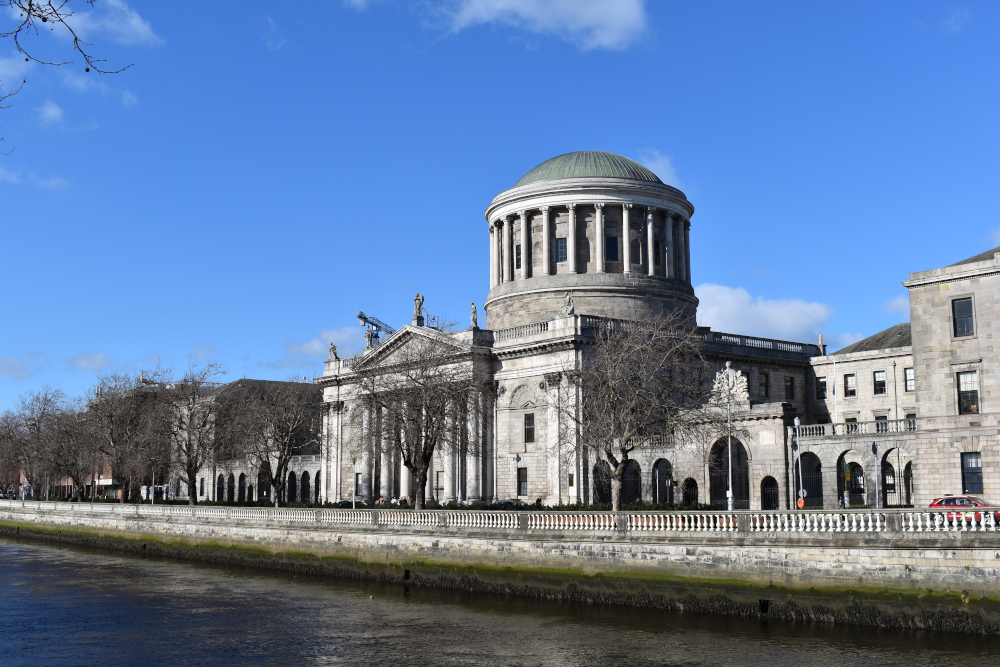
The High Court has authorised clinicians to lawfully refrain from instituting life-prolonging interventions against the will of a patient who repeatedly refused treatment, notwithstanding his lack of capacity.

About this case:
- Citation:[2026] IEHC 291
- Judgment:
- Court:High Court
- Judge:Ms Justice Emily Egan
Delivering judgment for the High Court, Ms Justice Emily Egan, in granting the reliefs sought, opined that “Such authorisation respects the respondent’s longstanding will and preference to refuse medical treatment, even if his life is in jeopardy and, to that extent, reflects his longstanding values.”
Background
The respondent was a 78-year-old man with a history of severe depressive illness with psychotic features. Over the past two years prior to the proceedings, the respondent had become profoundly frail, had sustained multiple serious fractures and marked weight loss.
Between 2024-2025, the respondent refused psychiatric medication and treatment and underwent a course of involuntary electroconvulsive therapy authorised under the Mental Health Act 2001, which resulted in only brief and limited improvement.
The respondent consistently expressed that his quality of life was poor, that he did not wish to reside in a nursing home, and that death was inevitable, while not accepting that he was depressed.
On 6 February 2025, the respondent’s treating psychiatrist, Dr McLoughlin, placed a “ceiling of care” letter on his chart recording the respondent’s wish that medical treatment would be offered but not forced and that there should be no coercive feeding, treatment and no CPR.
However, Dr McLoughlin took the view that the respondent lacked capacity at that time to make independent decisions and so this was not a valid advance care directive.
Following his transfer to an approved centre, the respondent continued to refuse most meals, declined investigations and medication, and refused supportive interventions.
The HSE brought an application before the High Court seeking clarity on whether clinicians may lawfully refrain from performing invasive and coercive interventions on the respondent which they regard as futile, harmful, and disproportionate, in circumstances where the proposed “ceiling of care” would likely result in the respondent’s premature death.
The HSE also queried whether non-coercive palliative care may be provided in defined circumstances and whether the respondent’s continued detention in the approved centre is necessary and proportionate.
The High Court
The court heard evidence on the respondent’s capacity from Dr McLoughlin, who noted the respondent’s refusal to engage with capacity assessments. In the circumstances, Dr McLoughlin formed the view that the respondent could understand information, retain it, and communicate a choice, but could not use or weigh that information in a meaningful evaluative way.
An independent expert similarly gave evidence that the respondent resisted assessment and while demonstrating capacity to express a choice, showed significant impairment in weighing information.
The independent expert concluded that the respondent lacked capacity in respect of complex decisions relating to his care and treatment.
Ms Justice Egan considered that the starting point was the presumption of capacity arising by virtue of s.8(2) of the Assisted Decision-Making (Capacity) Act 2015 and at common law.
Noting that there was no Irish caselaw on the effect of a person’s refusal to engage with a capacity assessment such as to frustrate it, the court remarked that “In principle, one can see that in many cases, such an approach may well result in the non-rebuttal of the presumption of capacity.”
Ms Justice Egan had regard to the submission of the respondent’s guardian ad litem that the respondent’s refusal to engage with a capacity assessment ought not to be interpreted as evidence of lack of capacity.
The judge reasoned: “The respondent has a right to refuse to engage with his medical attendants and with the Guardian ad litem. I must determine whether, aside entirely from this non-engagement, the respondent’s decision to decline all medical treatment is capacitous or whether, on the other hand, the presumption of capacity has been rebutted.”
Having considered the evidence, Ms Justice Egan was satisfied that the presumption of capacity had been rebutted where the respondent did not accept or believe the advice concerning the likely impact of his choices on his health and life.
In that regard, the court explained: “I am satisfied that the respondent’s longstanding and trenchant refusals of treatment do not represent capacitous, evaluative decision-making, but rather decisions made in the absence of an ability to weigh the consequences thereof. I am also satisfied that the respondent also lacks capacity to consent to palliative medical treatment and to make decisions in relation to his accommodation.”
As to the lawfulness of the “ceiling of care”, the court considered the decision of the Supreme Court in JJ [2022] 3 IR 1, noting that the central question was whether the proposed course is lawful in all the circumstances and that the court “is not engaged in a substitute-consent or best-interests analysis”.
The court emphasised that the Medical Council’s Guide to Professional Conduct and Ethics (9th ed., 2024) provides that treatment, including resuscitation or medical nutrition and hydration, should not be started or continued where it is unlikely to work, may cause more harm than benefit, or is likely to cause pain or distress outweighing any benefit.
Having regard to the relevant caselaw, Ms Justice Egan highlighted that the authorities “consistently confirm that the Court’s function is not to direct clinical care, but to determine whether the course proposed by clinicians is legally permissible”.
Finding that the relief sought engaged the right to life insofar as non-intervention may shorten life, the court considered that it was appropriate to authorise the respondent’s clinicians to refrain from taking steps to prolong his life and that “Such authorisation respects the respondent’s longstanding will and preference to refuse medical treatment, even if his life is in jeopardy and, to that extent, reflects his longstanding values.”
Ms Justice Egan continued: “Moreover, such interventions will destroy any remaining therapeutic relationship and are “likely to cause the patient pain, discomfort or distress that will outweigh the benefits”. In truth they will ‘cause the patient more harm than benefit’.”
The court was further satisfied that it would be ethically unacceptable to permit the respondent, when he enters the active stage of dying, to suffer unmanaged pain or distress and authorised the provision of non-coercive palliative care where appropriate.
The court was also satisfied that whilst the respondent’s personal liberty would be restricted, his continued detention in an approved centre was necessary and proportionate to protect his right to bodily integrity in light of his lack of capacity, frailty and inability to appreciate risk.
Conclusion
Accordingly, the High Court granted the declaration of lawfulness as to the ceiling of care and the remaining orders sought.
Health Service Executive v P.J. [2026] IEHC 291

Share this article:

Subscribe to our newsletter to not miss articles like this one:
 SUBSCRIBE

