

Written by:

Gillian O'Hanlon BL
Case Reporter
High Court: Debt recovery proceedings dismissed following over five years of delay
 Reading time: 5 minutes
Written by:
Gillian O'Hanlon BL
Case Reporter
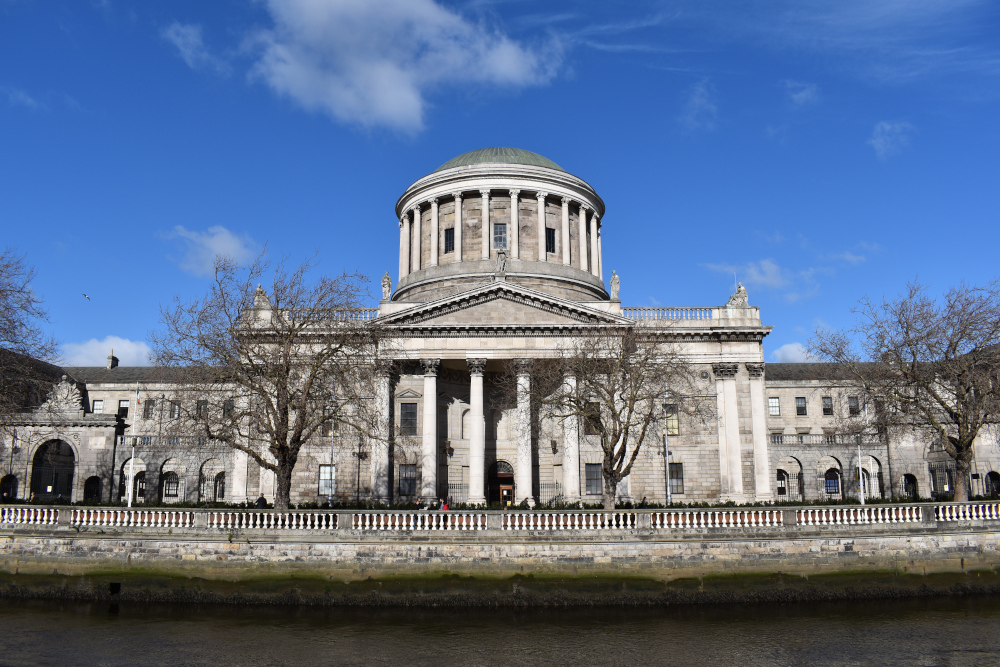
The High Court has dismissed debt recovery proceedings having determined that over five years of unexplained inactivity had occurred from inception.

About this case:
- Citation:[2026] IEHC 695
- Judgment:
- Court:High Court
- Judge:Mr Justice Paul Coffey
Delivering judgment for the High Court in October, Mr Justice Paul Coffey reasoned, “While the documentary nature of the proceedings and the absence of specific prejudice would ordinarily weigh in favour of permitting proceedings to continue, those considerations are principally relevant within the lower categories of inexcusable delay identified in Kirwan.”
Background
In April 2019, the plaintiff issued summary proceedings seeking the recovery of debts allegedly due relating to loans advanced by Ulster Bank to the defendant.
The proceedings were served on the defendant in May 2019, and the defendant entered an appearance on 23 May 2019.
The plaintiff took no further procedural steps until the defendant issued a motion seeking to strike out the proceedings for delay on 12 November 2025, a period of approximately six years and six months.
In the course of that period, there was a period of approximately six months during which the plaintiff attempted to settle the proceedings with the defendant, and a further nine-month period during the COVID-19 pandemic where a moratorium on debt collection was imposed.
The High Court
Mr Justice Coffey had regard to the reformulation by Kirwan v Connors [2025] IESC 21 of the law governing applications to dismiss proceedings for want of prosecution.
The judge noted that Order 122, rule 11 of the Rules of the Superior Courts (RSC) was central to the approach in Kirwan, providing that where “there has been no proceeding for two years from the last proceeding had”, a defendant may apply to dismiss the proceedings for want of prosecution.
Highlighting the renewed significance accorded to that provision in Kirwan, the court considered that the two-year period prescribed by that rule provides “the first temporal milestone and the objective starting point” from which progressively more stringent consequences are measured.
Mr Justice Coffey observed that the exercise is a two-stage one: first to determine whether there has been no proceeding for the two-year period contemplated by O.122, r.11 RSC, then to determine the aggregate period of relevant inactivity with any substantial period for which a legitimate explanation has been established being subtracted therefrom.
Accepting that, if the five-years-plus category of delay identified in Kirwan applied, then it could not establish a pressing exigency of justice sufficient to warrant the continuance of the proceedings, the plaintiff contended that the reckonable period should have been reduced to four years and ten months.
The plaintiff alleged that certain temporal periods should be excluded from the calculation, including a six-month period during which settlement negotiations took place, a nine-month moratorium during which the Central Bank requested that debt recovery proceedings should not be advanced in light of the pandemic, a twenty-day period between service and the entry of an appearance and four months thereafter for the preparation and issue of a motion for summary judgment.
The plaintiff submitted that the case fell within the four to five year category and accordingly, should be allowed to proceed having regard to the documentary nature of the claim, the absence of any real dependence on witness’ memory, the absence of a positive factual defence and the absence of specific prejudice to the defendant.
The defendant relied upon Bank of Ireland Mortgage Bank v O’Malley [2019] IESC 84, which obliged the plaintiff to request further information from Ulster Bank before it could properly seek summary judgment against the defendant.
However, the plaintiff did not request that material until 1 August 2025, approximately five years and eight months later.
Being satisfied that the main issue was what aggregate period of inactivity should be used for analysis, Mr Justice Coffey accepted that the six months during which the parties were engaged in bona fide settlement negotiations should be excluded, along with the nine-month moratorium on the progression of debt recovery proceedings.
Finding it unnecessary to determine whether the plaintiff could exclude the further period of twenty days between the service of the proceedings on the defendant and his entry of an appearance where the relevant period remained in excess of five years, the judge considered that the issue of whether the plaintiff could exclude the four-month period to prepare and issue its motion for summary judgment would be decisive.
In circumstances where the plaintiff sought an exclusion by reference to a step which was never actually taken, as “No motion for summary judgment was in fact prepared, issued or served”, Mr Justice Coffey determined that there was “no basis … to explain or to exclude the relevant period.”
Finding that the remaining period of delay constituted more than five years of unexplained inactivity attributable to the plaintiff and that the plaintiff could not establish a “pressing exigency of justice” requiring the proceedings to continue, the court observed that “While the documentary nature of the proceedings and the absence of specific prejudice would ordinarily weigh in favour of permitting proceedings to continue, those considerations are principally relevant within the lower categories of inexcusable delay identified in Kirwan.”
Conclusion
Accordingly, the High Court dismissed the proceedings.
Everyday Finance Designated Activity Company trading as Link Financial v Solan [2026] IEHC 695

Share this article:

Subscribe to our newsletter to not miss articles like this one:
 SUBSCRIBE