




Written by:

Gillian O'Hanlon BL
Case Reporter
High Court: Daughter is refused leave to challenge HSE’s care of parents
 Reading time: 5 minutes
Written by:
Gillian O'Hanlon BL
Case Reporter
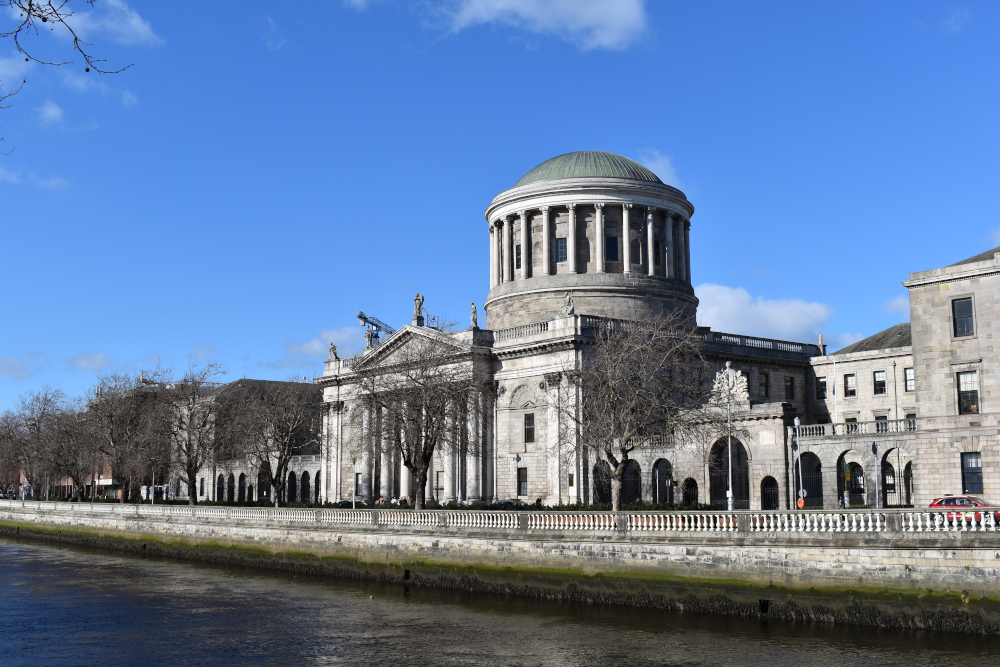
The High Court has refused to grant leave for a daughter’s challenge concerning years of alleged failings on part of the HSE in the care of her parents.

About this case:
- Citation:[2026] IEHC 671
- Judgment:
- Court:High Court
- Judge:Mr Justice Anthony Barr
Delivering an ex tempore judgment for the High Court, Mr Justice Anthony Barr opined that the applicant’s statement of grounds were “vague in the extreme” and that her generalised complaint against the HSE of breach of duty of care was “not sufficient to enable a person to bring judicial review proceedings in respect of the alleged shortcomings in the conduct of a statutory body over a number of years.”
Background
The applicant alleged that the HSE failed in its statutory duty of care towards vulnerable people by failing to adequately investigate numerous complaints which she made to them concerning her father’s incapacity and the alleged abuse of him by her siblings, and by failing to put appropriate supports in place to allow him to live safely at home.
In her application for leave to bring judicial review proceedings, she set out that her father had been diagnosed with mid-level Alzheimer’s disease and that due to this condition, he had been defrauded out of significant sums of money by criminal actors online. A further allegation was made to the effect that her siblings had combined to extract money from both of her parents.
The applicant set out that an interim barring order had been obtained by her father against her, which she alleged was the result of pressure being applied to him by her siblings in an effort to remove her from the family home.
The applicant alleged that in failing to adequately support her parents, the HSE had reached decisions as to the level of her father’s cognitive functioning over the years which were unreasonable and irrational, and had either ignored or failed to have regard to the evidence which she placed before it.
The HSE opposed the application, first contending that the applicant did not have locus standi to institute proceedings where the alleged decisions related only to the capacity and care requirements of the applicant’s father.
Secondly, the HSE alleged that the applicant had failed to identify any particular decisions in respect of which relief was claimed, seeking to make an omnibus claim of negligence and breach of duty against the HSE in relation to its care of her father and mother on a continuous basis since 2022.
Thirdly, the HSE argued that the proceedings were out of time having regard to Order 84 of the Rules of the Superior Courts, which requires such an application to be made within three months of the impugned decision.
The HSE contended that in circumstances where the applicant’s papers had been lodged in December 2025, she could have challenged any decision made by the respondent made from September 2025 onwards but had failed to do so, instead bringing a broad challenge to the HSE’s conduct from 2022 to 2026.
Finally, the respondent asked the High Court to refuse leave in light of the length of the statement of grounds, being 75 pages in length, and its lack of specificity.
The High Court
At the outset, Mr Justice Barr highlighted the relatively low threshold set out in G v DPP [1994] 1 IR 374 which applicants seeking leave to bring judicial review proceedings must meet.
Noting that where a leave application is brought on notice to the respondent, the nature of the applicable test does not change, the judge opined, “In reality, it boils down to a situation where the respondent must establish that the applicant does not have an arguable case, but that instead his or her case is bound to fail for one reason or another.”
The court considered that from the papers, it was clear that the applicant’s mother suffered with advanced semantic dementia requiring full-time care and supervision, and that the applicant’s father had a diagnosis of Alzheimer’s dementia in the mild to moderate range.
Mr Justice Barr also had regard to the considerable conflict within the family, primarily between the applicant and her three siblings, and the numerous complaints made by the applicant to statutory bodies complaining about the conduct of social workers and a nurse who attended her parents, none of which had been upheld.
As to the HSE’s first ground of objection, the judge was satisfied that the applicant did not have locus standi where she was not authorised to act as an agent on behalf of her parents, where her father had appointed two of his other children as attorney under an enduring power of attorney, and where the applicant had not applied for authorisation to make decisions for her parents under the Assisted Decision-Making (Capacity) Act 2015.
Turning to the second objection, the court agreed with the HSE that the applicant was attempting to make a “generalised complaint of breach of the duty of care owed by the respondent to her father on the basis that they had not intervened following their interviews and interactions with the applicant’s father and with the applicant and with her siblings.”
Finding the third ground of objection well-founded in law, Mr Justice Barr accepted that the applicant’s statement of grounds was “vague in the extreme” and lacked the degree of specificity required under the rules as per Leamlara Preservation Group v An Coimisiún Pleanála [2026] IEHC 631 and Lofinmakin (A Minor) v Minister for Justice [2011] IEHC 38.
Conclusion
Accordingly, the High Court refused leave to proceed by way of judicial review.
D.McC. v Health Service Executive [2026] IEHC 671

Share this article:

Subscribe to our newsletter to not miss articles like this one:
 SUBSCRIBE

