





Written by:

Gillian O'Hanlon BL
Case Reporter
High Court considers enforcement application amid allegations of threats by paramilitary members
 Reading time: 5 minutes
Written by:
Gillian O'Hanlon BL
Case Reporter
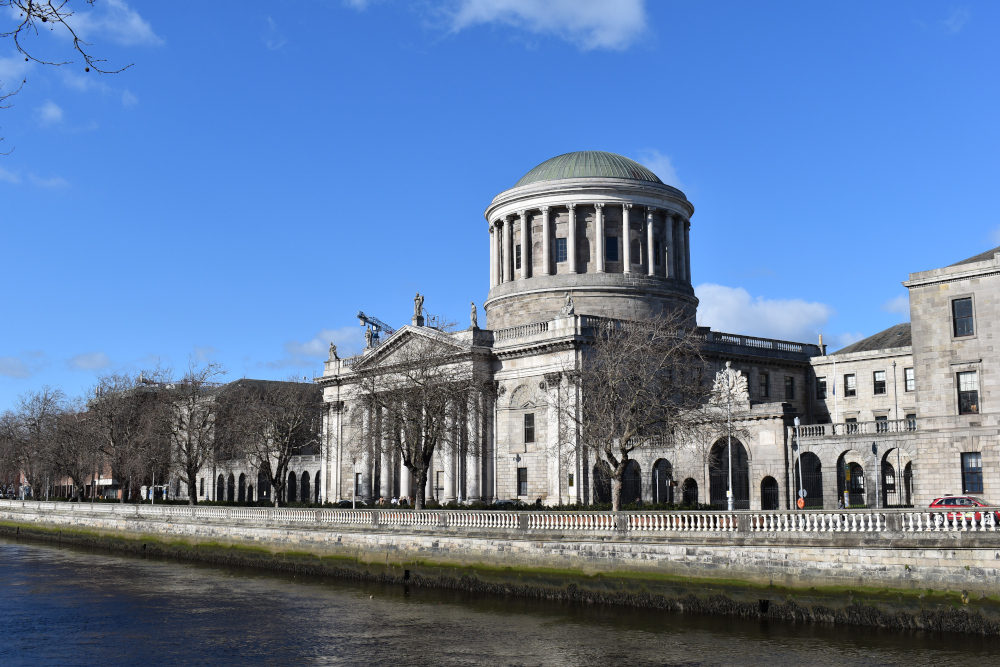
The High Court has considered whether to grant a stay on the decision of an adjudicator in favour of a company which allegedly sent ‘republicans’ to secure monies owing to it by Breffni Group.

About this case:
- Citation:[2026] IEHC 759
- Judgment:
- Court:High Court
- Judge:Mr Justice Michael Twomey
Delivering judgment for the High Court, Mr Justice Michael Twomey opined, “This Court does of course agree with counsel for Breffni that it would be an affront to the rule of law if a person were to use extra-judicial and illegal methods to seek enforcement of a debt. However, this Court expects the Gardaí to investigate these allegations and bring to justice any person who might have broken the law. This is how our criminal justice system responds to such threats to the rule of law.”
Background
On 27 July 2026, an adjudicator found that the respondent, Breffni Group, owed the applicant, Leder, the sum of €314,868.88 plus VAT for construction works completed in Momentum Business Park in Naas.
Leder applied to the High Court for leave to enforce the adjudicator’s decision pursuant to s.6(11) of the Construction Contracts Act 2013.
Breffni Group argued that the decision should be stayed as on 29 July 2026, two men visited the home of Breffni Group’s directors seeking to recover the money due to Leder pursuant to the decision.
The men allegedly communicated via the video and audio facility at the security gate to their house, claiming to be republicans and stating that money was owed to Dermot Finn, a director of Leder, and that they were there to “sort it”.
The directors made a complaint to Gardaí, who considered the alleged conduct to fall under the offence of making an unwarranted demand with menaces under s.17 of the Criminal Justice (Pubic Order) Act 1994, and escalated the case to the Special Detective Unit due to the alleged para-military involvement.
Breffni contended that in circumstances where the applicant had bypassed the architecture of the 2013 Act and sought a parallel and illegal route of enforcement, “It would be entirely unsafe and contrary to public policy to permit the Applicant to financially profit from civil execution while An Garda Síochaná actively investigates them for demanding payment with menaces”.
The High Court
Mr Justice Twomey considered that the court was being asked to exercise its discretion not to enforce the decision of the adjudicator, although Breffni Group did not dispute that the works were done by the applicant and that Breffni Group owed €314,868.88 to Leder for those works and that the decision of the adjudicator was binding on it.
The judge highlighted that to decline to enforce the decision would significantly restrict the builder’s right to recover funds for works done and would undermine the rationale of the 2013 Act to provide for immediate payment.
Mr Justice Twomey opined, “It would mean that an allegation of wrongdoing (and so not even a prosecution or a conviction) would be sufficient to frustrate the clear intention of the Oireachtas in providing for the immediate payment to builders (and also any sub-contractors) of monies due to them and so undermine what has been called the “pay now, argue later” system. Instead, it would become an ‘argue now, pay later’ system.”
As to the issue of prejudice arising from granting or refusing a stay, the court explained that it was concerned only with future prejudice arising from the grant or refusal of a stay, that Leder would be prejudiced if a stay were granted as its receipt of the payment due to it for building works would be delayed, and that Breffni Group would not be prejudiced by having to pay Leder for works done for its benefit.
As to Breffni Group’s argument that a stay was warranted having regard to the seriousness of the alleged subversion of the rule of law, Mr Justice Twomey observed that “even if there was a finding that the rule of law was subverted, the debt is still due from Breffni to Leder.”
The judge continued, “Accordingly, even if Leder/Mr. Finn were found to have engaged in wrongful activity (and it is important to emphasise that this Court has no basis for finding that the activities of these two unidentified men can be attributable to Leder or Mr. Finn), there is no right of set-off that applies to write-off the debt.”
The court emphasised that Breffni Group was asking it to ignore the principle of “innocent until proven guilty” by asking the civil justice system to assume that Leder could be guilty and to block the payment of a lawfully due debt to Leder, unless and until that assumption is disproved.
While the judge agreed with counsel for Breffni Group that it would be an affront to the rule of law if one were to use extra-judicial and illegal methods to seek enforcement of a debt, Mr Justice Twomey noted that the court expects Gardaí to investigate the allegations and to bring to justice any person who might have committed an offence.
Conclusion
Noting that the allegations were hugely concerning, the High Court considered that the debt to Leder was nonetheless still due and put the matter in for mention on 27 November 2026 for final orders.
Leder Plant Limited v Breffni Building and Civil Engineering Ltd t/a Breffni Group [2026] IEHC 759

Share this article:

Subscribe to our newsletter to not miss articles like this one:
 SUBSCRIBE

