





Written by:

Gillian O'Hanlon BL
Case Reporter
High Court: Court answers case stated on service and jurisdiction in criminal proceedings
 Reading time: 5 minutes
Written by:
Gillian O'Hanlon BL
Case Reporter
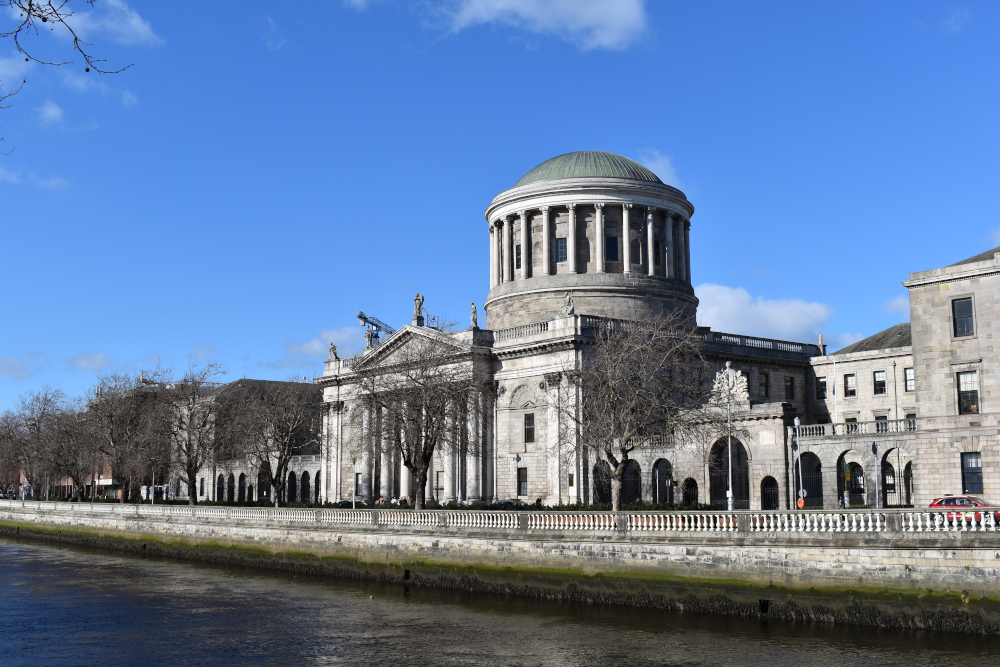
The High Court has answered a case stated concerning service outside the jurisdiction and the effect of defective service on the District Court’s jurisdiction.

About this case:
- Citation:[2026] IEHC 216
- Judgment:
- Court:High Court
- Judge:Mr Justice Barry O'Donnell
Delivering judgment for the High Court, Mr Justice Barry O’Donnell opined that “the manner in which the attendance of an accused is procured generally does not deprive the court of jurisdiction to proceed to hear the case. That general proposition is qualified by the caveat that in certain cases jurisdiction may have to be declined if the manner in which the attendance is procured constitutes a deliberate and conscious violation of the constitutional rights of the accused or otherwise constitutes a serious affront to the processes of the court.”
Background
Mr Evans was the subject of various prosecutions before Monaghan District Court, on charges including dangerous driving and for offences contrary to the Criminal Justice (Public Order) Act 1994 committed in the area of Castleblaney, Co Monaghan.
The summonses on foot of which the prosecutions were brought gave an address for Mr Evans of Crossmaglen, Co Armagh.
The summonses were served on Mr Evans by registered post. He did not appear to either summons and bench warrants issued for his arrest.
Mr Evans was arrested in an unrelated matter in the Dublin Metropolitan District in October 2023 and the Monaghan bench warrants were executed, resulting in the Dublin District Court remanding him to Monaghan District Court.
At hearing, counsel for Mr Evans argued that the summonses were unlawful as they had been served on him outside the jurisdiction by registered post, and that the court did not have jurisdiction to deal with the matter even if Mr Evans did appear.
The presenting inspector replied that registered post was the manner in which all summonses were served outside the jurisdiction, and that if leave to serve outside the jurisdiction was required for all cases involving residents of Northern Ireland, this would result in delays in the court list.
It was further submitted that the appearance by Mr Evans or his legal team cured any service issue in any event.
Mr Evans requested the court to state a consultative case to the High Court.
The District Court eventually acceded to this request, posing three questions to the High Court:
- Can service of a summons alleging a criminal offence be lawfully effected by posting the summons to the address of the accused outside the jurisdiction by registered post?
- If the answer to question (i) is no, will the unlawfulness and service always be cured by the attendance of the accused regardless of the circumstances?
- If the answer to question (i) is no, is the court deprived of jurisdiction in the proceedings by reason of a defect in service?
The High Court
At the outset of his judgment, Mr Justice Barry O’Donnell noted that there was no dispute between the parties, and the court agreed, that Mr Evans could not properly be served by registered post outside the jurisdiction where the District Court Rules did not provide for service to be effected in that way, and that no attempt had been made to effect service by use of the Criminal Justice (Mutual Assistance) Act 2008.
Having considered DPP v. Nolan [1990] 2 IR 526 and DPP v District Judge O’Neill [2015] IEHC 688, the court concluded that the issue of the summons in this case using the procedure in the Courts (No. 3) Act 1986 had the effect of invoking the District Court’s jurisdiction and that from the moment the District Court prima facie had jurisdiction to deal with the charges.
Mr Justice O’Donnell found that the next question was whether the issues around service had the effect of depriving the court of jurisdiction, finding it very clear that the manner in which an accused is brought before the court will generally not affect jurisdiction “save in exceptional circumstances”.
The court also considered inter alia DPP (Ivers) v. Murphy [1999] 1 I.R. 98, and noting the non-exhaustive examples in which a preceding process could impact on jurisdiction therein, was satisfied that the jurisdiction of the District Court in relation to the charges faced by the accused was invoked when the District Court office issued the summonses.
Agreeing with the DPP that the initial method of service of the summonses was largely irrelevant in any event, as this was not the procedure which led to Mr Evans appearing before the Monaghan District Court, Mr Justice O’Donnell then queried whether the accused’s appearance was procured by some deliberate or conscious violation of his rights constituting such an affront to the court such that the District Court should have declined jurisdiction.
In that regard, the judge considered the factors set out in Payne v District Judge Brophy [2006] 1 I.R. 560, finding that the issue of service was indeed a hypothetical and that the District Court should have conducted an inquiry so as to determine how the issues properly should be characterised and whether the issue and execution of the bench warrants had the effect of depriving the court of jurisdiction.
The court observed that all the arguments made by the accused stemmed from the initial issues relating to service and that while it was alleged that those matters contaminated the subsequent bench warrants, there had been no direct challenge to the validity of the bench warrants or to their execution.
Conclusion
Accordingly, the High Court determined that the first question posed by the District Court did not arise on the facts of the case stated and did not need to be answered, but that the answer was clearly “no”.
In respect of the second and third questions, the High Court answered that unlawfulness in service will not always be cured by the attendance of the accused and that certain circumstances which are sufficiently fundamental may deprive the court of jurisdiction, but that determination in the first instance is a matter for the court of trial.
Director of Public Prosecutions v Jack Evans [2026] IEHC 216

Share this article:

Subscribe to our newsletter to not miss articles like this one:
 SUBSCRIBE

